


Freezing lasagna is an easy way to save leftovers or prepare a meal ahead of time. You can freeze lasagna before baking or after baking, as long as you cool cooked lasagna properly and wrap it tightly to prevent freezer burn.
The best method depends on when you plan to serve it. Freeze an unbaked lasagna if you want a freshly baked meal later, or freeze baked portions for quick weeknight dinners.
What You’ll Need
- Freezer-safe baking dish or containers
- Plastic wrap or freezer-safe foil
- Freezer bags or airtight containers for individual portions
- Permanent marker and labels
- Refrigerator space for safe thawing
How to Freeze Lasagna
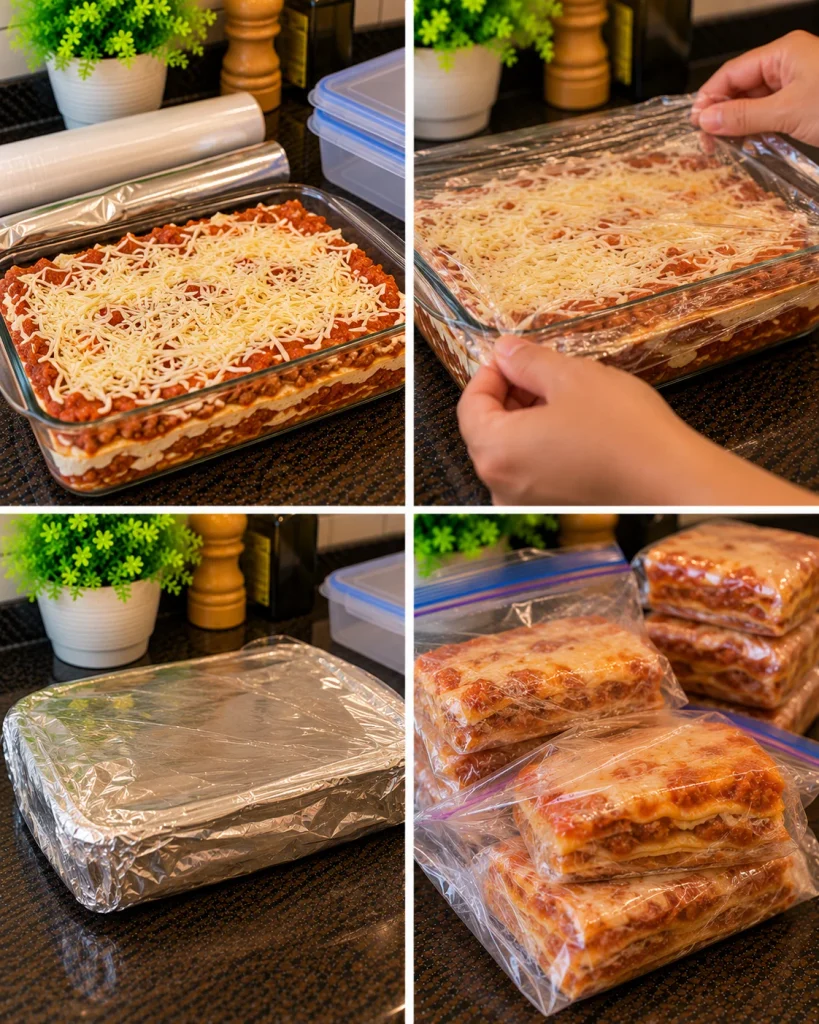
Method 1: Freeze Unbaked Lasagna
Freezing lasagna before baking is ideal for meal prep and make-ahead dinners.
- Assemble the lasagna as usual in a freezer-safe baking dish.
- If using hot sauce or freshly cooked meat, let the components cool before assembling.
- Cover the dish tightly with a layer of freezer-safe wrap, followed by aluminum foil.
- Label it with the date and whether it is baked or unbaked.
- Place it flat in the freezer until solid.
When you’re ready to cook it, thaw it in the refrigerator overnight or longer, depending on its size. Remove any plastic wrap before baking. Follow your recipe’s baking instructions, allowing extra time if the lasagna is still cold.
Method 2: Freeze Baked Lasagna
Freezing already-baked lasagna is perfect for saving leftovers.
- Bake the lasagna until fully cooked.
- Let it cool briefly, then divide it into meal-sized portions if desired.
- Refrigerate leftovers within two hours of cooking. Divide large amounts into shallow containers to help them cool quickly.
- Wrap individual portions tightly or place them in airtight, freezer-safe containers.
- Label and date each package before freezing.
For the best texture, freeze the portions once they have chilled in the refrigerator. This makes it easy to reheat only what you need.
Alternative Methods
Freeze individual slices: Cut cooled lasagna into portions and wrap each piece separately. Store the wrapped slices in a freezer bag for convenient lunches or single servings.
Use freezer-safe containers: Place individual portions in airtight containers, leaving a little room if the container is filled with warm food that will cool and settle. This method helps protect the lasagna from freezer odors and makes reheating easier.
Why This Works
Tight wrapping limits exposure to air, which helps prevent freezer burn and protects the flavor and texture of the pasta, cheese, and sauce. Freezing lasagna promptly after proper cooling also helps maintain food safety.
Common Mistakes to Avoid
- Freezing lasagna while it’s hot: Hot food can warm nearby freezer items. Cool it safely in the refrigerator before freezing.
- Leaving it uncovered: Exposed pasta and cheese can dry out and develop freezer burn.
- Using a dish that isn’t freezer-safe: Some glass and ceramic dishes can crack with sudden temperature changes.
- Thawing on the counter: Thaw frozen lasagna in the refrigerator instead.
- Refreezing food repeatedly: Repeated thawing and freezing can reduce quality and increase food-safety risks if the lasagna is mishandled.
Signs of Spoilage or Quality Loss
Lasagna that has been stored too long or wrapped poorly may develop dry edges, ice crystals, or pale, leathery patches from freezer burn. These are usually signs of quality loss rather than proof that the food is unsafe.
Discard lasagna if it has an unusual or sour odor, visible mold, or a slimy texture after thawing. Do not taste it to determine whether it is safe. Freezing does not make spoiled food safe to eat.
How Long Does Frozen Lasagna Last?
For the best quality, follow these storage guidelines:
| Lasagna type | Recommended freezer time |
|---|---|
| Unbaked lasagna | About 2–3 months |
| Baked lasagna | About 2–3 months |
| Individual cooked portions | About 2–3 months |
These are quality guidelines for lasagna kept continuously frozen at 0°F (-18°C). Properly frozen food can remain safe longer, but flavor and texture may decline.
For food safety, refrigerate cooked lasagna within two hours of cooking and use refrigerated leftovers within 3–4 days. Thaw frozen lasagna in the refrigerator and reheat leftovers to 165°F (74°C) in the center.
Frequently Asked Questions
Can you freeze lasagna with ricotta cheese?
Yes. Lasagna made with ricotta freezes well, although the cheese may become slightly grainier or release a little moisture after thawing. Tight wrapping helps preserve its overall texture.
Is it better to freeze lasagna cooked or uncooked?
Both methods work. Freeze it uncooked if you want to bake a fresh meal later, or freeze it cooked if you want convenient portions that are ready to reheat.
Can you bake lasagna straight from frozen?
Yes, provided the baking dish is suitable for the temperature change. Remove plastic wrap, cover with foil, and allow extra baking time. Check that the center reaches 165°F (74°C) before serving, especially when reheating previously cooked lasagna.
Should you thaw frozen lasagna before reheating?
Thawing overnight in the refrigerator helps it heat more evenly and reduces reheating time. You can also reheat it from frozen, but it will take longer.