
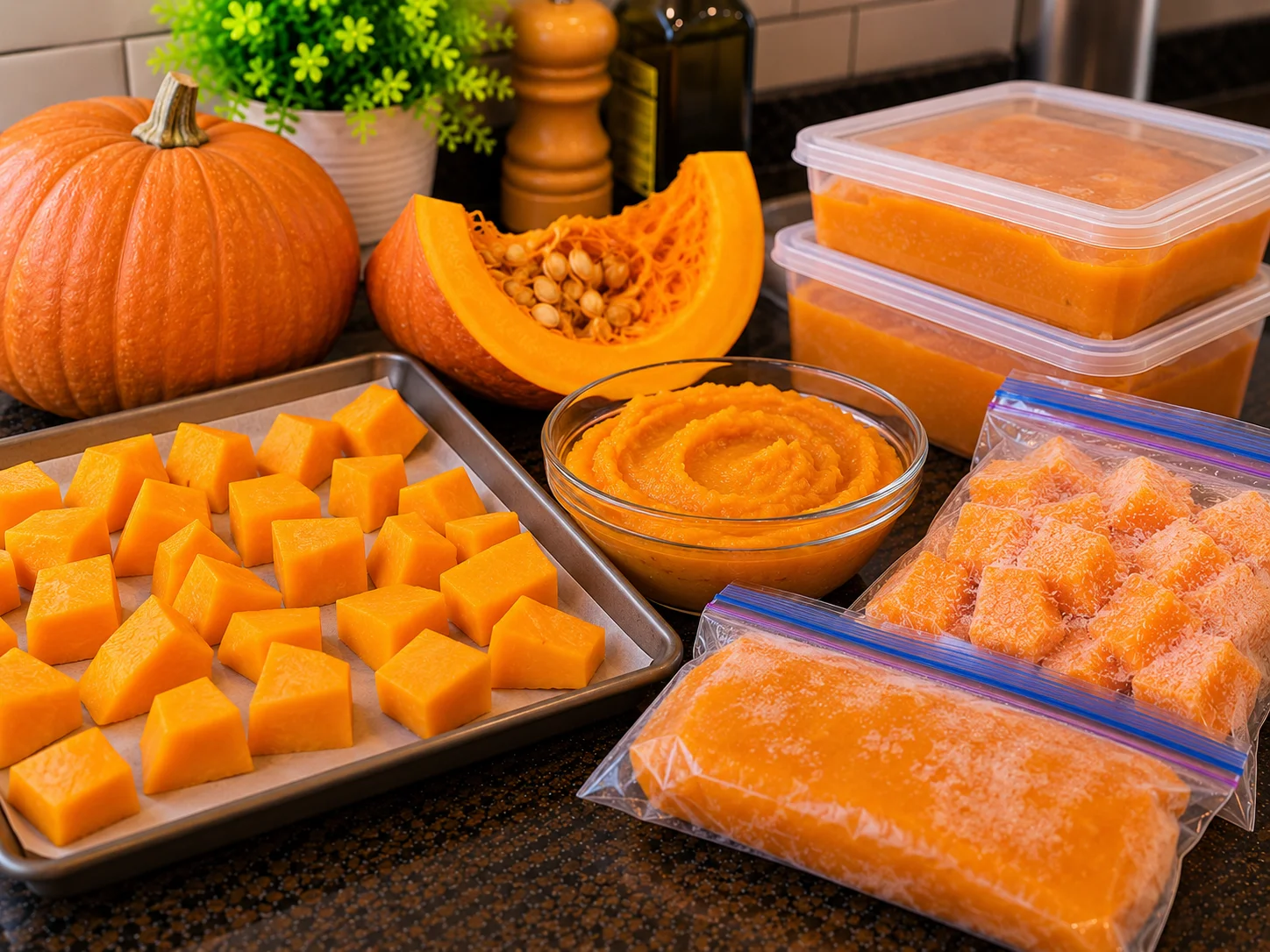

Freezing pumpkin is an easy way to preserve fresh pumpkin for soups, pies, smoothies, and other recipes. You can freeze pumpkin raw in pieces, cooked and mashed, or roasted and pureed. The best method depends on how you plan to use it later.
For most recipes, cooking and mashing pumpkin before freezing is the most convenient option because it’s ready to use once thawed.
What You’ll Need
- Fresh pumpkin
- Sharp knife and cutting board
- Spoon for removing seeds
- Baking sheet or pot
- Blender, food processor, or potato masher (optional)
- Freezer-safe bags or airtight containers
- Permanent marker for labeling
How to Freeze Pumpkin
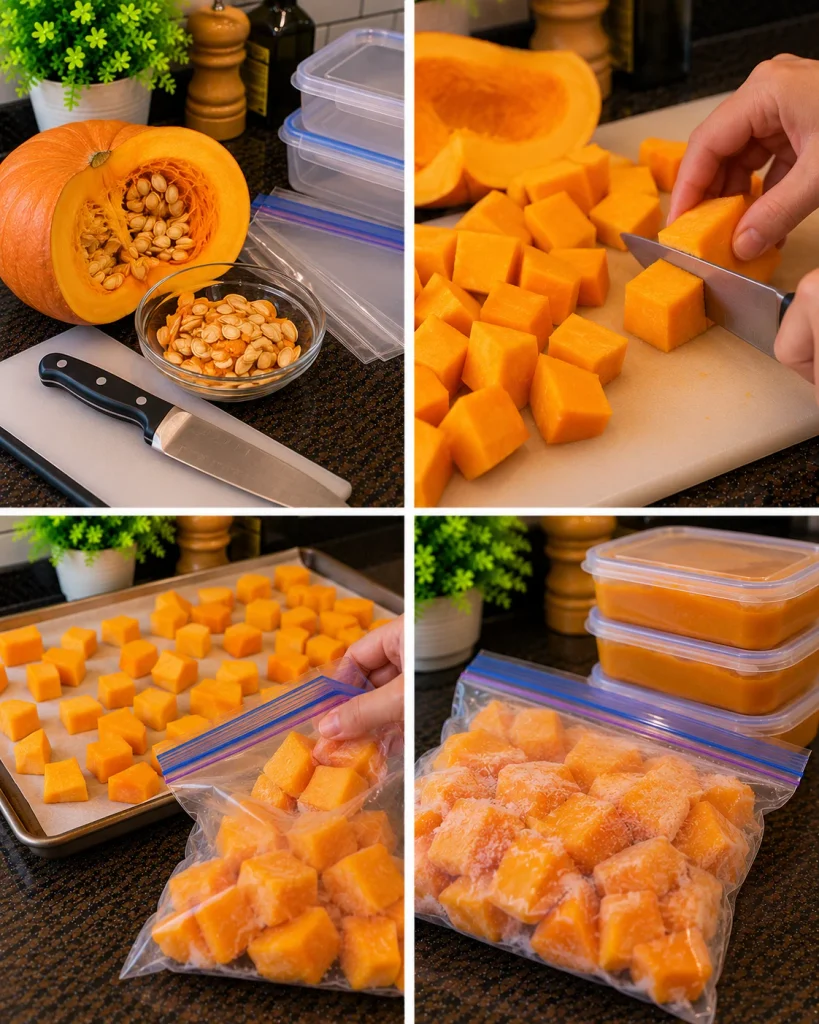
Method 1: Freeze Raw Pumpkin Pieces
This method works well if you want to cook the pumpkin later for soups, stews, or other dishes.
- Wash the pumpkin under running water and dry it.
- Cut it in half and remove the seeds and stringy pulp.
- Peel the pumpkin and cut the flesh into evenly sized cubes.
- Spread the cubes on a baking sheet in a single layer.
- Freeze until the pieces are firm, usually a few hours.
- Transfer the frozen cubes to freezer-safe bags or airtight containers.
- Label with the date and return them to the freezer.
Freezing the cubes separately first helps prevent them from sticking together.
Method 2: Freeze Cooked and Mashed Pumpkin
This is the best method for pumpkin puree used in baking, soups, sauces, and other recipes.
- Wash the pumpkin, cut it in half, and remove the seeds and pulp.
- Cut it into large pieces and steam, boil, or roast until tender.
- Remove the skin if needed, then mash or blend the flesh until smooth.
- Cool the pumpkin promptly in shallow containers.
- Divide it into recipe-sized portions.
- Pack into freezer-safe containers or bags, leaving a little room for expansion.
- Label and freeze.
For easier baking later, freeze the puree in measured portions so you can thaw only what you need.
Method 3: Freeze Roasted Pumpkin
Roasting gives pumpkin a deeper flavor and can help avoid excess moisture.
- Cut the pumpkin in half and remove the seeds.
- Place the halves cut-side down on a baking sheet.
- Roast at 400°F until the flesh is tender.
- Let it cool, scoop out the flesh, and mash or puree it.
- Portion into freezer-safe bags or containers.
- Remove excess air, label, and freeze.
Alternative Methods
- Ice cube trays: Freeze pumpkin puree in small portions, then transfer the frozen cubes to a freezer bag. This works well for smoothies, sauces, and small servings.
- Flat freezer bags: Spread cooled puree in a thin, even layer inside a freezer bag. Remove excess air and freeze flat to save space and speed up thawing.
Why This Works
Freezing slows the growth of microorganisms and the reactions that cause food quality to deteriorate. Ice crystals can soften pumpkin’s texture, so frozen pumpkin is generally better for cooked dishes than for recipes requiring firm, fresh pumpkin.
Common Mistakes to Avoid
- Leaving in the seeds and stringy pulp: Remove them before freezing for better results.
- Freezing hot pumpkin in sealed containers: Cool it promptly before freezing.
- Using containers that aren’t freezer-safe: These may crack or allow freezer odors to affect the pumpkin.
- Forgetting to label the date: Labels help you keep track of storage time.
- Thawing on the counter: Thaw pumpkin in the refrigerator or add frozen cubes directly to a cooking dish.
Signs of Spoilage or Quality Loss
Check pumpkin after thawing and before using it.
- Unusual odor: Discard pumpkin that smells sour, fermented, or otherwise unpleasant.
- Mold: Throw away moldy pumpkin rather than trying to remove the affected part.
- Unexpected sliminess: Discard pumpkin with a slimy texture that suggests spoilage.
- Freezer burn: Dry, pale, or discolored patches usually indicate quality loss rather than automatically meaning the pumpkin is unsafe. Flavor and texture may suffer.
Never taste pumpkin to determine whether it is safe if you suspect spoilage.
How Long Does Frozen Pumpkin Last?
| Pumpkin type | Recommended freezer storage |
|---|---|
| Raw pumpkin cubes | 8–12 months for best quality |
| Cooked pumpkin pieces | 8–12 months for best quality |
| Pumpkin puree | 3–6 months for best quality |
These are quality guidelines for pumpkin kept continuously frozen at 0°F (-18°C) or below. Frozen food can remain safe longer when consistently stored at that temperature, provided it was handled safely before freezing.
How to Thaw Frozen Pumpkin
- In the refrigerator: Place it in a covered container and let it thaw overnight or until fully thawed.
- In soups and stews: Add frozen pumpkin cubes directly to the pot and cook until tender.
- For baking: Thaw pumpkin puree in the refrigerator. If it releases excess water, drain it or let it sit in a fine-mesh strainer before measuring.
Avoid thawing pumpkin on the kitchen counter.
Frequently Asked Questions
Can you freeze pumpkin without cooking it?
Yes. Peel the pumpkin, remove the seeds, cut it into cubes, and freeze the pieces on a baking sheet before transferring them to a freezer bag. The texture may soften after thawing.
Can you freeze pumpkin puree in a jar?
Yes, provided the jar is freezer-safe and has enough empty space for expansion. Wide-mouth, straight-sided jars are generally a better choice than narrow-necked jars, which can crack as the puree freezes.
Do you need to blanch pumpkin before freezing?
Blanching is not essential for freezing pumpkin for everyday home cooking. Raw cubes can be frozen directly, although cooking pumpkin before freezing is often more convenient for recipes that use puree.
Can you freeze pumpkin pie filling?
Yes, but results depend on the recipe. For greater flexibility, freeze plain pumpkin puree separately and mix it with eggs, sugar, spices, and other ingredients when you’re ready to bake.