
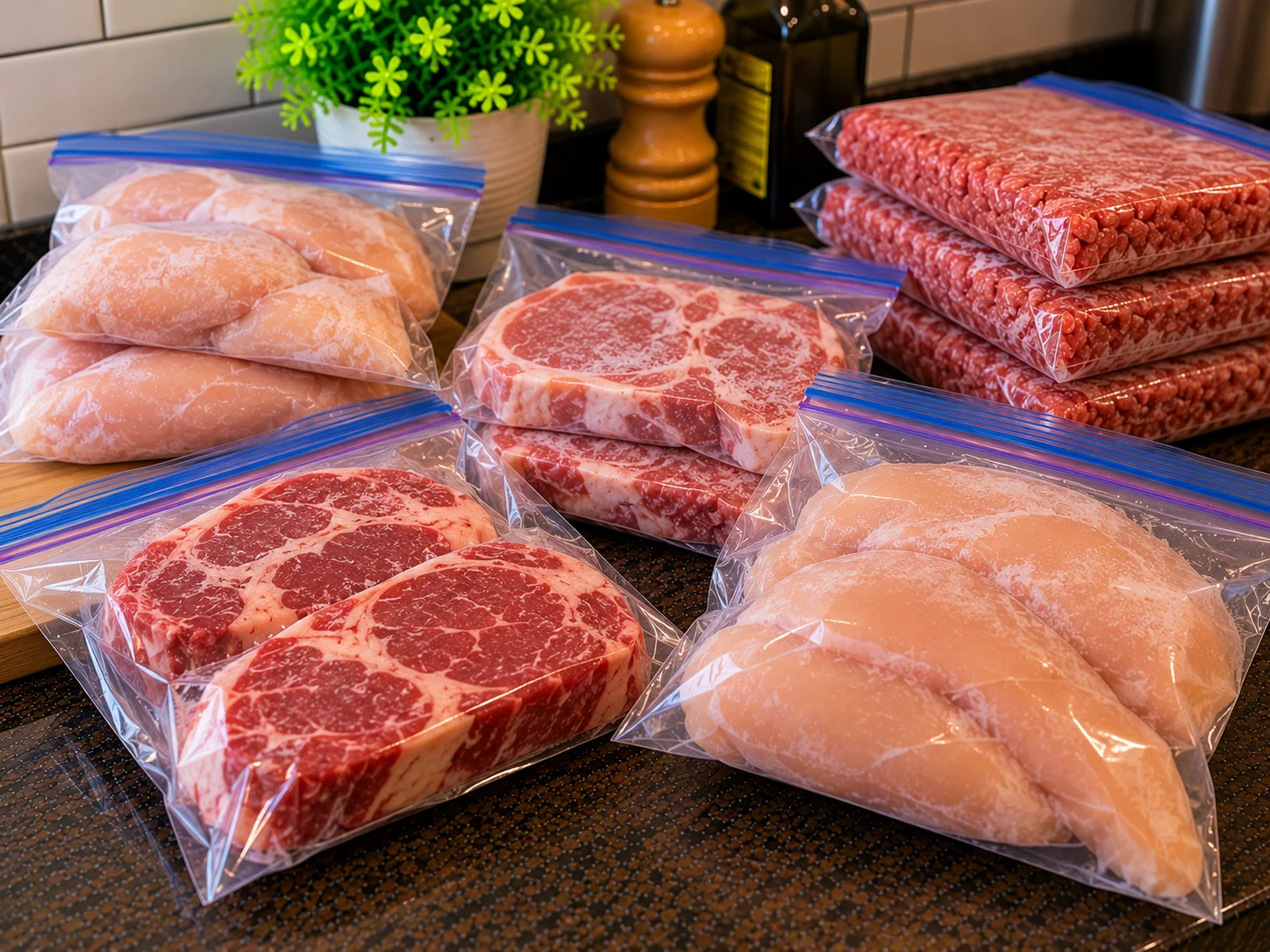

Freezing meat is one of the easiest ways to extend its shelf life and reduce food waste. The best way to freeze meat is to divide it into meal-sized portions, wrap it tightly, remove excess air, and label each package with the date. Proper packaging helps prevent freezer burn and keeps meat in better condition until you’re ready to cook it.
What You’ll Need
- Freezer-safe bags or airtight freezer containers
- Plastic wrap or freezer paper (optional)
- Permanent marker and labels
- Baking sheet (for individual pieces, if needed)
How to Freeze Meat Step by Step
1. Portion the Meat Before Freezing
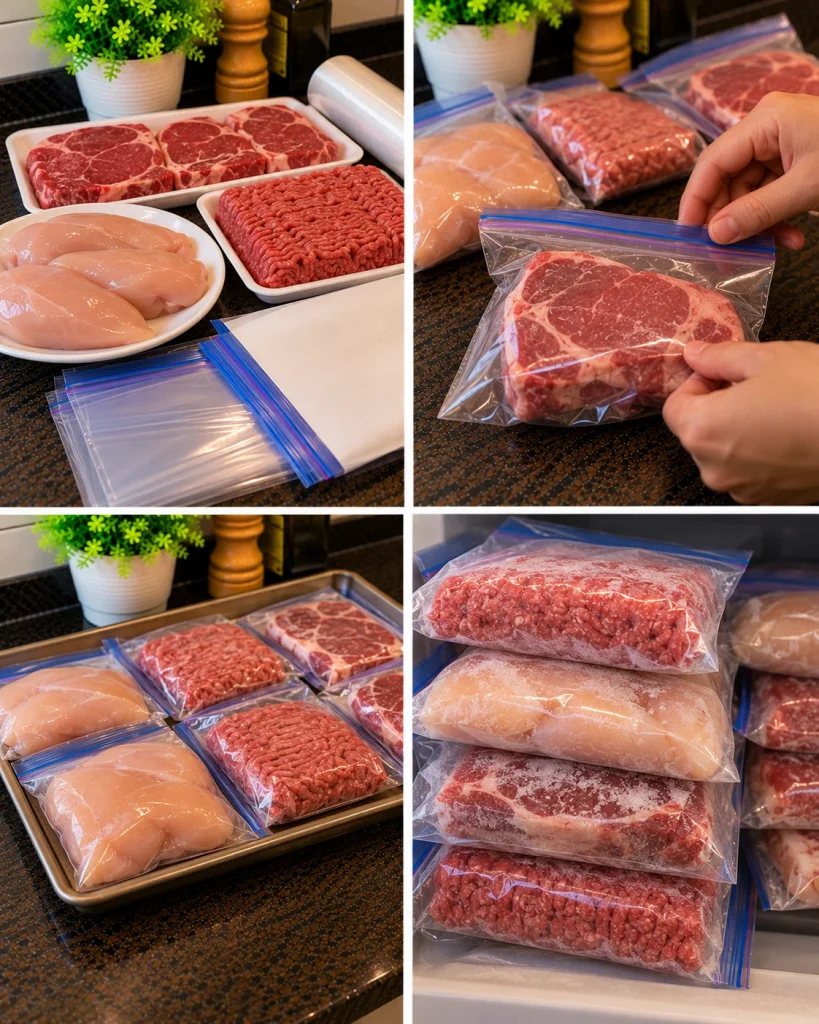
Divide meat into portions you can use for one meal. Separate large cuts, steaks, chicken breasts, or ground meat into smaller packages to avoid thawing more than you need.
If the meat is already frozen, keep it frozen until you’re ready to repackage it, unless you need to address damaged packaging.
2. Wrap It Tightly
Place the meat in a freezer-safe bag or wrap it securely in freezer paper or plastic wrap, followed by a freezer bag. Remove as much air as possible from bags before sealing.
Air exposure can cause freezer burn, which affects texture and flavor.
3. Label Each Package
Write the type of meat and freezing date on each package. For example, label it “Ground beef — October 20.”
This makes it easier to use older packages first and keep track of storage times.
4. Freeze Meat in a Single Layer
Arrange packages in a single layer in the freezer until they become solid. Once frozen, stack them to save space.
Keep the freezer at 0°F (-18°C) or below. Freeze fresh meat promptly rather than leaving it in the refrigerator until it is close to its use-by date.
5. Thaw Meat Safely
The safest method is to thaw meat in the refrigerator. Place it on a plate or in a container to catch any liquid.
You can also thaw meat in cold water in a leak-proof bag, changing the water every 30 minutes, or use the microwave. Cook meat thawed using cold water or the microwave immediately after thawing.
Never thaw meat on the kitchen counter.
Alternative Methods
Freezer paper: Wrap individual cuts tightly in freezer paper, then label and date them. This works well for steaks, chops, and larger cuts.
Vacuum sealing: A vacuum sealer removes most of the air, helping protect meat from freezer burn and making packages easier to store.
Freezing meatballs or burger patties individually: Arrange them on a parchment-lined baking sheet and freeze until firm. Transfer them to a freezer bag, removing excess air before sealing.
Why This Works
Low freezer temperatures stop microorganisms from growing while the meat remains frozen. Tight packaging limits air exposure, helping prevent freezer burn and preserving flavor and texture. Freezing does not make spoiled meat safe to eat.
Common Mistakes to Avoid
- Using regular storage bags: Choose bags specifically designed for freezer use.
- Leaving too much air inside: Excess air increases the risk of freezer burn.
- Freezing one large, thick package: Smaller portions freeze faster and are easier to thaw.
- Overloading the freezer with unfrozen food: Freeze packages in batches if necessary to help maintain a consistent temperature.
- Refreezing meat left at room temperature: Never refreeze meat that has been sitting out too long.
- Thawing on the counter: Room-temperature thawing allows bacteria to multiply on the surface.
Signs of Spoilage or Quality Loss
Meat that develops dry, grayish-brown or pale patches may have freezer burn. Freezer-burned meat is generally safe to eat if it has remained continuously frozen, but the affected areas may taste dry or tough.
Discard meat if it shows signs of spoilage before freezing, such as a persistent unpleasant odor, a slimy texture, or unusual discoloration. Do not taste meat to determine whether it is safe.
How Long Does Frozen Meat Last?
At 0°F (-18°C) or below, properly packaged meat remains safe indefinitely when continuously frozen, although its quality gradually declines. These recommended timeframes are for best quality.
| Type of meat | Best-quality freezer time |
|---|---|
| Steaks and roasts (beef, lamb, pork) | 4–12 months |
| Ground beef, pork, or lamb | 3–4 months |
| Whole chicken or turkey | 12 months |
| Chicken or turkey pieces | 9 months |
| Bacon | 1 month |
| Raw sausage | 1–2 months |
| Cooked meat or leftover meat dishes | 2–3 months |
Keep the freezer at 0°F (-18°C) or below and follow safe handling practices. These timeframes are based on USDA freezer storage recommendations.
Frequently Asked Questions
Should I wash meat before freezing it?
No. Washing raw meat can spread bacteria around your sink and kitchen. Package it directly and wash your hands and any surfaces that come into contact with it.
Can I freeze meat in its original supermarket packaging?
Yes, for short-term storage. For longer storage, add an airtight freezer bag or another freezer-safe layer because store packaging may allow air to enter over time.
Can I refreeze meat after thawing it?
Meat thawed in the refrigerator can generally be refrozen safely, although its quality may decline. Meat thawed in cold water or the microwave should be cooked before refreezing.
Is meat still good after a year in the freezer?
It may be, provided it stayed continuously frozen at 0°F (-18°C) or below. Some cuts, such as ground meat and pork chops, have shorter recommended storage times for best quality, so check the type of meat and its packaging history.