
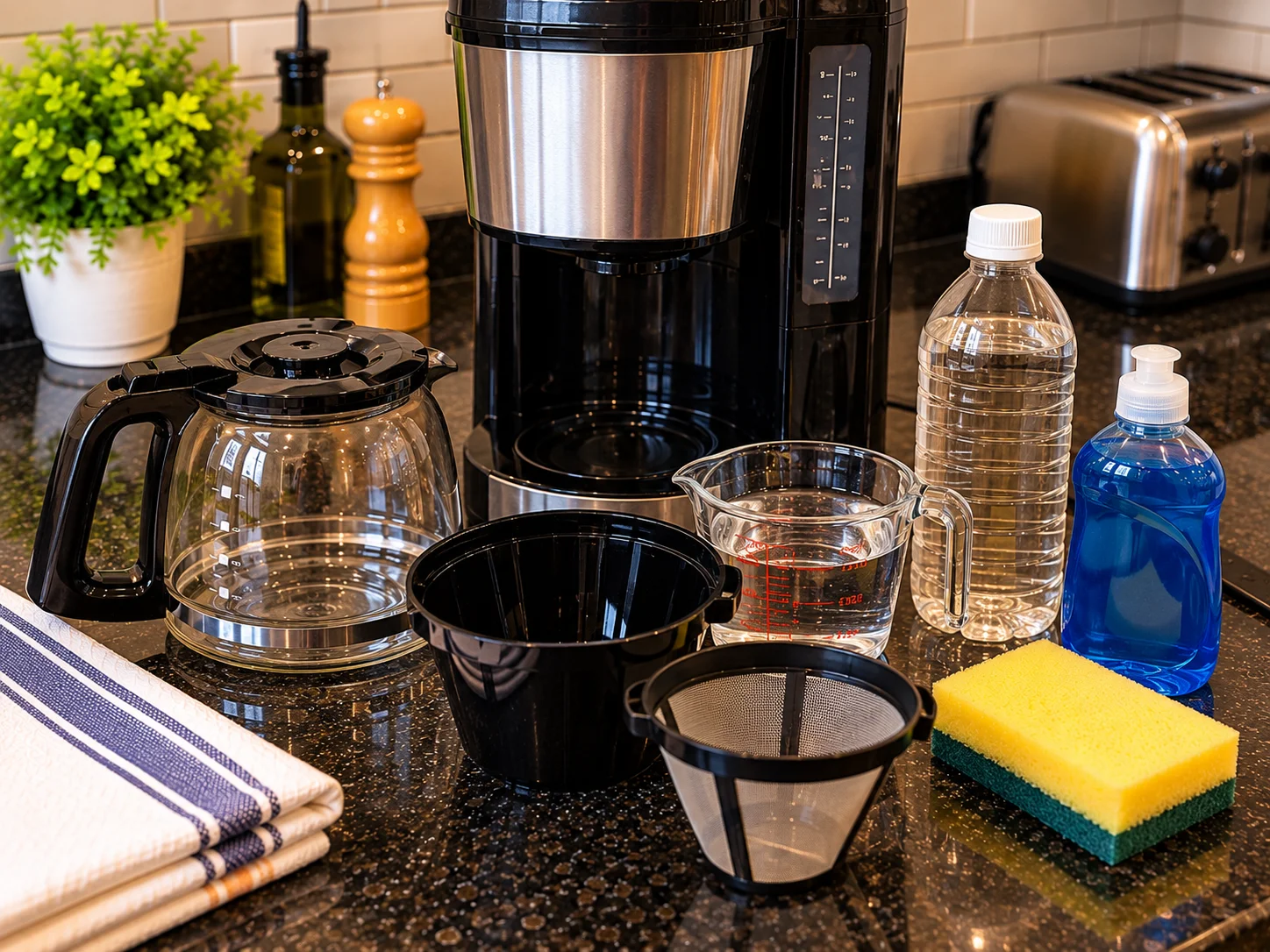

Cleaning a coffee maker regularly helps remove mineral buildup, coffee oils, and leftover residue that can affect the taste of your coffee. The easiest way to clean a standard drip coffee maker is to wash the removable parts with warm, soapy water and run a cleaning cycle with white vinegar or a manufacturer-approved descaling solution.
What You’ll Need
- White vinegar or a coffee maker descaling solution
- Warm water
- Dish soap
- A soft sponge or microfiber cloth
- A clean towel
Check your coffee maker’s manual before using vinegar, as some manufacturers recommend a specific descaling product.
How to Clean a Coffee Maker Step by Step
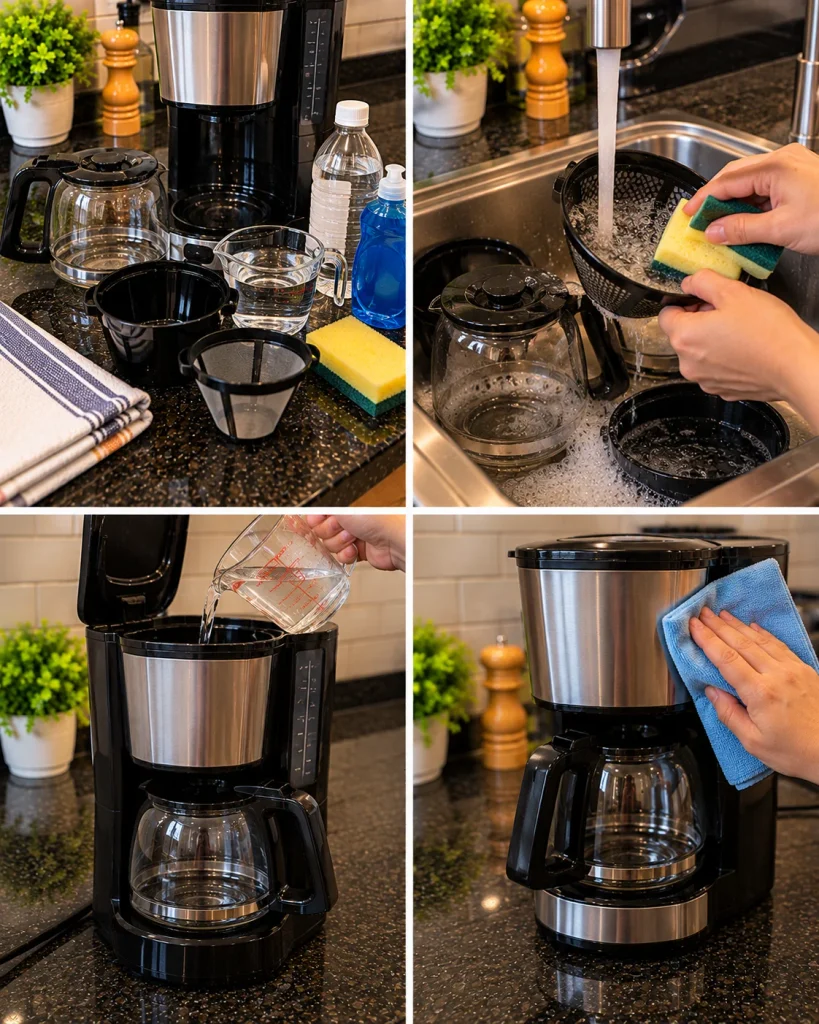
1. Wash the Removable Parts
Turn off and unplug the coffee maker. Remove the carafe, filter basket, and reusable filter, if applicable.
Wash these parts with warm water and dish soap. Use a soft sponge to remove coffee stains and oily residue, then rinse thoroughly and let them air-dry.
2. Clean the Outside
Wipe the exterior, warming plate, and surrounding surfaces with a damp cloth. For stubborn spots, use a little dish soap on the cloth.
Avoid pouring water directly onto the machine or submerging its electrical components.
3. Run a Cleaning Cycle
If your manufacturer permits vinegar, follow these steps:
- Empty the water reservoir and remove any paper filter or coffee grounds.
- Fill the reservoir with a mixture of equal parts white vinegar and water.
- Place the empty carafe on the warming plate.
- Start a brew cycle. If your machine has a cleaning setting, use it according to the manual.
- If the cycle pauses or your manual recommends soaking, let the solution sit for about 15–30 minutes before continuing.
If you prefer, use a commercial coffee maker descaler according to its label instead.
4. Rinse the Coffee Maker Thoroughly
Empty the carafe and rinse it well. Fill the reservoir with fresh water and run a complete brew cycle.
Repeat with fresh water for another one or two cycles, until no vinegar smell remains. Follow your manufacturer’s instructions if they specify a different rinsing procedure.
5. Let Everything Dry
Wash the carafe again if needed, then leave the lid open briefly to let the reservoir and removable parts dry. Make sure the machine is unplugged before wiping any areas near electrical components.
Why This Works: Pro Tips
Minerals in tap water can accumulate inside the heating system and narrow the passages where water flows. Descaling helps dissolve this buildup, while dish soap removes coffee oils from the carafe and filter basket.
For the best results:
- Clean the carafe and filter basket after each use.
- Empty used coffee grounds promptly.
- Leave the lid open when the machine is not in use, if the design allows.
- Descale regularly, especially if you have hard water.
Common Mistakes to Avoid
- Skipping the rinse cycles: Vinegar residue can leave an unpleasant taste and smell.
- Using abrasive scrubbers: These can scratch glass, plastic, or nonstick surfaces.
- Cleaning while the machine is plugged in: Unplug it before washing or wiping the exterior.
- Mixing cleaning products: Never combine vinegar with bleach or other cleaners.
- Descaling too often or too rarely: Follow the manufacturer’s schedule and adjust for water hardness.
- Putting non-dishwasher-safe parts in the dishwasher: Check the manual first.
Frequently Asked Questions
How often should you clean a coffee maker?
Wash removable parts after every use. Descale the machine about once a month as a general starting point, or follow the manufacturer’s recommended schedule.
Is vinegar or baking soda better for cleaning a coffee maker?
Vinegar is commonly used to dissolve mineral deposits, while baking soda is better suited to some surface-cleaning tasks. Use a manufacturer-approved descaler if vinegar is not recommended for your machine.
Can you clean a coffee maker without vinegar?
Yes. Use a descaling product designed for your coffee maker and follow its instructions. You can still clean the carafe, filter basket, and other removable parts with warm, soapy water.
How do you know when your coffee maker needs cleaning?
Look for white mineral deposits, slower brewing, unusual odors, or coffee that tastes bitter or stale. These signs can indicate buildup, although bitter coffee can also result from old beans or incorrect brewing.