


Cleaning fruit properly helps remove dirt, dust, and some surface germs before eating. The best method is simple: rinse fresh fruit under cool, running water and gently rub the surface with your hands. You don’t need soap, bleach, or special produce cleaners.
What You’ll Need
- Fresh, running water
- A clean colander (optional)
- A clean produce brush for firm fruits (optional)
- A clean paper towel or kitchen towel
How to Clean Fruit Step by Step
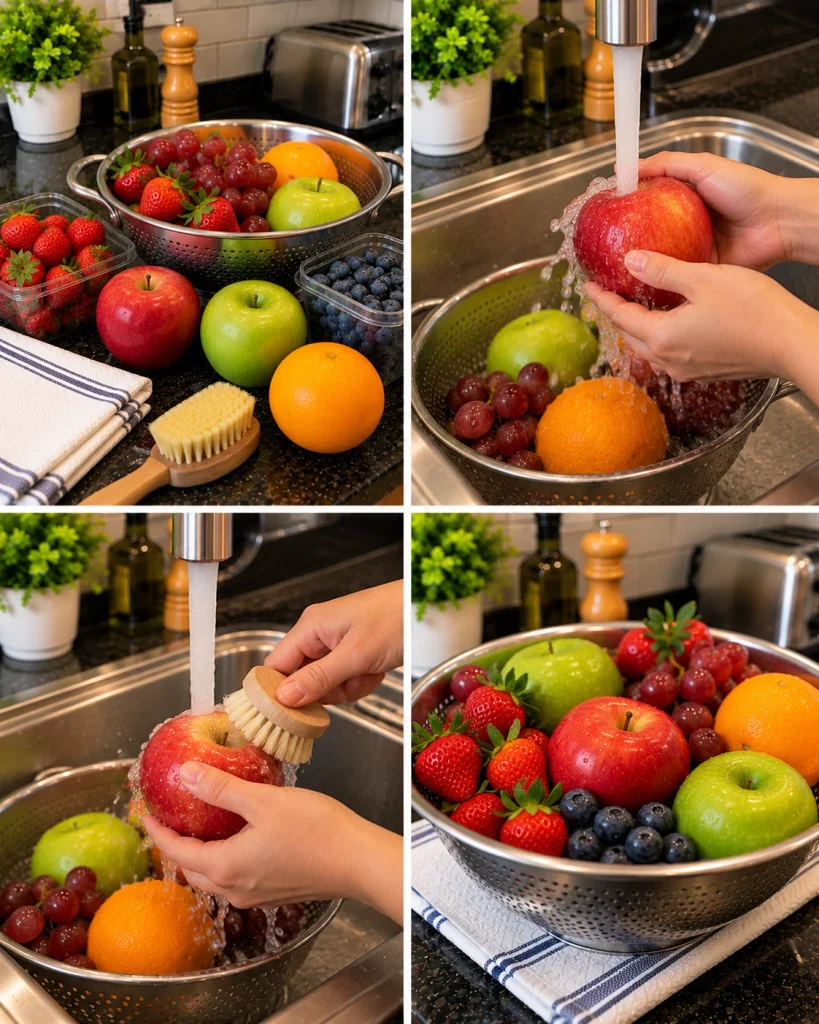
1. Wash Your Hands First
Wash your hands with soap and water before handling fruit. Make sure your sink, colander, and any cutting tools are clean.
2. Rinse Fruit Under Running Water
Hold apples, pears, grapes, berries, and other fresh fruit under cool, running water. Gently rub the surface with your fingers to remove dirt and debris.
3. Clean Firm Fruits Carefully
For firm fruits such as apples, pears, and melons, gently scrub the surface with a clean produce brush. Rinse thoroughly before cutting or peeling.
4. Handle Berries Gently
Place strawberries, blueberries, raspberries, and blackberries in a colander and rinse them gently under running water. Avoid soaking delicate berries for long periods because they can become mushy.
5. Dry the Fruit
Pat the fruit dry with a clean paper towel or kitchen towel. Drying helps remove remaining surface moisture and can help some fruits stay fresh longer.
6. Clean Fruit Before Cutting
Always rinse melons, oranges, and other fruits with inedible peels before cutting them. A knife can transfer dirt and bacteria from the outside to the edible flesh.
Why This Works / Pro Tips
Running water and gentle rubbing help remove dirt and some surface microorganisms. Washing does not eliminate every germ or all pesticide residues, but it is a practical way to reduce surface contamination.
- Do not use soap or dish detergent. Fruit can absorb residues that are not intended for consumption.
- Skip bleach and household cleaning products. They are not safe for washing food.
- Avoid vinegar or baking soda as necessary cleaning treatments. Plain running water is the recommended everyday method.
- Wash fruit just before eating or preparing it when possible, especially berries and other delicate produce.
- Keep washed fruit separate from raw meat and unclean surfaces to prevent cross-contamination.
Common Mistakes to Avoid
- Washing fruit with soap, detergent, or bleach.
- Using the same unwashed cutting board for raw meat and fresh fruit.
- Soaking berries for too long.
- Washing fruit before storage and leaving it damp, which can encourage mold.
- Assuming washing makes spoiled or moldy fruit safe to eat.
Frequently Asked Questions
Should you wash fruit with salt water?
Salt water is not necessary for everyday fruit cleaning. Rinsing under cool, running water while gently rubbing the surface is the recommended approach.
Does washing fruit remove pesticides?
Washing under running water can reduce some surface pesticide residues, dirt, and germs, but it does not remove all pesticides.
Should you wash fruit before putting it in the refrigerator?
For many fruits, washing right before eating is best. If you wash fruit before storing it, dry it thoroughly and use a clean container to reduce excess moisture.
Can you use dish soap to wash fruit?
No. Dish soap and household detergents are not intended for use on food. Use clean, running water instead.