
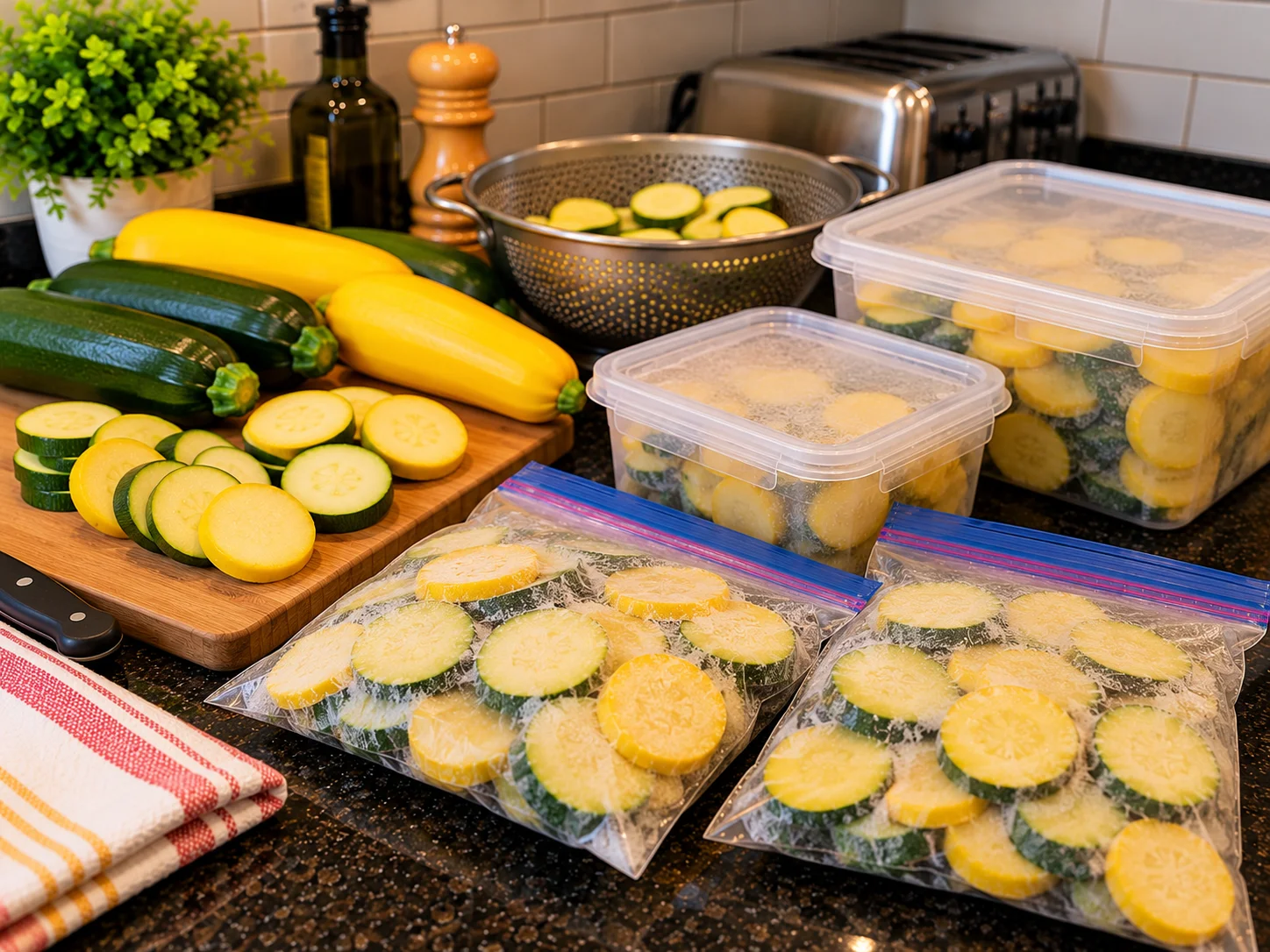

Yes, you can freeze squash, including yellow summer squash, zucchini, butternut squash, and acorn squash. The best method depends on the type of squash. Summer squash is best blanched before freezing, while winter squash is usually peeled, cooked, and mashed or cubed first.
Frozen squash works well in soups, casseroles, sauces, and baked dishes, although it may become softer after thawing.
What You’ll Need
- Fresh squash
- A knife and cutting board
- A pot of boiling water (for summer squash)
- A bowl of ice water
- Freezer bags or airtight containers
- A baking sheet (optional)
How to Freeze Squash

Method 1: Freeze Yellow Squash or Zucchini
- Wash and slice. Rinse the squash and cut it into slices or cubes.
- Blanch the squash. Place the pieces in boiling water for about 3 minutes.
- Cool quickly. Transfer them to ice water for about 3 minutes, then drain well.
- Dry thoroughly. Pat the pieces dry to remove excess moisture.
- Pack for freezing. Spread them on a baking sheet to freeze individually, if desired, before transferring them to freezer bags.
- Label and freeze. Remove excess air, seal the bags, and write the date on them.
Method 2: Freeze Butternut or Acorn Squash
- Wash the squash and peel it if needed.
- Remove the seeds and cut the flesh into cubes.
- Steam, boil, or roast until tender.
- Let it cool promptly, then portion it into freezer-safe containers.
- Seal, label, and freeze.
You can also mash cooked squash before freezing it, which makes it easy to add to soups, sauces, and purees.
Alternative Methods
- Freeze mashed squash: Cook until tender, mash, cool promptly, and freeze in meal-sized portions.
- Freeze roasted squash: Roast cubes until tender, cool, and freeze in a single layer before packing them into bags.
Why This Works
Blanching slows the enzyme activity that can affect the flavor, color, and texture of summer squash during storage. Cooking winter squash before freezing helps preserve its quality and makes it convenient to use later.
Common Mistakes to Avoid
- Freezing summer squash without blanching if you want better long-term quality.
- Packing squash while it is still hot.
- Leaving excess air in freezer bags.
- Expecting thawed squash to stay as crisp as fresh squash.
- Freezing squash that is already moldy, slimy, or spoiled.
Signs of Spoilage or Quality Loss
Discard squash that had signs of spoilage before freezing, such as mold, a rotten smell, or slimy flesh. After freezing, dryness, ice crystals, or freezer burn usually indicate quality loss rather than automatically making the food unsafe. Discard it if you suspect it was unsafe before freezing or was stored improperly.
How Long Does Frozen Squash Last?
For the best quality, use frozen squash within 8–12 months when kept continuously at 0°F (-18°C) or below. It may remain safe longer if continuously frozen, but its texture and flavor can decline.
Thaw frozen squash in the refrigerator when needed, or add suitable frozen pieces directly to soups and cooked dishes.
Frequently Asked Questions
Can you freeze squash without blanching it?
Yes, but the flavor, color, and texture may deteriorate more quickly. Blanching is recommended for sliced summer squash.
Should you thaw frozen squash before cooking?
Not always. You can add frozen squash directly to soups, stews, and many cooked dishes. Thawing and draining may help when a recipe needs less moisture.
Can you freeze squash whole?
It’s generally better to cut and prepare squash before freezing. Whole squash takes up more space and is harder to use once thawed.
Can you freeze raw butternut squash?
You can freeze it raw, but cooking it first generally gives better results for texture and convenience. Raw-frozen pieces may become softer after thawing.