


Strong food smells can linger in plastic food containers long after the food is gone. Tomato sauce, curry, garlic, onions, and oily leftovers are common culprits. The good news is that a few simple household supplies can help remove stubborn odors and leave your containers fresher.
The best approach is to wash the container thoroughly, use baking soda to absorb lingering smells, and let it dry completely. If the odor remains, try a vinegar soak or give the container more time to air out.
What You’ll Need
- Dish soap
- Warm water
- Baking soda
- White vinegar (optional)
- A soft sponge or dishcloth
- A clean drying rack
How to Remove Strong Food Smells From Containers
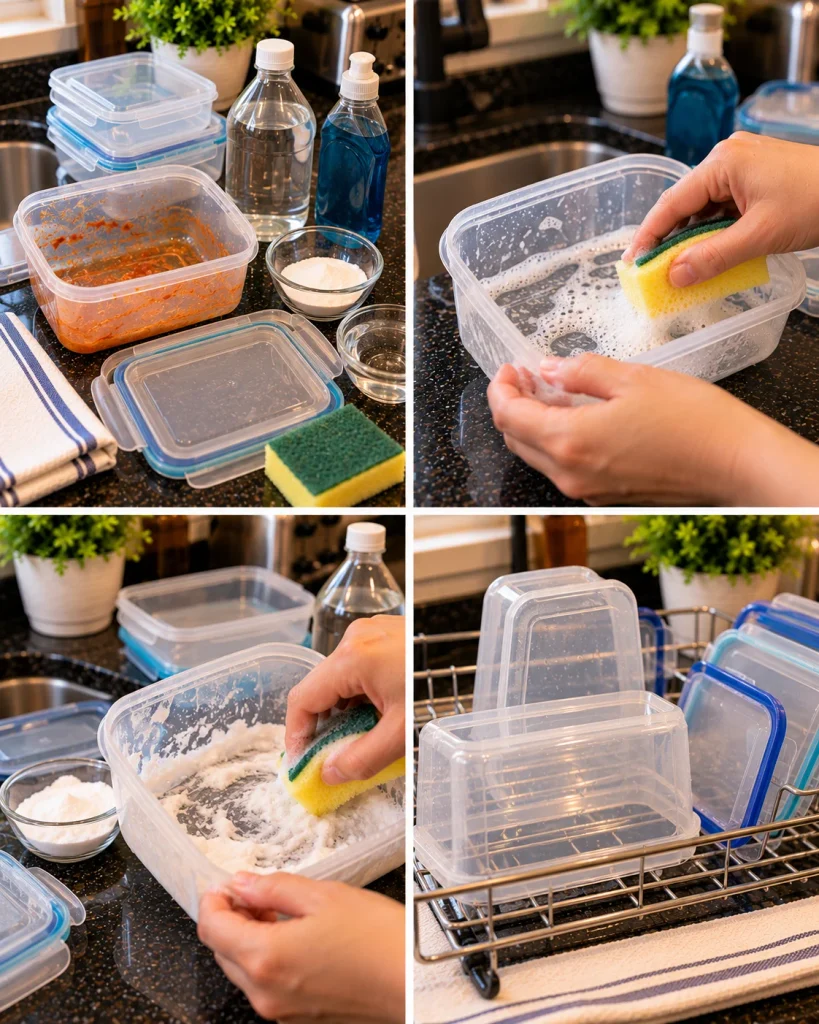
1. Wash the Container Thoroughly
Start by washing the container and lid with warm water and dish soap. Pay attention to the corners, grooves, and rubber seals, where food residue and grease can collect.
Use a soft sponge to clean the surfaces without scratching the plastic. Rinse thoroughly to remove all soap and food residue.
2. Use Baking Soda to Absorb Lingering Odors
Baking soda is a useful option for containers that still smell after washing.
Mix baking soda with a little water to make a thick paste. Spread it over the inside of the container and let it sit for about 15–30 minutes. For a persistent smell, leave the paste on longer if the container’s material allows it.
Gently scrub with a soft sponge, then rinse well. You can also place a small amount of dry baking soda in a clean, dry container, close the lid, and leave it overnight before washing again.
3. Try a White Vinegar Soak
If baking soda doesn’t remove the smell, try white vinegar.
Mix equal parts white vinegar and water, then soak the container for about 15–30 minutes. Wash it afterward with dish soap and rinse thoroughly.
Check the manufacturer’s care instructions before soaking containers with rubber seals or special coatings. Never mix vinegar with bleach or bleach-containing cleaners.
4. Let the Container Air-Dry Completely
Drying is an important final step. Water trapped inside a closed container can contribute to musty odors.
Place the container and lid separately on a drying rack. Allow both pieces to dry completely before storing them. Leaving the lid off for a while can also help any remaining food odor dissipate.
5. Repeat if the Smell Persists
Some strong odors take more than one cleaning to disappear, especially in older plastic containers that have absorbed oily foods.
Repeat the baking soda treatment if needed. If the container still smells strongly after several cleanings, or the plastic is deeply scratched, stained, or deteriorating, replacing it may be the more practical option.
Why Do Plastic Containers Hold Food Smells?
Plastic can retain odors because food oils and aromatic compounds may cling to its surface or become trapped in small scratches. Tomato-based sauces, garlic, onions, and heavily spiced foods can be particularly noticeable.
Heat and repeated use may also make odors and stains harder to remove. Glass containers generally resist lingering food smells better because their nonporous surfaces are less likely to retain food residue.
Common Mistakes to Avoid
- Putting the lid on too soon: Trapped moisture and lingering odors can build up inside a closed container.
- Using abrasive scrubbers: Rough scouring pads can scratch plastic, creating more places for residue to collect.
- Relying on hot water alone: Dish soap helps remove the grease that can hold onto strong food odors.
- Using scented products to cover the smell: Fragrances may mask the odor instead of removing its source.
- Ignoring the lid: Food residue can collect around the rim, grooves, and seals, so clean these areas as carefully as the container itself.
How to Prevent Food Smells From Returning
A few simple habits can make food containers easier to keep fresh.
- Wash containers soon after use instead of letting food residue sit for hours.
- Remove oily sauces and greasy leftovers thoroughly before storing the container.
- Dry containers and lids completely before putting them away.
- Store containers with their lids off or slightly separated when practical.
- Use glass containers for especially pungent foods if lingering odors are a recurring problem.
Frequently Asked Questions
Does baking soda remove curry and tomato sauce smells from plastic?
Baking soda can help reduce lingering odors from curry and tomato sauce. Apply a baking soda paste, let it sit, and rinse thoroughly. Stubborn odors may require repeated treatment.
Can I put vinegar and baking soda in the container together?
You can, but it’s generally more practical to use them separately. They react with each other and largely neutralize one another, so combining them isn’t necessarily more effective than applying each treatment on its own.
Why does my food container smell even after washing?
Grease, tiny food particles, and residue around the lid or seal may remain after a quick wash. Plastic can also retain some food odors over time. Clean all surfaces carefully, try baking soda, and let the container air-dry completely.
When should I replace a smelly plastic container?
Consider replacing it if the odor remains after repeated cleaning, particularly if the container is heavily scratched, cracked, warped, or deteriorating. A container that cannot be cleaned properly may be difficult to keep fresh with regular use.