


A kitchen that’s ready for meal prep makes cooking faster, reduces clutter, and helps you prepare meals with less stress. The key is to keep your counters clean, organize everyday tools, prepare ingredients efficiently, and make sure your refrigerator and pantry are easy to use.
You don’t need a complete kitchen makeover. A few simple habits can make meal prep easier throughout the week.
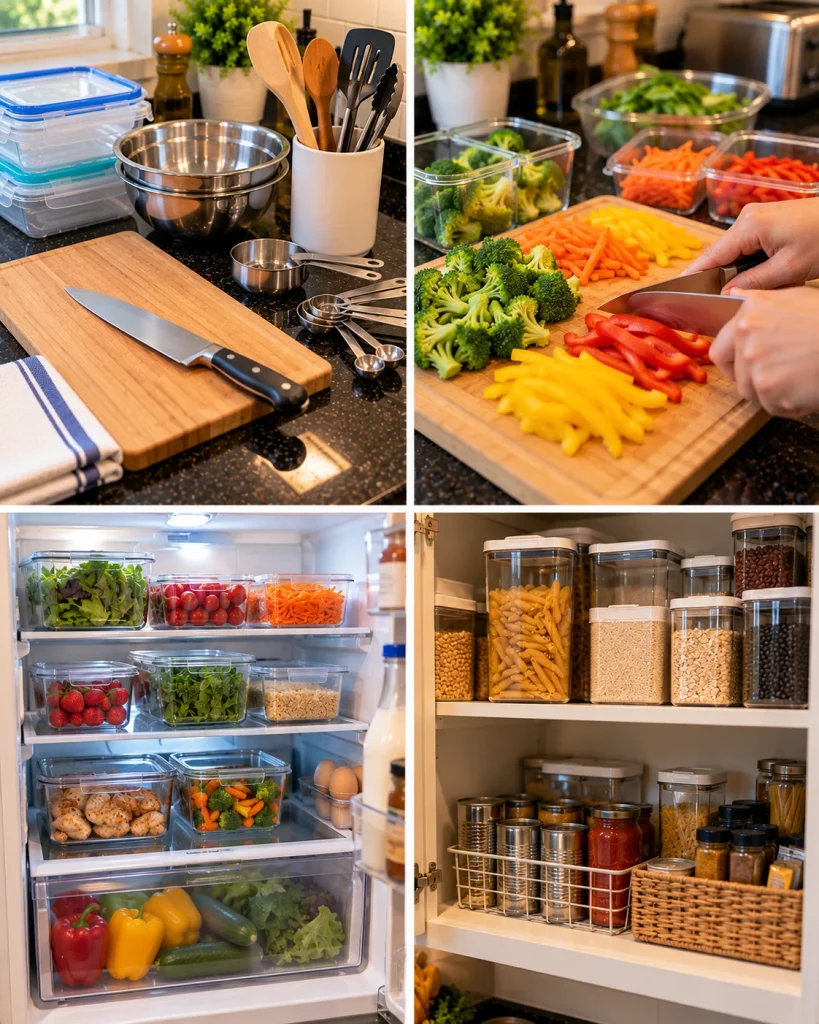
1. Clear and Clean Your Counters
Start with a clean workspace. Remove mail, unused appliances, and other items that take up valuable counter space.
Before preparing food:
- Wipe down countertops with an appropriate kitchen cleaner.
- Wash dirty dishes and clear the sink.
- Put away items that don’t belong in the cooking area.
- Keep one section of counter open for chopping and assembling ingredients.
A clear surface gives you more room to work and makes food preparation easier.
2. Keep Essential Kitchen Tools Within Reach
You shouldn’t have to search through several drawers every time you prepare a meal. Store frequently used tools where they’re easy to grab.
Keep these items accessible:
- Chef’s knife and cutting board
- Measuring cups and spoons
- Mixing bowls
- Spatula, tongs, and wooden spoon
- Food storage containers
- Kitchen towels
Group similar items together. For example, keep measuring tools near mixing bowls and food storage containers near the area where you portion leftovers.
Return tools to their usual places after washing them to prevent clutter from building up.
3. Organize Your Refrigerator for Easy Prep
A well-organized refrigerator makes it easier to see what you have and use ingredients before they spoil.
Try these simple steps:
- Group similar foods: Keep produce, dairy products, sauces, and leftovers in consistent areas.
- Use clear containers: Transparent containers help you identify ingredients quickly.
- Keep older foods visible: Place items that need to be used soon toward the front.
- Label prepared food: Add the name and date when storing cooked dishes or prepped ingredients.
- Maintain safe temperatures: Keep your refrigerator at 40°F or below.
Keep raw meat and seafood sealed on the lowest shelf to prevent drips from contaminating other foods. Wash produce when appropriate for your prep routine, and dry it well before storing when excess moisture could affect quality.
4. Create a Simple Pantry System
Your pantry should make everyday cooking straightforward. Store frequently used ingredients, such as rice, pasta, canned beans, cooking oils, and seasonings, in easy-to-reach places.
Use these organization tips:
- Group ingredients by type.
- Store frequently used items at eye level.
- Keep opened packages sealed tightly.
- Place newer products behind older ones.
- Check expiration dates and package condition regularly.
A small basket for meal prep staples can also help. Fill it with ingredients you often use for quick lunches and dinners so you can gather what you need without searching the entire pantry.
5. Prepare Ingredients Before You Start Cooking
One of the easiest ways to make meal prep smoother is to gather everything before turning on the stove.
Follow this simple routine:
- Check your meal plan. Decide which dishes you’ll prepare and identify the ingredients they share.
- Gather ingredients. Take out the items you’ll need from the refrigerator and pantry.
- Wash and chop produce. Prepare vegetables and herbs according to your recipes.
- Measure dry ingredients. Portion rice, pasta, spices, or other ingredients when it helps your workflow.
- Set out containers. Have clean containers ready for leftovers and prepared components.
If you’re preparing several meals at once, group similar tasks together. Chopping all the vegetables in one session, for example, can be more efficient than stopping to chop ingredients for every individual dish.
Keep perishable ingredients refrigerated until needed, and return them promptly after preparation.
6. Make Food Storage Part of Your Routine
Meal prep doesn’t end when cooking is finished. Having a reliable storage system helps keep your food organized and reduces waste.
Use clean, food-safe containers that are appropriate for the food you’re storing. Divide large amounts of cooked food into smaller, shallow containers to help them cool more quickly.
Refrigerate perishable foods within two hours of cooking, or within one hour when temperatures are above 90°F. Use refrigerated leftovers within three to four days, or freeze them for longer storage.
Label containers with the preparation date and place foods you plan to eat first where they’re easy to see.
7. Reset Your Kitchen After Each Meal
A quick kitchen reset keeps the next meal prep session from becoming another cleanup project.
Before finishing for the day:
- Wash dishes or load the dishwasher.
- Wipe down counters and the stovetop.
- Return tools and seasonings to their places.
- Check the refrigerator for food that needs attention.
- Restock frequently used ingredients if they’re running low.
You can also spend a few minutes before bed clearing the main cooking area. Starting with a clean workspace makes the next day’s cooking more manageable.
Common Meal Prep Organization Mistakes
Avoid these habits that make kitchen prep harder than it needs to be:
- Overfilling countertops: Too many appliances and containers leave little room to work.
- Buying storage containers without a plan: Choose a manageable collection of sizes that suit your usual portions and refrigerator space.
- Prepping more food than you can use: Plan quantities around your meals and available storage.
- Ignoring food safety: Don’t leave perishable ingredients or cooked foods sitting at room temperature for extended periods.
- Changing your organization system too often: Consistent storage locations make everyday tasks faster.
Frequently Asked Questions
How often should I organize my kitchen for meal prep?
Do a quick reset after cooking each day. Once a week, check the refrigerator, review pantry staples, and plan which ingredients you need for upcoming meals.
What should I keep on my counter for meal prep?
Keep only the tools you use frequently, such as a cutting board or utensil holder. Leave enough open space for chopping, mixing, and assembling food.
How can I make meal prep easier in a small kitchen?
Use vertical storage, stackable food containers, and drawer organizers. Clear the counter before cooking, and work in stages so you don’t need to keep every ingredient and tool out at once.
Keep Your Kitchen Ready With Small Daily Habits
An organized meal prep kitchen comes down to a few consistent habits: clear your counters, keep essential tools accessible, organize ingredients, and store prepared food safely. Start with one area at a time, then build a simple routine that fits your cooking schedule.
With a little preparation, your kitchen can stay ready for quick breakfasts, packed lunches, and easy weeknight dinners without requiring hours of organizing.