


The best way to organize a busy kitchen counter is to keep everyday essentials within reach and store everything else in cabinets, drawers, or shelves. A well-organized counter gives you more room to prepare food, makes cooking easier, and helps your kitchen stay tidy throughout the day.
You don’t need expensive organizers or a complete kitchen makeover. A few practical changes can make a noticeable difference.
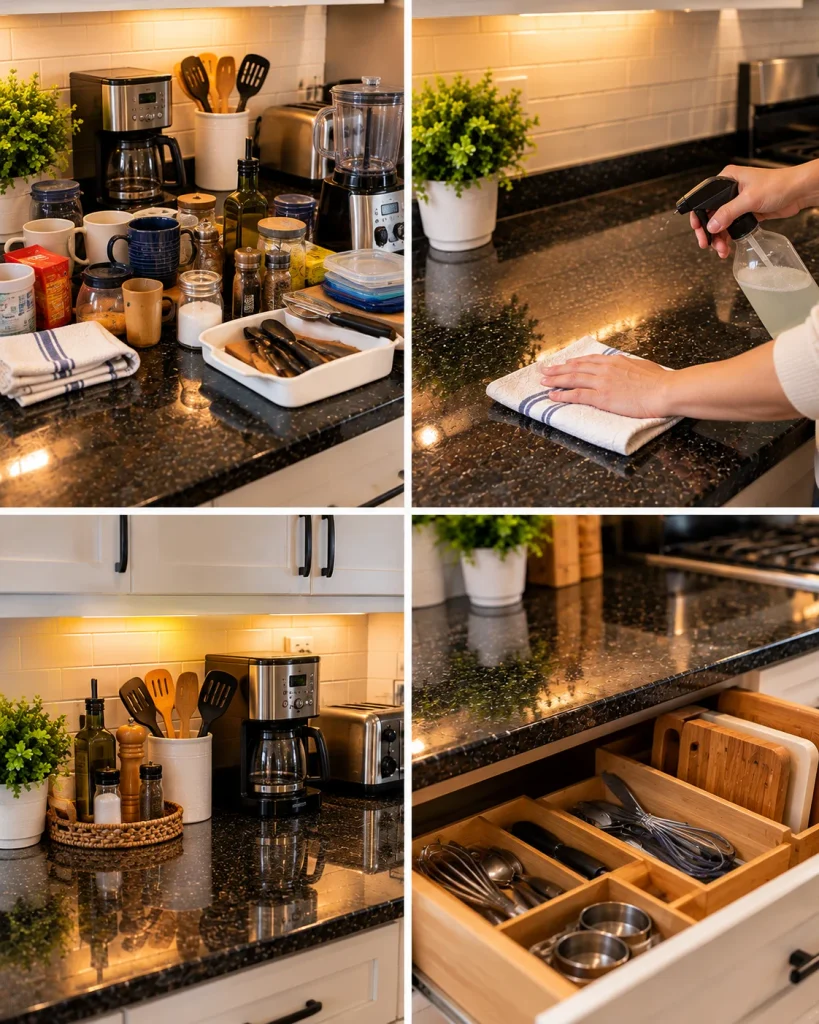
1. Start by Clearing the Counter
Remove everything from your kitchen counter before deciding what to keep. This helps you see how much space you have and identify items that don’t need to stay there.
Sort everything into three groups:
- Daily essentials: Coffee maker, cooking oil, salt, or a utensil holder.
- Occasional-use items: Blender, food processor, and specialty kitchen tools.
- Unnecessary clutter: Mail, empty packaging, unused gadgets, and items that belong elsewhere.
Wipe the counter clean before putting anything back. Start with only the items you genuinely use regularly.
2. Keep Everyday Essentials Within Reach
Your kitchen counter should make your daily routine easier. Place frequently used items near the areas where you need them.
For example, keep your coffee maker near your mugs, cooking utensils close to the stove, and food preparation tools near your main workspace.
Try to leave one section of the counter open for chopping vegetables, preparing ingredients, and setting down cookware. Clear workspace is often more useful than extra storage on the countertop.
3. Create Zones for Different Kitchen Tasks
Dividing your counter into small functional zones helps keep related items together and reduces unnecessary movement.
Coffee and breakfast zone
Keep your coffee maker, frequently used mugs, and coffee supplies together. Store extra mugs and less-used breakfast items in a cabinet.
Cooking zone
Place everyday cooking utensils, salt, pepper, and frequently used cooking oil near the stove. Keep the surrounding surface clear enough for safe cooking and easy cleaning.
Food preparation zone
Keep this area as open as possible. Store cutting boards, knives, and mixing bowls in nearby drawers or cabinets so they’re easy to grab when needed.
Even a small kitchen can benefit from these zones. The key is to give each area a clear purpose.
4. Use Trays to Group Small Items
Loose bottles, jars, and containers can make a counter look cluttered, even when you use them regularly.
A small, washable tray can hold cooking oils, salt, and pepper in one place. Another tray can keep coffee supplies or breakfast essentials together.
Trays also make cleaning easier because you can move several items at once. Choose a size that fits your counter without taking up too much workspace.
Avoid adding too many organizers. The goal is to reduce clutter, not create more of it.
5. Make Use of Vertical Space
When counter space is limited, look beyond the countertop itself.
Consider these practical storage options:
- Wall shelves for lightweight, frequently used items.
- Hooks or rails for suitable kitchen utensils.
- Cabinet organizers for mugs, lids, and small tools.
- Drawer dividers to keep utensils organized.
Keep wall-mounted items away from areas exposed to excessive grease and splashes whenever possible. Make sure shelves and rails are securely installed, especially when storing heavier items.
6. Store Bulky Appliances Elsewhere
Small appliances can quickly take over a kitchen counter. Keep appliances you use daily accessible, but move occasional-use equipment into cabinets, pantry shelves, or other suitable storage areas.
For example, a blender used every morning may deserve a permanent spot. A food processor used only occasionally can usually be stored away.
Before putting appliances away, make sure their storage location is dry and appropriate. Follow the manufacturer’s instructions for cleaning and storage.
7. Keep the Counter Organized Every Day
Even a well-organized kitchen counter can become crowded during a busy week. A short daily reset helps prevent clutter from building up.
At the end of the day:
- Return utensils and supplies to their designated places.
- Put away dishes and small appliances that aren’t needed.
- Remove packaging, receipts, and other miscellaneous items.
- Wipe the counter clean.
These small habits make it easier to maintain an organized kitchen without repeatedly starting from scratch.
Common Kitchen Counter Organization Mistakes
Avoid these common problems when arranging your space:
- Keeping everything within reach: Too many items reduce your available workspace.
- Buying organizers before decluttering: You may end up organizing things you rarely use.
- Blocking the main preparation area: Always leave enough room to work comfortably.
- Ignoring cabinets and drawers: These spaces can hold many items that don’t need to sit on the counter.
- Forgetting regular maintenance: A quick daily reset prevents clutter from returning.
Frequently Asked Questions
What should you keep on a kitchen counter?
Keep items you use daily, such as a coffee maker, utensil holder, or a small selection of cooking essentials. Choose items based on your routine and available space.
How do you organize a small kitchen counter?
Remove rarely used items, group everyday essentials into zones, and use cabinets or drawers for extra storage. Wall shelves and rails can also help when installed safely.
How do you keep a kitchen counter clutter-free?
Give frequently used items a designated place and return them after use. A short daily reset helps prevent dishes, packaging, mail, and miscellaneous objects from taking over.
Final Thoughts
The best way to organize a busy kitchen counter is to make it practical first and attractive second. Keep everyday essentials close, group related items together, use vertical storage where appropriate, and leave enough open space for food preparation.
You don’t need expensive organizers or a completely redesigned kitchen. A few thoughtful changes and a consistent daily routine can make your counter easier to use and maintain.