
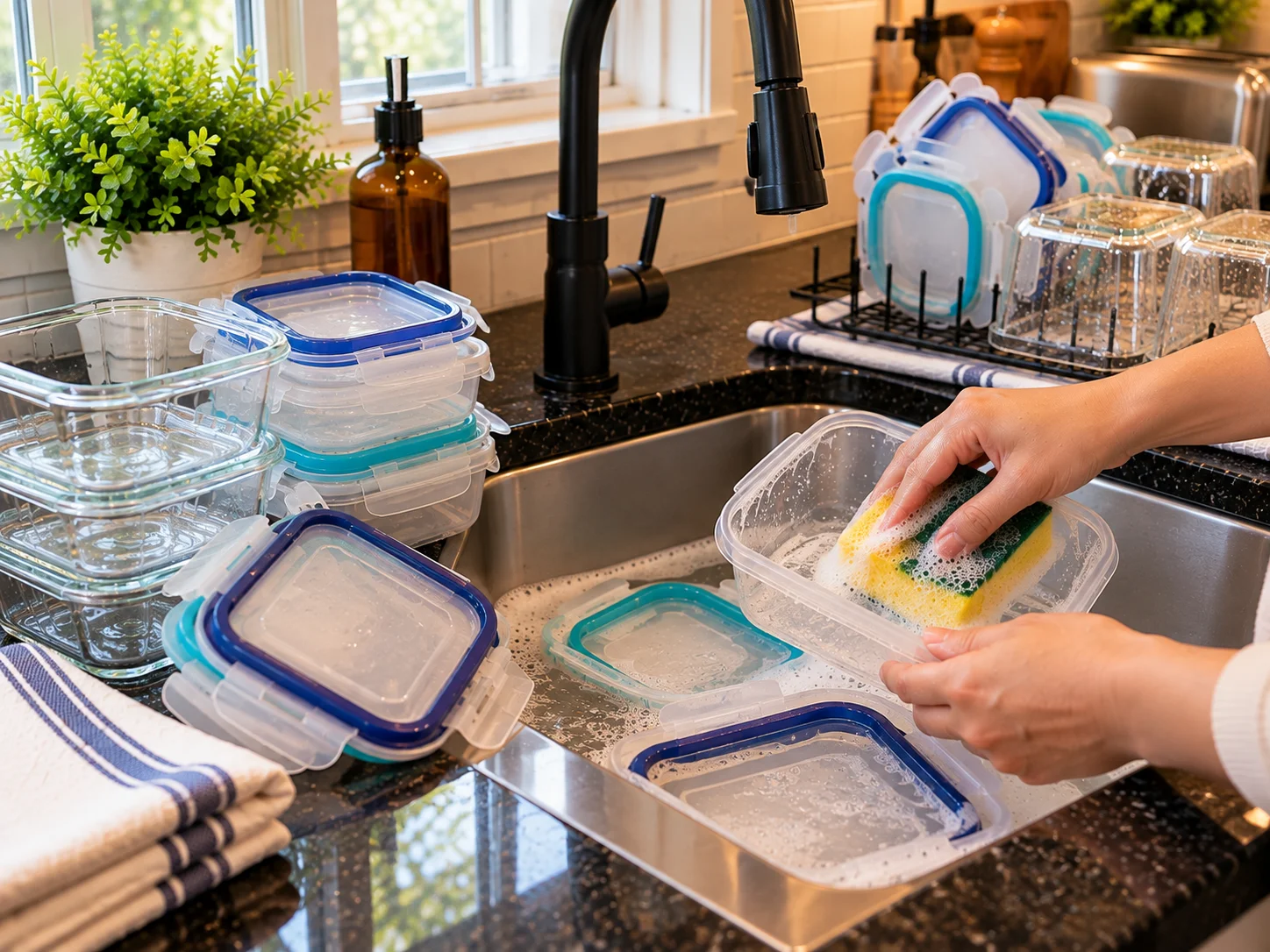

Reusable food containers are great for storing leftovers, packing lunches, and keeping ingredients fresh, but they can quickly develop greasy residue, stubborn stains, and lingering food odors. The best way to clean reusable food containers is to wash them with warm water and dish soap, paying special attention to corners, lids, and rubber seals.
With a few simple steps, you can keep your containers clean, fresh, and ready for everyday use.
What You’ll Need
- Warm water
- Dish soap
- Soft sponge or dishcloth
- Small cleaning brush for corners and seals
- Clean dish towel or drying rack
How to Clean Reusable Food Containers

1. Remove Leftover Food
Scrape leftover food into the trash or compost bin before washing. If food has dried onto the container, soak it in warm, soapy water for a few minutes to loosen the residue.
Avoid scraping plastic containers with sharp utensils, which can leave scratches where food residue may collect.
2. Wash With Warm, Soapy Water
Fill the container with warm water and a small amount of dish soap. Use a soft sponge to clean the bottom, sides, and corners.
For greasy containers, spend extra time wiping away the oily film. Rinse the sponge frequently so you don’t spread grease around the surface.
Check the manufacturer’s instructions before using very hot water, especially with plastic containers.
3. Clean the Lid Separately
Lids often trap food particles and grease around their edges. Wash both sides thoroughly, including grooves, locking tabs, and any small openings.
If the container has a removable silicone gasket or rubber seal, take it out if the manufacturer allows it. Wash the seal and the channel underneath with a small brush, then rinse well.
These hidden areas can hold moisture and food residue even when the container looks clean.
4. Rinse Thoroughly
Rinse the container, lid, and any removable seals under clean running water. Make sure no soap remains in corners or around the edges.
Leftover detergent can affect the taste or smell of food stored in the container later.
5. Let Everything Dry Completely
Place the container and lid on a clean drying rack, preferably with the openings facing down or at an angle that allows water to drain.
Keep the lid separate until all parts are completely dry. Trapped moisture can contribute to musty odors and mold growth during storage.
Once dry, reassemble the container if needed and store it in a clean, dry place.
How to Remove Stubborn Stains and Odors
Some foods leave behind discoloration or smells even after normal washing. Tomato sauce, curry, garlic, onions, and oily dressings are common causes.
For Food Stains
Make a paste with baking soda and a little water. Gently rub it over the stained area with a soft sponge, then rinse thoroughly and wash with dish soap.
This can help reduce surface stains, although some discoloration may remain in plastic.
For Lingering Odors
Wash the container again with warm, soapy water and let it dry completely. If the smell persists, sprinkle baking soda inside, add enough water to form a thin paste, and let it sit for a short time before rinsing and washing again.
Avoid using abrasive scrubbers that can scratch plastic surfaces.
For Greasy Residue
Use fresh warm, soapy water and a clean sponge. If the container still feels slippery, repeat the wash rather than putting it away with a greasy film.
Common Mistakes to Avoid
- Washing only the container: Lids, seals, and grooves need cleaning too.
- Stacking containers while damp: Trapped moisture can lead to unpleasant smells and mold.
- Using abrasive scrubbers on plastic: Scratches can make containers harder to clean.
- Ignoring manufacturer instructions: Not every container or lid is dishwasher-safe or suitable for high temperatures.
- Using bleach or other harsh cleaners unnecessarily: Follow the manufacturer’s cleaning guidance, and never mix cleaning chemicals.
Can You Put Reusable Food Containers in the Dishwasher?
Many reusable containers are dishwasher-safe, but it depends on the material and the manufacturer’s instructions.
Glass containers are often dishwasher-safe, while plastic containers may need to go on the top rack or be hand-washed. Some lids and silicone seals have different cleaning requirements from the containers themselves.
Check the product label or care instructions before using the dishwasher. If a container has become cracked, deeply scratched, warped, or difficult to clean, consider replacing it.
How Often Should You Clean Reusable Food Containers?
Wash reusable food containers after every use, even if they held food that appeared clean or dry. Containers used for meat, dairy, cooked leftovers, sauces, or other perishable foods should be washed promptly after the food is removed.
Don’t leave perishable food sitting at room temperature for extended periods. Cleaning the container afterward does not make food safe if it has already been stored improperly.
Frequently Asked Questions
Why do plastic food containers still smell after washing?
Plastic can retain odors from strongly flavored or oily foods. Wash the container thoroughly, try a baking soda treatment, and let it dry completely. If the odor persists despite cleaning, check for scratches or damage.
Is vinegar good for cleaning reusable food containers?
Vinegar can help with some lingering odors, but ordinary dish soap and water are usually enough for routine cleaning. Check the manufacturer’s instructions before using vinegar, especially on containers with special coatings or seals.
Should I store food containers with the lids on or off?
Store containers and lids completely dry. Keeping lids separate or loosely placed can allow airflow and help prevent trapped moisture and musty smells.
Final Thoughts
The best way to clean reusable food containers is to wash them thoroughly with warm, soapy water, clean the lids and seals separately, rinse well, and let every part dry completely. For stubborn stains or odors, a gentle baking soda treatment may help.
A little extra attention to lids, corners, and drying makes reusable containers easier to maintain and ready for your next meal.