
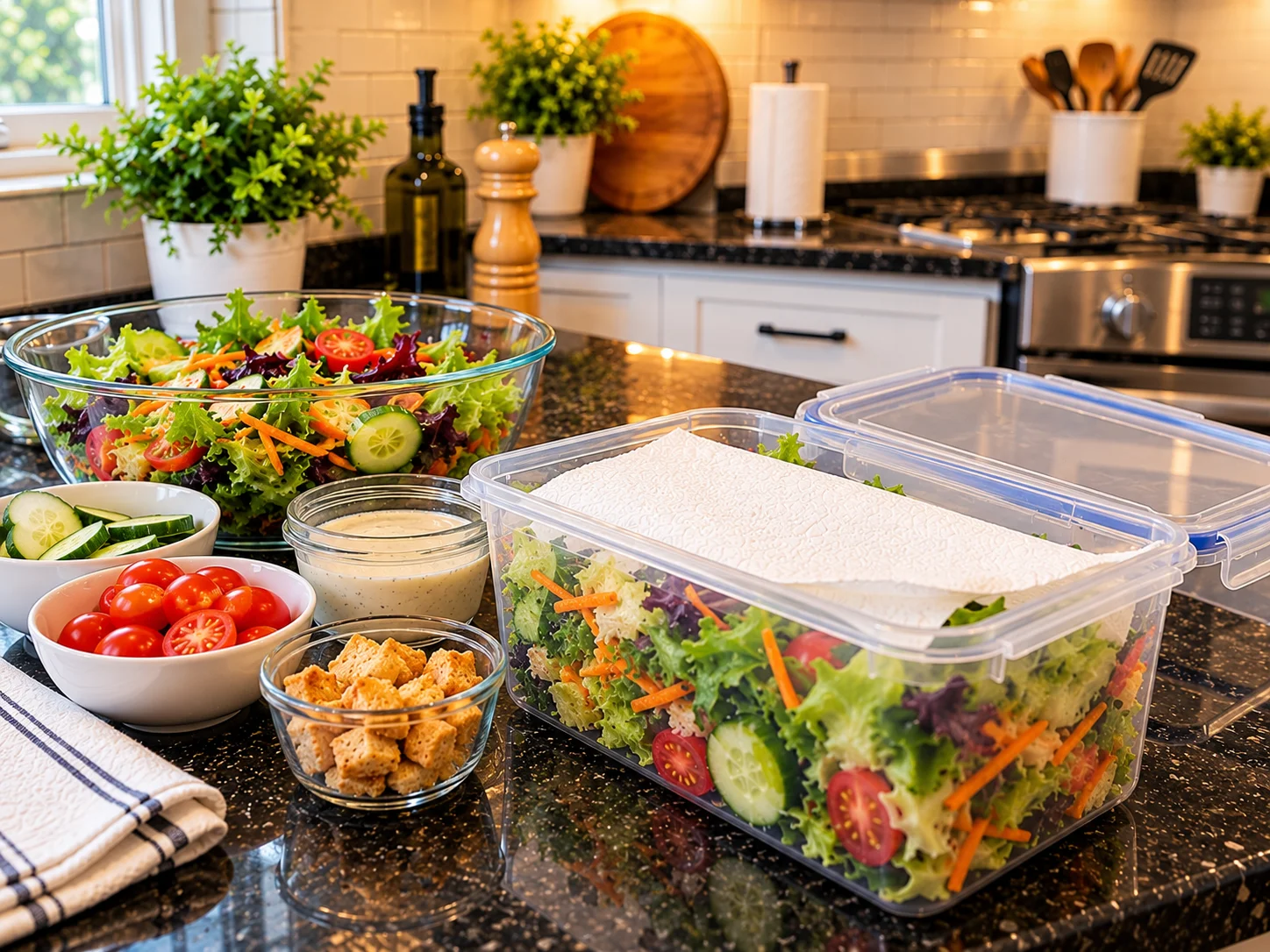

The best way to store leftover salad without it going soggy is to keep excess moisture under control, use an airtight container, and separate wet ingredients from delicate greens whenever possible. Salad dressing is often the biggest problem because it makes lettuce and other leafy vegetables wilt quickly.
With a few simple storage tricks, you can keep leftover salad fresher and more enjoyable for your next meal.
What You’ll Need
- An airtight food storage container
- Clean paper towels
- A spoon or salad tongs
- A separate small container for dressing, if needed
How to Store Leftover Salad
1. Separate the Dressing
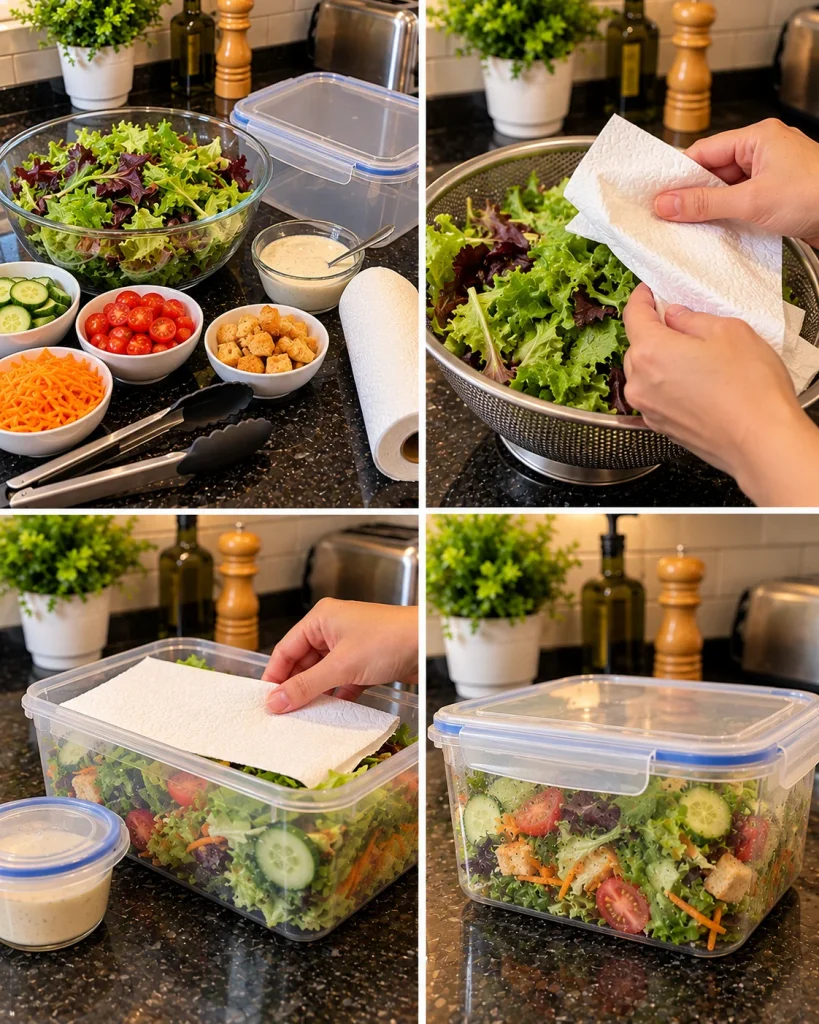
If your salad hasn’t been dressed yet, keep the dressing in a separate container until you’re ready to eat. This is one of the easiest ways to prevent soggy lettuce.
If the salad is already dressed, you can still store it, but the greens may soften as they sit. Remove any excess dressing if possible without crushing the leaves.
2. Remove Excess Moisture
Moisture left on lettuce, spinach, cucumbers, and other vegetables can collect at the bottom of the container and make the salad limp.
If the salad is undressed and the vegetables are wet, gently pat them dry with a clean paper towel before storing. Avoid squeezing or crushing delicate leaves.
For an already mixed salad, carefully drain any pooled liquid from the bottom of the bowl.
3. Use an Airtight Container
Transfer the salad to a clean, airtight container. Choose a size that holds the salad without tightly compressing the leaves.
If the salad contains delicate greens, avoid packing them down. Crushed leaves tend to lose their texture faster.
For a large amount of leftover salad, dividing it into smaller containers can make it easier to store and serve without repeatedly opening the entire batch.
4. Add a Dry Paper Towel
For an undressed leafy salad, place a clean, dry paper towel on top of the greens before closing the container. It can absorb some excess moisture that collects inside.
If your container tends to collect condensation, check the towel when you open the salad and replace it if it becomes damp.
A paper towel won’t reverse wilting caused by dressing, but it can help manage excess moisture during storage.
5. Refrigerate Promptly
Place the salad in the refrigerator as soon as possible. Keep it covered and cold rather than leaving it on the counter.
Perishable salad ingredients should not sit at room temperature for more than two hours, or more than one hour when temperatures are above 90°F. If the salad contains cooked chicken, eggs, cheese, or other perishable ingredients, proper refrigeration is especially important.
Which Salad Ingredients Should You Store Separately?
Some ingredients release water or soften more quickly than others. Separating them can help preserve the texture of leftover salad.
| Ingredient | Best storage approach |
|---|---|
| Lettuce and leafy greens | Keep dry and lightly packed |
| Tomatoes | Store separately when possible, especially if chopped |
| Cucumbers | Keep separate if they release a lot of liquid |
| Croutons and nuts | Store separately to preserve crunch |
| Salad dressing | Refrigerate separately when appropriate |
| Cooked chicken or eggs | Keep refrigerated in a covered container |
You don’t need to separate every ingredient. Focus on the items most likely to make the salad watery or lose their crunch.
How Long Does Leftover Salad Last in the Fridge?
The answer depends on the ingredients and whether the salad has already been dressed.
- Undressed green salad: Usually keeps its texture longer when the leaves are dry and stored properly.
- Dressed green salad: Often becomes limp within a few hours, depending on the dressing and ingredients.
- Salad with cooked chicken or eggs: Use within 3–4 days when refrigerated at 40°F or below, provided it was handled and stored safely.
These are general guidelines, not guarantees of freshness. Follow any shorter storage instructions for packaged ingredients, and discard salad that shows signs of spoilage. Don’t taste food to determine whether it is safe.
Common Mistakes That Make Salad Soggy
Leaving the dressing mixed in: Acidic dressings and salt can draw moisture from vegetables and cause leafy greens to wilt.
Storing wet greens: Water trapped between leaves can collect in the container and soften the salad.
Using an oversized container: Too much empty space isn’t always a problem, but a poorly sealed container can allow the salad to dry out while moisture collects inside.
Adding croutons too early: Croutons absorb moisture from vegetables and dressing, so they are best added just before serving.
Leaving salad out too long: Salad can become unsafe even if it still looks fresh, so refrigerate leftovers promptly.
Frequently Asked Questions
Can you store salad that already has dressing on it?
Yes. Transfer it to an airtight container and refrigerate it promptly. Drain excess liquid if needed, and expect the greens to soften more quickly than an undressed salad.
Should you wash leftover salad before storing it?
No. If the salad is already prepared, washing it again can introduce more moisture and make it soggier. Remove excess liquid and store it in a clean container instead.
Can you make soggy salad crisp again?
Sometimes. If the greens are only slightly wilted and haven’t been dressed, separating them and briefly chilling them in ice water may help restore some crispness. Dry them thoroughly before storing or serving. This works less well once dressing has softened the leaves.
Is it better to store salad in glass or plastic containers?
Either can work well if the container is clean and has a tight-fitting lid. The most important factors are controlling moisture, avoiding crushed greens, and keeping the salad refrigerated.
The easiest rule to remember: Keep the greens dry, store the dressing separately, and refrigerate leftovers promptly. These small changes can help leftover salad retain more of its original crunch.