
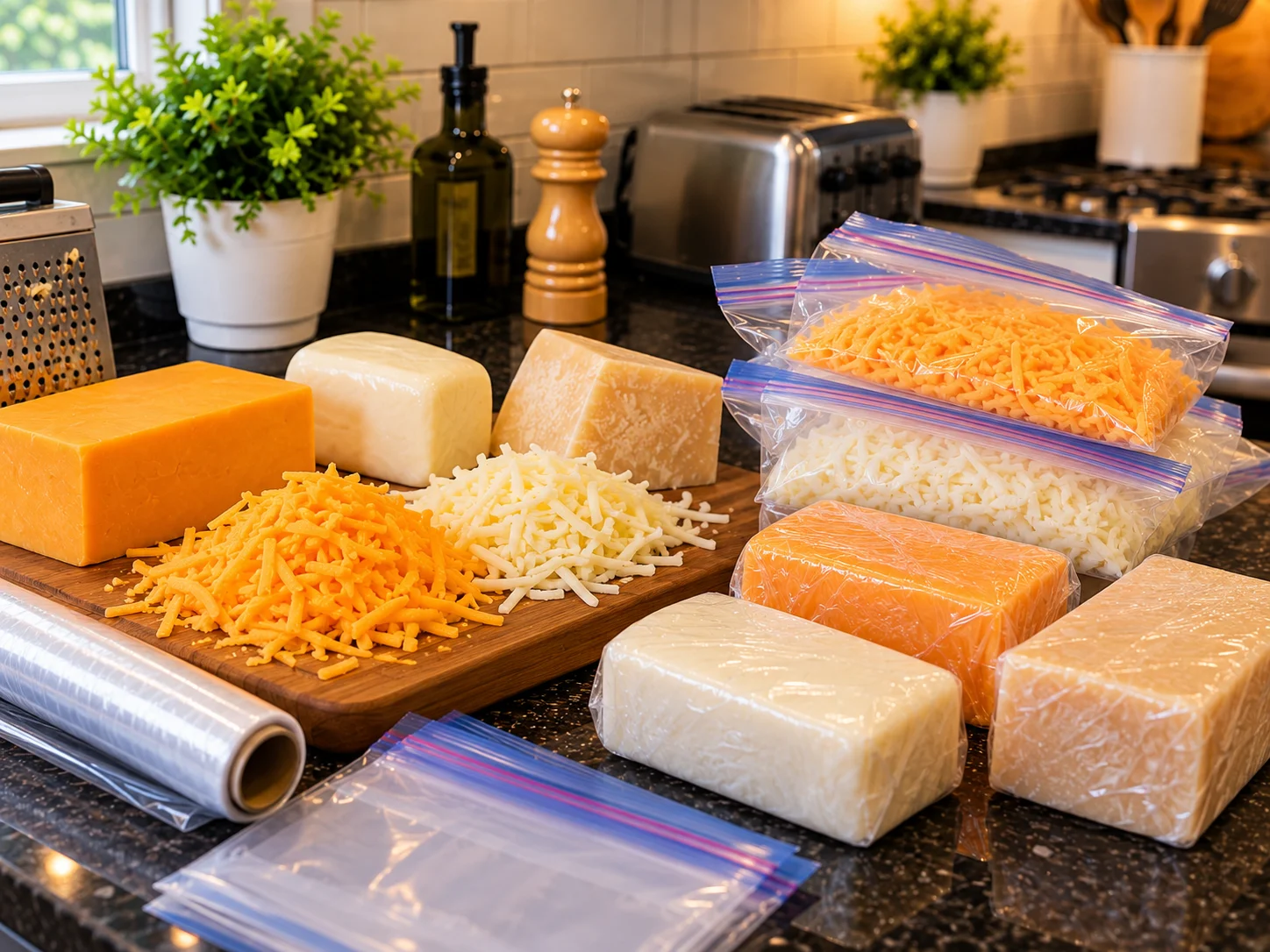

Freezing cheese is a simple way to save leftovers, extra blocks, and cheese that is close to its best-by date. The trick is choosing the right type, wrapping it well, and freezing it in portions you can use later.
Hard and semi-hard cheeses generally freeze better than soft cheeses. Some varieties may become crumbly or grainy after thawing, but they can still work well in cooked dishes such as casseroles, pasta, and soups.
Which Cheeses Freeze Best?
Not all cheeses respond to freezing in the same way. Use this guide to decide what to save.
| Cheese type | How well it freezes | Best use after thawing |
|---|---|---|
| Cheddar | Very well | Sandwiches, casseroles, sauces |
| Mozzarella | Well, especially shredded | Pizza, pasta, baked dishes |
| Monterey Jack | Well | Quesadillas, casseroles |
| Swiss | Generally well | Sandwiches, melted dishes |
| Parmesan | Well | Grating over pasta and soups |
| Cream cheese | Texture changes noticeably | Baking and cooked recipes |
| Brie and Camembert | Texture may deteriorate | Cooked dishes |
| Cottage cheese | Often becomes watery or grainy | Cooked recipes, if suitable |
For the best results, freeze cheese while it is still fresh and in good condition. Freezing does not improve cheese that has already spoiled.
What You’ll Need
- Cheese you want to freeze
- Plastic wrap, freezer paper, or another suitable food wrap
- Freezer bags or airtight freezer containers
- A knife or grater, if portioning is needed
- A marker for labeling
How to Freeze Cheese Step by Step

1. Divide the Cheese Into Useful Portions
Think about how you plan to use the cheese later. Cut a large block into smaller pieces for individual meals, or grate it if you usually add it to pizza, pasta, or casseroles.
Smaller portions are easier to thaw, and you won’t need to defrost the entire supply at once.
2. Wrap the Cheese Tightly
Wrap each portion securely to reduce exposure to air. Then place it in a freezer bag or airtight container.
For grated cheese, spread it in a freezer bag and press out as much excess air as possible before sealing.
Good packaging helps reduce freezer burn, which can dry out the surface and affect flavor and texture.
3. Label and Date the Packages
Write the type of cheese and the freezing date on each package. If you’ve grated the cheese or divided it into portions, label those packages too.
Clear labels make it easier to use older supplies first and prevent forgotten cheese from sitting in the freezer indefinitely.
4. Freeze the Cheese Flat When Possible
Arrange small packages so they freeze quickly and stack neatly. Keep the freezer at 0°F (-18°C) or below.
Once frozen, organize the packages together so you can find them easily when cooking.
How to Thaw Frozen Cheese
For the best quality, thaw cheese in the refrigerator rather than leaving it on the counter.
- Blocks: Place the wrapped cheese in the refrigerator until thawed.
- Shredded cheese: You can often use it directly from frozen in hot dishes, depending on the recipe.
- Soft cheeses: Expect possible changes in texture and moisture. They are usually better suited to cooked dishes after freezing.
Allow enough time for larger blocks to thaw. The exact time depends on the size and shape of the portion.
Once thawed, keep cheese refrigerated and use it according to its condition and storage history. Avoid repeatedly thawing and refreezing portions, as this can further reduce quality.
How Long Can You Keep Cheese in the Freezer?
For best quality, many cheeses are best used within about 2 to 6 months, although the ideal period varies by type, packaging, and how well the cheese is protected from air.
Cheese kept continuously at 0°F (-18°C) or below remains safe indefinitely from a temperature standpoint, but its flavor and texture can deteriorate over time.
Use the shorter end of the quality window for cheeses that are more sensitive to texture changes. Well-wrapped hard cheeses generally tolerate freezing better than soft, high-moisture varieties.
Common Mistakes to Avoid
Freezing cheese in its original packaging without checking it. Some packaging provides limited protection against freezer air once opened. Add a secure outer wrap or freezer bag when needed.
Freezing one large block when you only need small amounts. Divide cheese into practical portions before freezing to avoid unnecessary thawing.
Expecting thawed cheese to have exactly the same texture. Freezing can make cheese crumbly, grainy, or watery. Plan to use texture-sensitive varieties in cooked dishes.
Freezing cheese that is already spoiled. Freezing stops most microbial growth while the cheese remains frozen, but it does not reliably destroy harmful microorganisms or make spoiled food safe.
Leaving too much air in the package. Excess air increases the risk of freezer burn and quality loss.
Frequently Asked Questions
Can you freeze cheese in its original packaging?
Sometimes. If the package is unopened and designed to protect the cheese, it may be suitable for freezing. For opened cheese, add freezer-safe wrapping or an airtight outer bag to provide better protection.
Can you freeze shredded cheese?
Yes. Shredded cheddar, mozzarella, and similar cheeses are convenient to freeze in meal-sized portions. You can often add them straight to recipes without thawing first.
Does frozen cheese taste different?
It can. Freezing may change the texture, making some cheeses crumbly or grainy. Flavor can also decline during prolonged storage, especially if the packaging allows air exposure.
Is it better to freeze cheese as a block or shredded?
Choose the form that suits your cooking habits. Blocks are useful for slicing or grating later, while shredded cheese is convenient for quick meals, pizza, and casseroles.
The Best Way to Freeze Cheese Without Waste
Freeze cheese while it is fresh, divide it into portions you will actually use, and wrap each portion tightly before labeling it. Hard and semi-hard varieties are usually the easiest to freeze successfully, while softer cheeses are better saved for recipes where texture changes matter less.
With a little preparation, you can preserve extra cheese, simplify future meals, and avoid throwing away perfectly usable food.