


Freezing raspberries is an easy way to preserve fresh berries for smoothies, sauces, baking, and desserts. For the best texture, freeze them in a single layer first, then transfer them to an airtight freezer bag or container.
What You’ll Need
- Fresh raspberries
- Baking sheet or tray
- Parchment paper
- Freezer-safe bag or airtight container
How to Freeze Raspberries
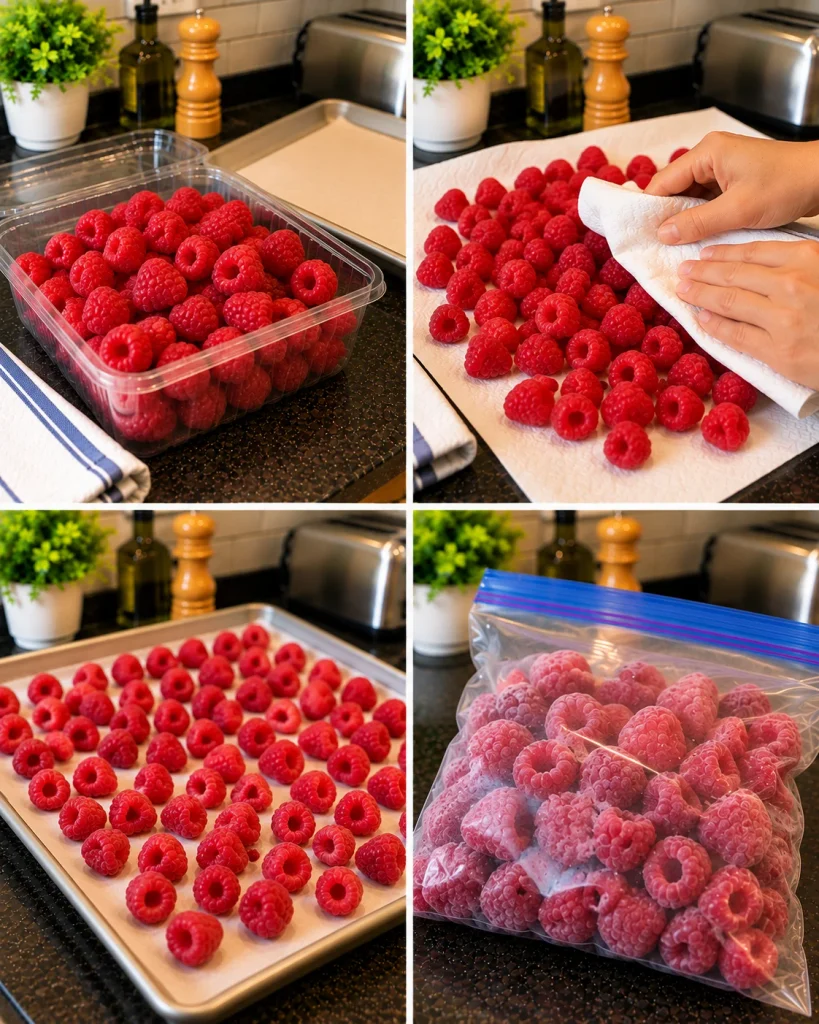
1. Sort the raspberries
Pick out any berries that are moldy, badly bruised, or spoiled. Freezing preserves the quality of raspberries you start with, so use berries that are fresh and in good condition.
2. Rinse gently
If the raspberries need washing, rinse them gently under cool water. Avoid soaking them, since raspberries are delicate and can absorb water easily.
3. Dry them thoroughly
Spread the berries on a clean towel or paper towels and let them dry completely. Excess moisture can form ice crystals and cause the berries to stick together.
4. Freeze in a single layer
Line a baking sheet with parchment paper and arrange the raspberries in one layer, leaving a little space between them.
Place the tray in the freezer until the berries are firm.
5. Transfer to a freezer container
Once frozen, move the raspberries to a freezer-safe bag or airtight container. Remove as much excess air as practical, seal tightly, and label the container with the date.
Freezing them individually first makes it easier to take out only the amount you need later.
How to Use Frozen Raspberries
Frozen raspberries work especially well in smoothies because you can add them straight from the freezer. They can also be used in baked desserts, sauces, compotes, and other cooked preparations.
For desserts where you want the berries to retain their shape, thaw them gently in the refrigerator and drain any excess liquid before using.
Keep in mind that frozen raspberries usually become softer after thawing. They may not have the same firm texture as fresh berries, but they can still be excellent for smoothies and cooked or baked dishes.
Common Mistakes to Avoid
Freezing wet berries: Excess water can create large ice crystals and encourage the berries to freeze together.
Skipping the single-layer freeze: Putting fresh raspberries directly into a bag can leave you with one solid frozen clump.
Overfilling the container: Too much air exposure can contribute to freezer burn and quality loss.
Freezing spoiled berries: Freezing does not restore the quality of damaged or spoiled fruit.
Frequently Asked Questions
Can you freeze raspberries without washing them?
Yes, but if you plan to wash them before freezing, make sure they are completely dry first. You can also freeze clean, dry berries and wash them when you’re ready to use them.
Do frozen raspberries work well in smoothies?
Yes. Frozen raspberries are convenient for smoothies and can add both fruit flavor and a cold, thick texture without needing to thaw them first.
Should you thaw raspberries before baking?
Usually, you can use frozen raspberries directly in many baked recipes. Follow the recipe’s instructions, since thawing can release extra moisture and affect the finished texture.
How should frozen raspberries be stored?
Keep them in a well-sealed freezer bag or airtight freezer container to reduce air exposure and protect their quality.