


Yes, you can freeze blueberries without ruining them. In fact, blueberries are one of the easier fruits to freeze. The key is to freeze them while they are fresh, keep excess moisture off the berries, and package them well to limit air exposure.
Frozen blueberries may be a little softer after thawing, but they work especially well in smoothies, oatmeal, muffins, pancakes, and baked goods.
How to Freeze Blueberries
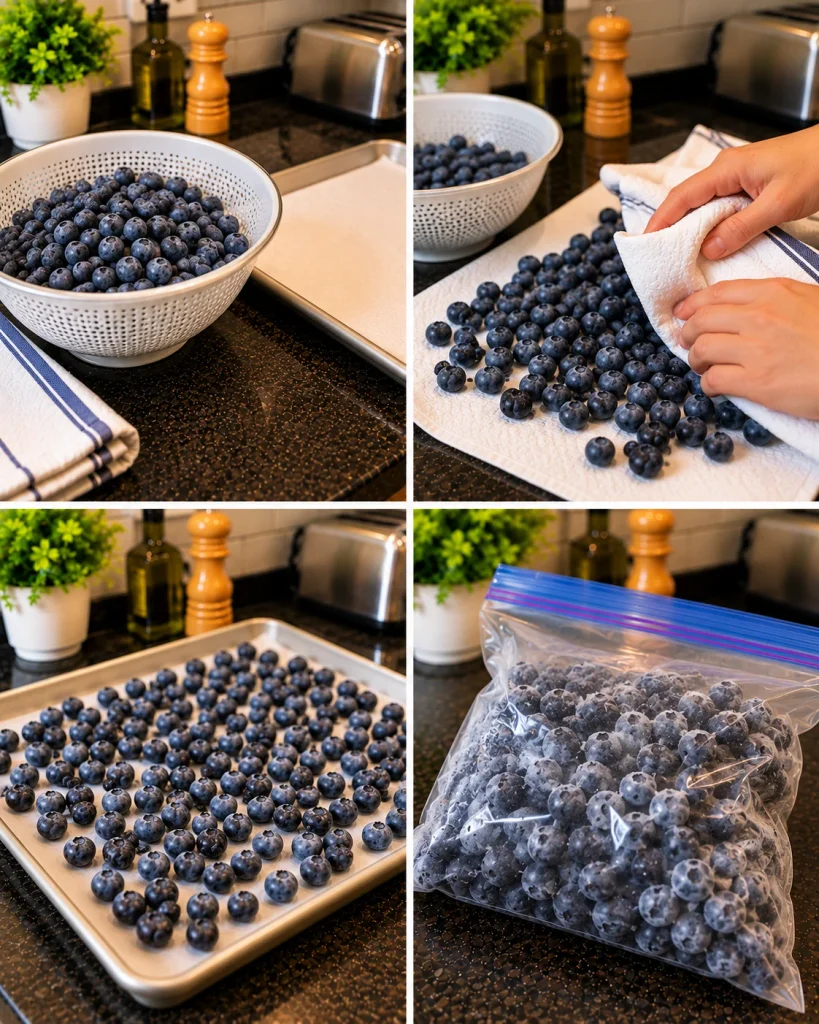
1. Sort the blueberries
Remove any berries that are moldy, damaged, or overly soft. Freeze the blueberries while they are still in good condition.
2. Wash and dry them
Rinse the blueberries under cool running water, then dry them thoroughly with a clean towel. Excess water can freeze around the berries and make them stick together.
3. Freeze them in a single layer
Spread the dry blueberries on a baking sheet in a single layer. Keep the berries from touching as much as possible.
Place the baking sheet in the freezer until the blueberries are firm.
4. Transfer to a freezer bag or container
Once frozen, move the blueberries to an airtight freezer bag or freezer-safe container. Remove as much excess air as practical before sealing.
Label the container with the date and return it to the freezer.
Can You Freeze Blueberries Without Washing Them?
Yes. Some people prefer to freeze blueberries unwashed and rinse them just before using them. This can help avoid storing berries with surface moisture, but either approach can work as long as washed blueberries are dried thoroughly before freezing.
If you are freezing them unwashed, make sure they are clean and free from damaged or moldy berries first.
Will Frozen Blueberries Get Mushy?
They can become softer after thawing. Freezing forms ice crystals that affect the fruit’s structure, so thawed blueberries generally won’t have exactly the same firm texture as fresh ones.
For this reason, frozen blueberries are often better for cooked or blended foods than for eating plain after thawing.
You can use them straight from the freezer in smoothies, oatmeal, pancakes, muffins, and other recipes.
How to Prevent Freezer Burn
Freezer burn is mainly a quality problem, not an indication that the food has become unsafe. To reduce it:
- Use an airtight freezer bag or container.
- Remove as much air as possible before sealing.
- Keep the freezer at a consistently cold temperature.
- Avoid repeatedly opening and closing the package.
- Use older frozen blueberries before newer batches.
How Long Do Frozen Blueberries Last?
Frozen blueberries can maintain good quality for several months when properly packaged and kept continuously frozen. Over time, they may develop more noticeable changes in texture, flavor, or color.
Freezing preserves the blueberries; it does not improve berries that were already spoiled or poor quality before freezing.
The Best Way to Use Thawed Blueberries
If texture matters, you may prefer to use blueberries directly from the freezer rather than thawing them first. For baking, frozen blueberries can often be added straight to the batter.
If you do thaw them, expect some liquid to be released. Drain excess liquid when the recipe calls for a firmer mixture.
Frequently Asked Questions
Can you freeze fresh blueberries?
Yes. Fresh blueberries freeze well when sorted, dried, frozen in a single layer, and then transferred to airtight freezer packaging.
Should blueberries be washed before freezing?
They can be washed and thoroughly dried before freezing, or frozen unwashed and rinsed before use. The important thing is to avoid excess moisture during freezing.
Do frozen blueberries need to be thawed before baking?
Usually not. Many baked recipes can use blueberries directly from the freezer. Follow the recipe’s instructions if it specifically calls for thawed berries.
Are frozen blueberries safe to eat?
Properly frozen blueberries remain preserved while frozen, but freezing does not make spoiled or moldy fruit safe. Always discard berries that were already spoiled before freezing.