

A simple kitchen cleaning routine helps keep your kitchen tidy, hygienic, and easier to manage without spending hours cleaning every day. The easiest approach is to handle small messes as they happen, spend a few minutes cleaning each evening, and set aside time once a week for deeper cleaning.
You don’t need a complicated schedule or a long list of cleaning products. A few consistent habits can make a noticeable difference.
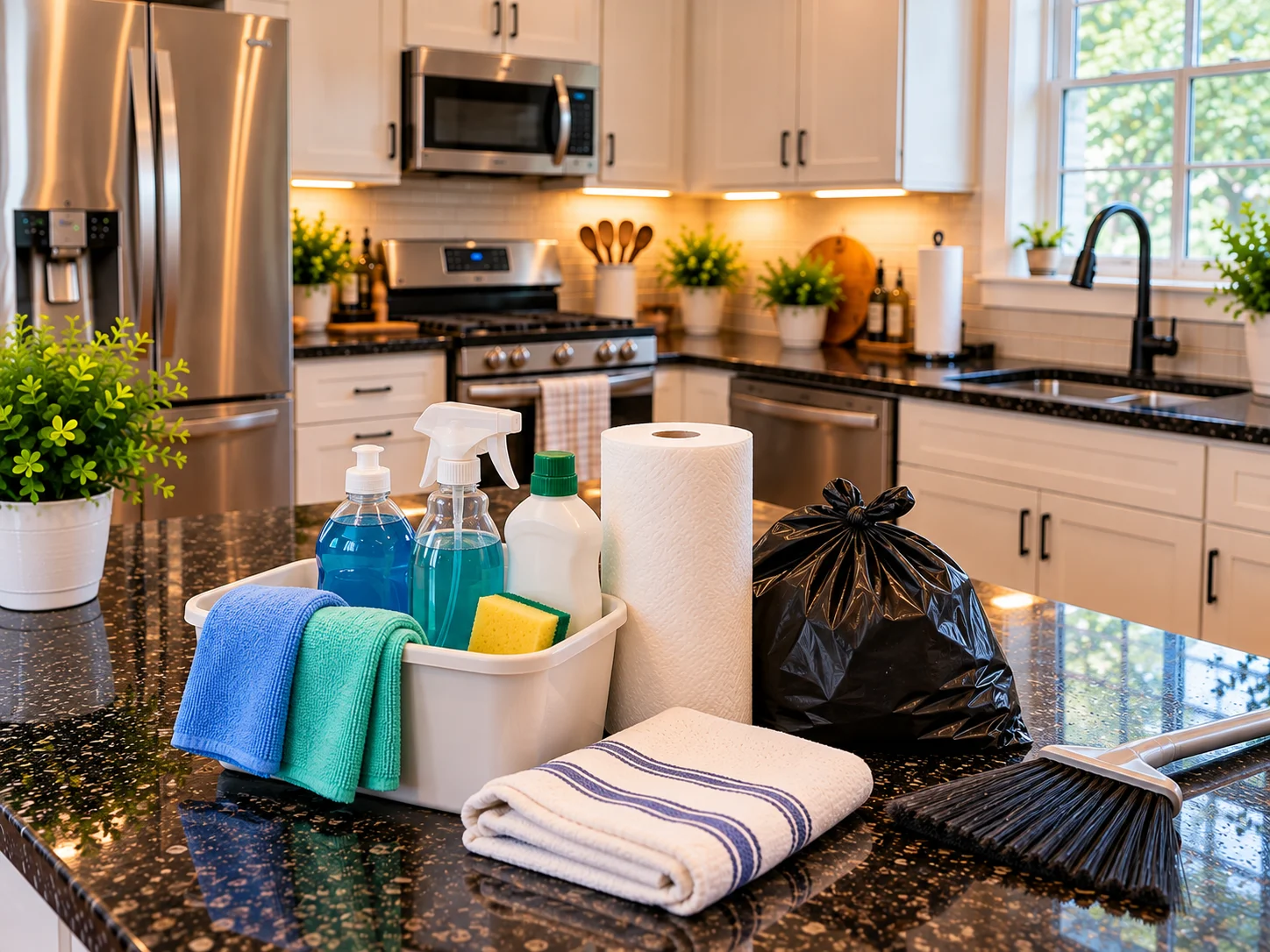
What You’ll Need
- Dish soap
- A clean microfiber cloth or sponge
- All-purpose kitchen cleaner suitable for your surfaces
- A dish towel
- A broom or vacuum
- A mop, if needed
- A trash bag
Always follow product labels, and never mix cleaning products.
How to Create a Daily Kitchen Cleaning Routine
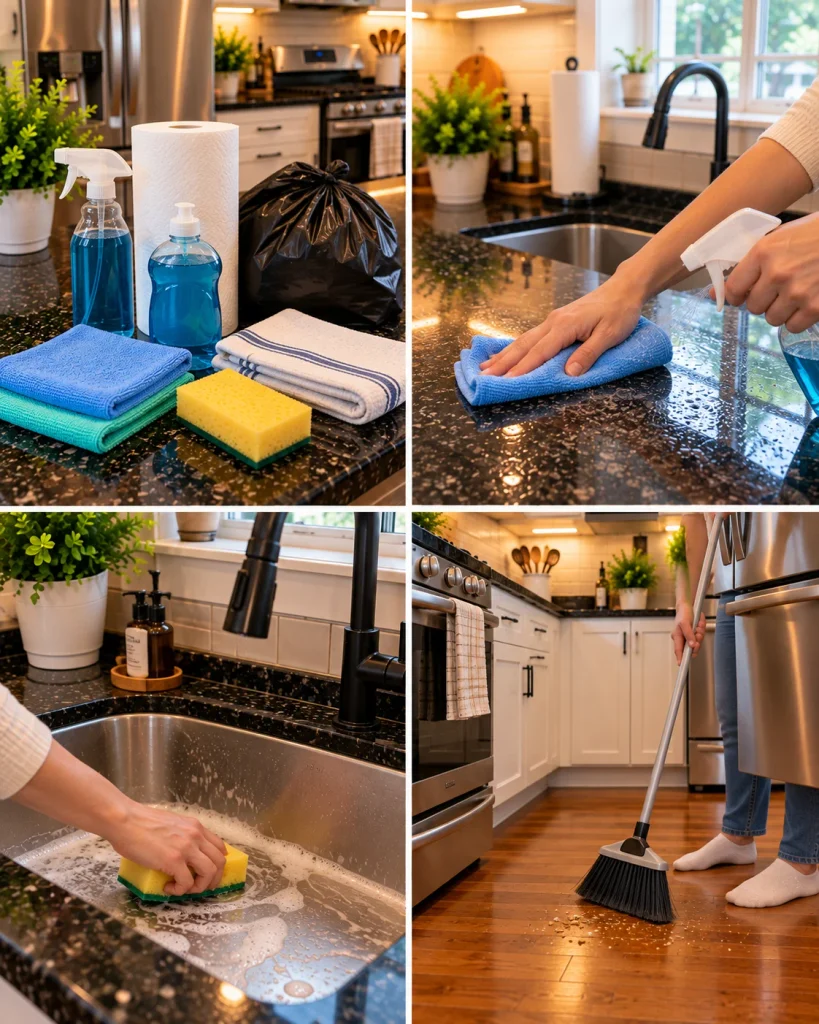
The goal is to prevent messes from building up. These simple tasks can fit into your normal cooking and mealtime habits.
1. Clean as You Cook
Wash utensils, cutting boards, and other items as you finish using them, or place dishwasher-safe items directly in the dishwasher.
Wipe up spills before they dry, and return ingredients to their proper storage places. Cleaning as you go reduces the amount of work waiting for you after a meal.
2. Wash the Dishes
After meals, wash dishes by hand or load them into the dishwasher. Avoid leaving dirty dishes in the sink overnight whenever possible.
Emptying the sink also gives you more space for food preparation the next day.
3. Wipe Down Countertops
Clear the counters and remove crumbs, food residue, and spills. Use a cleaner that’s suitable for the countertop material, following the manufacturer’s instructions.
Pay attention to areas around the stove, sink, and food preparation spaces, where grease and moisture often collect.
4. Clean the Sink
Remove food scraps, wash away residue, and clean the sink with an appropriate product. Rinse it thoroughly and wipe the surrounding area dry.
A quick sink cleaning helps prevent lingering food odors and keeps the area ready for the next meal.
5. Sweep the Floor
Sweep or vacuum crumbs and other debris from the kitchen floor, especially beneath the table and around the stove.
You don’t necessarily need to mop every day. Save mopping for visible spills, sticky areas, or your regular weekly cleaning session.
Follow a Simple Weekly Kitchen Cleaning Schedule
Daily cleaning keeps the kitchen under control, while weekly tasks address areas that need more attention.
| Day | Cleaning task |
|---|---|
| Monday | Wipe cabinet fronts and handles |
| Tuesday | Clean the microwave inside and out |
| Wednesday | Wipe the stovetop and backsplash |
| Thursday | Check the refrigerator for old leftovers and spills |
| Friday | Clean small appliances and frequently touched surfaces |
| Saturday | Mop the floor and clean the trash can if needed |
| Sunday | Reset the kitchen and prepare for the week |
Adjust this schedule to fit your household. If a task needs attention sooner, clean it rather than waiting for its assigned day.
Monthly Kitchen Cleaning Tasks
Some areas don’t need attention every day or even every week. Add these jobs to your routine once a month, or as needed:
- Clean refrigerator shelves and drawers.
- Wipe cabinet interiors where crumbs or spills collect.
- Clean range hood filters according to the manufacturer’s instructions.
- Remove grease and buildup from less frequently cleaned surfaces.
- Check pantry shelves for spills, crumbs, and expired food.
- Clean behind or beneath movable appliances when it is safe to do so.
You can spread these tasks across several days instead of trying to finish them all at once.
How to Make Your Kitchen Cleaning Routine Easier
A routine works best when it’s realistic enough to follow consistently.
Keep cleaning supplies accessible. Store your everyday supplies in a convenient, secure location away from children and pets.
Use a short evening reset. Spend 10–15 minutes washing dishes, wiping counters, clearing the sink, and picking up anything left out. You may need less time once the routine becomes a habit.
Clean high-use areas first. If you’re short on time, prioritize food-contact surfaces, dirty dishes, spills, and visible crumbs.
Return items to their proper places. Putting away ingredients, utensils, and small appliances helps prevent clutter from accumulating.
Don’t wait for the kitchen to look dirty. Small, regular cleaning sessions are usually easier than tackling several days of grease, crumbs, and dishes at once.
Common Kitchen Cleaning Mistakes to Avoid
- Using the same dirty cloth everywhere: Change or wash cloths regularly, especially after cleaning food spills or raw-food preparation areas.
- Ignoring spills on the stove: Grease and food residue can become harder to remove when left to accumulate.
- Cleaning around clutter: Clear the counter first so you can clean the entire surface.
- Using the wrong cleaner: Check that a product is suitable for your countertops, appliances, and other surfaces.
- Mixing cleaning products: Never mix bleach with vinegar, ammonia, or other cleaners. Use products according to their labels.
- Trying to do everything in one session: Divide tasks into daily, weekly, and monthly jobs to make the workload manageable.
Frequently Asked Questions
How often should you clean your kitchen?
Wipe food preparation surfaces and clean up spills after use. Wash dishes regularly, clean the sink and countertops daily, and sweep as needed. Plan weekly and monthly tasks for areas that need less frequent attention.
How long should a daily kitchen cleaning routine take?
A basic routine may take around 10–15 minutes when you clean regularly. The time depends on how often you cook, how many people use the kitchen, and how much cleanup is needed.
What should you clean first in the kitchen?
Start by putting away food and clearing clutter. Wash the dishes, clean food preparation surfaces, wipe the stovetop and sink, and finish by sweeping the floor. This order helps you avoid cleaning the same area twice.
Is it better to clean the kitchen in the morning or at night?
Either works, but an evening reset helps you start the next day with a clean sink and clear countertops. If mornings are more convenient, use that time to finish any remaining dishes and tidy the kitchen before cooking.
Final Thoughts
The best kitchen cleaning routine is one you can maintain without feeling overwhelmed. Clean as you cook, spend a few minutes resetting the kitchen each day, and divide deeper cleaning tasks across the week and month.
Start with the daily basics and add more tasks only when you need them. Consistency matters more than having a perfect cleaning schedule.