
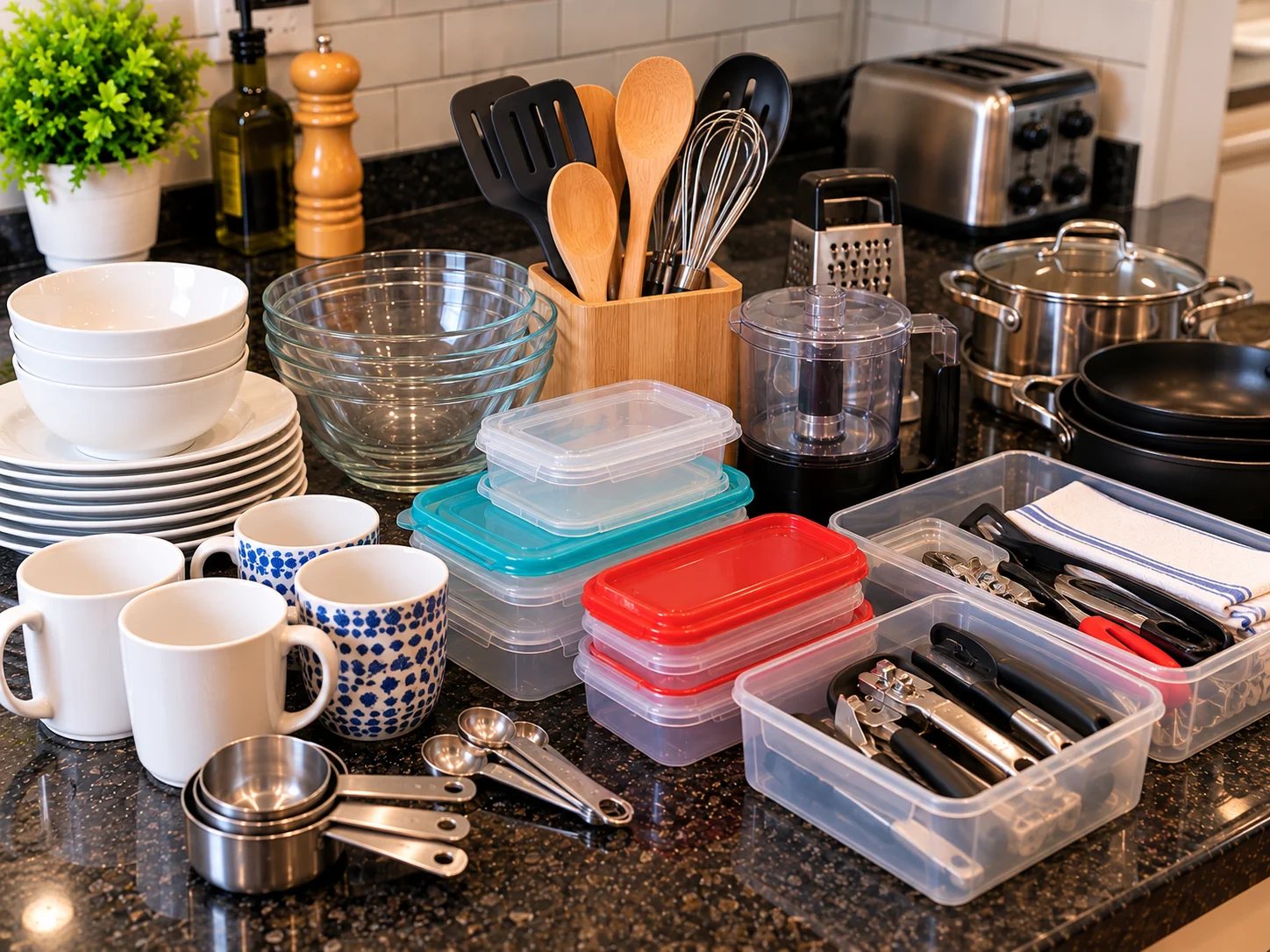

Kitchen clutter usually grows because too many things are competing for the same space. Before buying another organizer, rack, or container, start by reducing what you need to store.
The easiest approach is to remove duplicates, clear unused items, and give the things you actually use a simple, consistent home.
Start With the Most Crowded Area

Don’t try to declutter the entire kitchen at once. Choose one problem area, such as:
- A crowded countertop
- The utensil drawer
- A packed cabinet
- The pantry
- The refrigerator door
Empty that area completely so you can see what is taking up space.
Get Rid of Duplicates
Duplicates are often the easiest source of extra clutter.
Look for things like:
- Multiple can openers
- More spatulas than you regularly use
- Extra measuring cups
- Duplicate serving utensils
- Several nearly identical food containers
- Small appliances that perform the same job
Keep the version you use and like best. If two items genuinely serve different purposes, keep both, but avoid keeping extras simply because you might need them someday.
Remove Things You Don’t Use
Ask yourself a simple question: When was the last time I used this?
Items that haven’t been used in a long time may be taking up valuable space without helping your daily routine.
This can include:
- Specialty gadgets
- Chipped or uncomfortable dishes
- Containers without matching lids
- Appliances you rarely use
- Cooking tools you bought for a specific recipe and never used again
You don’t need to empty your kitchen completely. The goal is to make room for the things you actually reach for.
Clear the Countertops
Countertops can make a kitchen feel cluttered even when the cabinets are organized.
Keep out only the items you use frequently. Everything else should have a designated cabinet, drawer, or pantry space.
If an appliance is used only occasionally, putting it away can make a noticeable difference.
Make Better Use of Existing Space
Before buying storage, look at the space you already have.
A few simple changes can help:
- Stack compatible dishes together.
- Nest bowls and measuring cups.
- Keep pots and pans together by size.
- Store food containers with their lids instead of letting loose pieces spread through a cabinet.
- Group similar kitchen tools in the same drawer.
- Move rarely used items to less convenient storage areas.
The goal isn’t to fit more into every cabinet. It’s to make the existing space easier to use.
Give Everything a Home
Once you’ve reduced the excess, decide where each remaining item belongs.
Keep frequently used items in easy-to-reach locations. Less frequently used tools can go farther back in a cabinet or on a higher shelf.
When everything has a home, cleaning up becomes much easier because you don’t have to decide where something belongs every time you put it away.
Stop Clutter From Coming Back
Decluttering works best when you also change the habit that created the mess.
Before buying another kitchen gadget, container, or serving piece, ask whether you already own something that can do the same job.
You can also use a simple rule: when something new comes in, consider whether something old should leave.
That keeps the kitchen from gradually filling up again.
A Simple 15-Minute Kitchen Reset
If your kitchen feels overwhelming, start small.
- Clear the countertops.
- Put away anything that already has a home.
- Throw away obvious trash or broken items.
- Set aside duplicates and unused items.
- Return the essentials to their usual places.
- Choose one drawer or cabinet to declutter next.
You don’t need a perfectly organized kitchen. You need a kitchen where the things you use regularly are easy to find, easy to reach, and easy to put away.