


A crowded pantry is easier to manage when everything has a clear place. Instead of stacking cans and bags wherever they fit, group similar foods, use vertical space, and keep the items you use most within easy reach.
The goal isn’t a perfectly styled pantry. It’s a setup that makes it easy to see what you have and grab what you need.
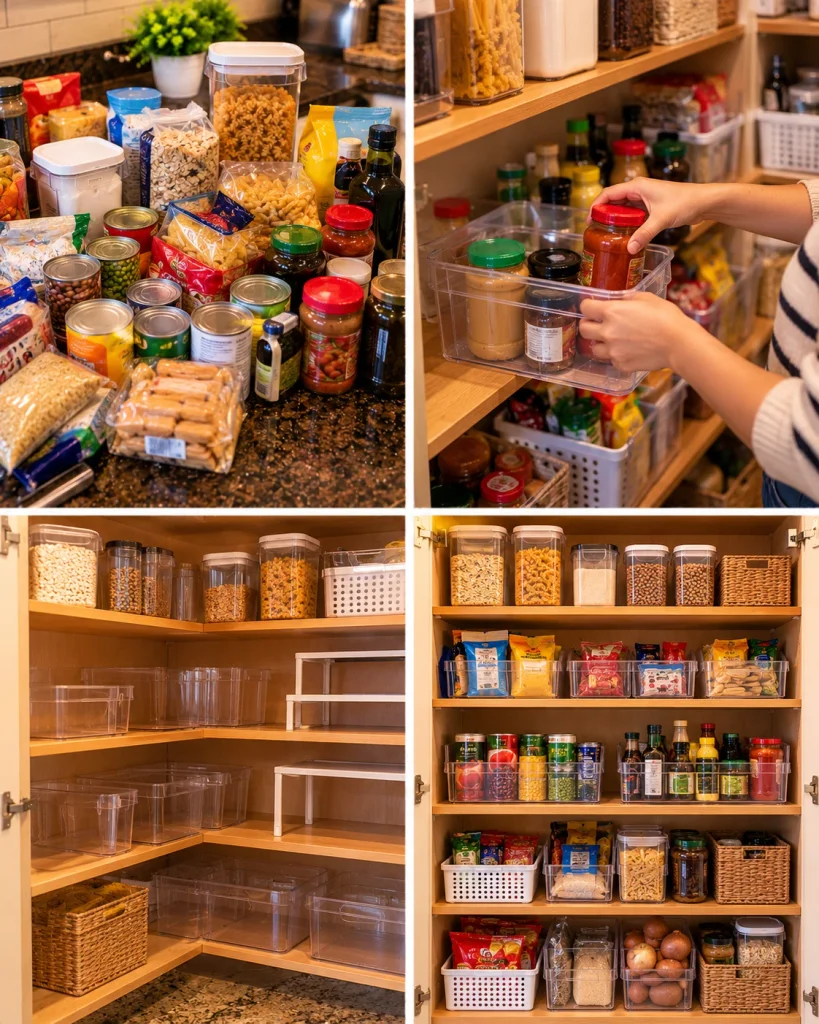
1. Take Everything Out First
Start with a completely empty pantry. This makes it much easier to see how much space you actually have.
As you remove items, check dates, damaged packaging, and anything you no longer want. Wipe down shelves before putting food back.
Don’t feel pressured to throw away food simply because it’s past a printed date. For shelf-stable foods, use the condition of the package and appropriate food-safety guidance rather than treating every date as an automatic discard date.
2. Group Similar Foods Together
Create simple categories based on how you use your pantry.
For example:
- Pasta, rice, and grains
- Canned vegetables and beans
- Baking ingredients
- Breakfast foods
- Snacks
- Sauces and condiments
- Spices and seasonings
- Tea and coffee
Keeping similar foods together makes the pantry easier to scan and helps prevent duplicate purchases.
3. Put Frequently Used Foods at Eye Level
The foods you reach for every day should be the easiest to access.
Keep everyday staples such as cereal, pasta, rice, or snacks on shelves that are comfortable to reach. Less frequently used items can go higher or farther back.
If you have deep shelves, avoid putting small containers directly behind tall ones. You’ll forget they’re there.
4. Use Bins to Control Small Items
Open bags, snack packets, and small packages can quickly make a pantry look chaotic.
A few simple bins or baskets can keep these items contained. Group similar foods in each bin rather than mixing everything together.
For example, one basket can hold snack bars while another holds small baking supplies.
Choose containers that are easy to remove so you don’t have to unload an entire shelf to reach the back.
5. Make Use of Vertical Space
If your shelves have a lot of unused height, add shelf risers or stackable organizers.
This creates another level for shorter cans, jars, or containers without requiring additional shelving.
For narrow spaces, vertical organizers can also make a big difference. The key is to add storage without making items harder to see.
6. Keep Older Items Toward the Front
When you bring home new pantry foods, don’t simply place them in front of the old ones.
Move older items forward and put newer purchases behind them. This simple habit helps you use foods in a sensible order and can reduce waste.
It’s especially helpful for foods you buy in bulk.
7. Don’t Overfill the Pantry
One of the biggest causes of pantry clutter is trying to use every inch of available space.
Leave enough room to see labels and remove items easily. If you can’t tell what’s on a shelf without moving several things, the pantry is probably holding more than it can comfortably manage.
A little empty space makes organization much easier to maintain.
Common Pantry Organization Mistakes
Putting everything in containers: Not every pantry item needs to be transferred into a storage container. Keep foods in their original packaging when it works well.
Ignoring the back of deep shelves: Use bins or risers so food doesn’t disappear behind other items.
Creating too many categories: A complicated system is difficult to maintain. Keep categories broad and practical.
Buying organizers before measuring: Measure your shelves first. Storage products that are too large can make a pantry even harder to use.
A Simple Pantry Setup
For most crowded pantries, a practical arrangement is:
Eye level: Everyday foods and frequently used ingredients
Middle shelves: Canned goods, pasta, rice, sauces, and other staples
Lower shelves: Larger containers, bulk items, and heavier foods
Upper shelves: Infrequently used ingredients and backup supplies
The best pantry organization system is the one that matches your cooking habits. Keep frequently used foods visible, group similar items together, and avoid packing shelves so tightly that you can’t see what you have. A simple system is much easier to keep organized over time.