


Measuring ingredients doesn’t have to slow down your cooking or baking. With a little preparation, the right tools, and a few simple habits, you can measure ingredients faster while keeping your amounts accurate. The key is to organize what you need before you start and avoid unnecessary trips back to the pantry.
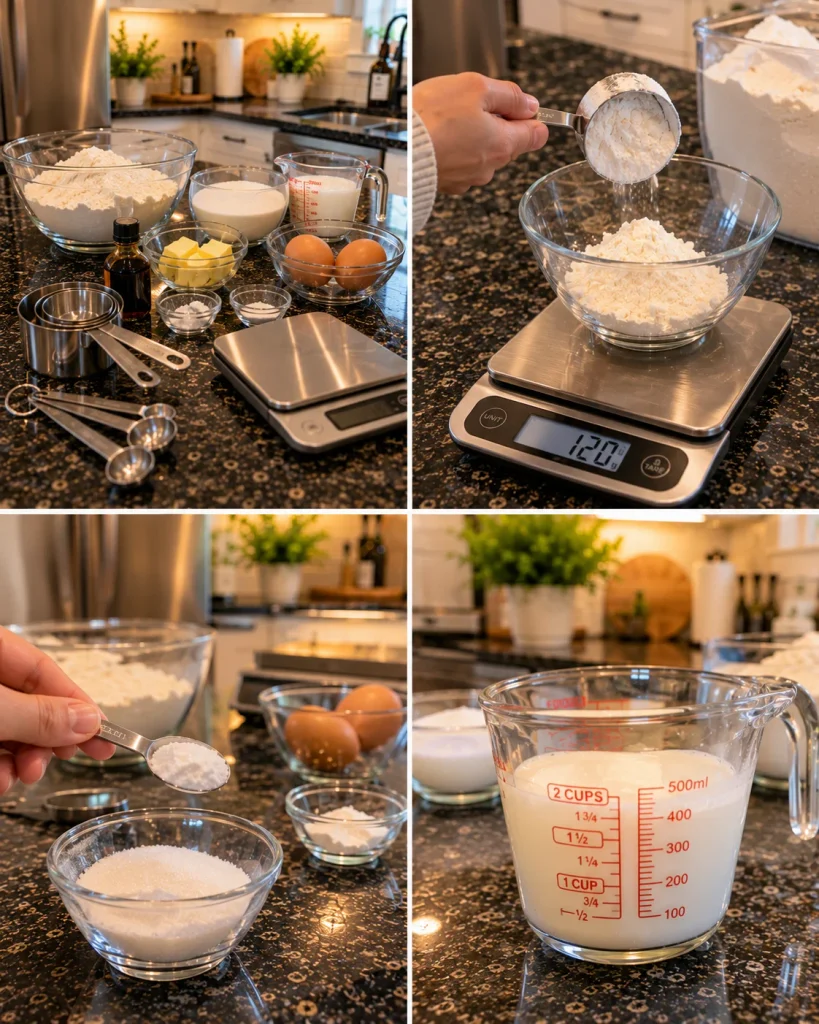
1. Gather Your Ingredients Before Measuring
Before you begin, read through your recipe and place all the ingredients on the counter. Check which measuring cups, spoons, and bowls you’ll need.
This simple step helps you avoid stopping halfway through to search for an ingredient or wash a measuring spoon. It also makes it easier to notice missing ingredients before you start mixing.
2. Use a Kitchen Scale for Dry Ingredients
A digital kitchen scale can speed up measuring flour, sugar, oats, and other dry ingredients. Instead of filling and leveling several measuring cups, you can weigh ingredients directly into your mixing bowl.
Place the bowl on the scale, press the tare button to reset it to zero, and add the first ingredient. Reset the scale again before adding the next ingredient if your recipe uses grams for each amount.
A scale is especially helpful for baking, where accurate ingredient ratios can affect the final texture.
3. Keep Measuring Tools Together
Store your measuring cups, measuring spoons, and kitchen scale in one easy-to-reach place. A small drawer organizer or container can keep everything together.
When measuring tools are easy to find, you spend less time opening drawers and searching for the right size.
If you cook frequently, keep your most-used measuring tools near your main food preparation area.
4. Measure Ingredients in a Smart Order
The order in which you measure ingredients can reduce cleanup and save time.
For example, measure dry ingredients first, followed by other ingredients that won’t leave sticky or greasy residue on your tools. If you’re measuring oil, honey, or syrup, leave those ingredients until later when practical.
You can also use one measuring cup for several ingredients when their order and texture allow it. Just make sure the cup is clean enough for the next ingredient and that each measurement remains accurate.
5. Use the Right Measuring Tool
Choosing the right tool makes measuring quicker and easier.
- Dry measuring cups: Best for measuring dry ingredients by volume, such as flour and sugar.
- Liquid measuring cups: Designed for water, milk, oil, and other liquids.
- Measuring spoons: Useful for small amounts of spices, baking powder, salt, and extracts.
- Digital kitchen scale: Ideal for weighing ingredients accurately.
Using the appropriate tool reduces spills, guesswork, and the need to repeat a measurement.
6. Prepare Frequently Used Ingredients in Advance
If you regularly make the same recipes, organize commonly used ingredients so they’re easy to access. Keep flour, sugar, salt, and other pantry staples in clearly labeled containers.
For recipes you prepare often, you can also group the ingredients you need before cooking. However, measure perishable ingredients shortly before use and store them safely until needed.
Avoid pre-measuring large quantities of ingredients far in advance unless you have a suitable storage plan.
7. Avoid Common Measuring Mistakes
Working quickly shouldn’t mean sacrificing accuracy. A few common habits can lead to incorrect measurements and extra work.
- Scooping flour directly with a measuring cup: This can pack the flour and result in too much. Spoon it into the cup and level the top when using volume measurements.
- Guessing small amounts: Use measuring spoons for ingredients such as baking soda, salt, and spices.
- Reading liquid measurements from above: Place the measuring cup on a level surface and check the amount at eye level.
- Using the same dirty spoon repeatedly: Residue from one ingredient can affect another, especially when measuring sticky or strongly flavored ingredients.
A Simple Routine for Faster Measuring
For a quicker kitchen workflow, follow this order:
- Read the recipe and gather every ingredient.
- Set out the necessary measuring tools.
- Weigh ingredients when a scale is convenient and the recipe provides weights.
- Measure dry ingredients before sticky or greasy ones when practical.
- Return ingredients to their proper storage places as you finish with them.
- Clean measuring tools promptly after use.
The biggest time-saver is preparation. When your ingredients and tools are ready before you start, measuring becomes a smooth part of cooking rather than a series of interruptions.