

Weeknight cooking can get messy fast when you’re rushing between chopping, cooking, and cleaning. A few simple habits can keep the kitchen under control without adding extra work. The key is to clean as you go, limit the number of tools you use, and give every task a place in your routine.
Set Up Before You Start

Before turning on the stove, take a minute to gather the ingredients and tools you actually need. Read through the recipe or cooking steps so you know what comes next.
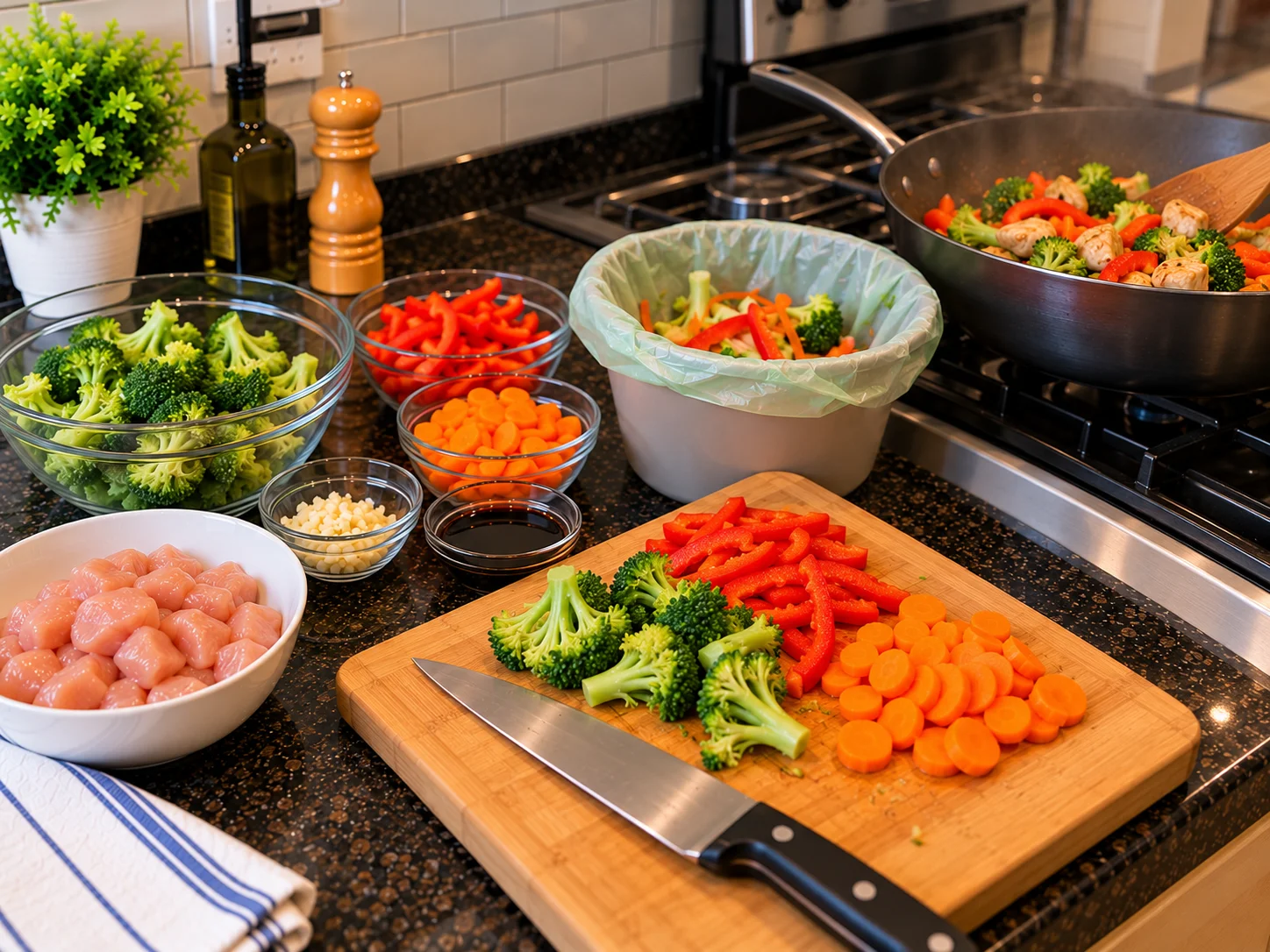
Keep a trash bowl or small container nearby for vegetable scraps, packaging, and other waste. This prevents scraps from piling up on the counter or ending up scattered around the sink.
If you’re using several ingredients, group them together before cooking. You’ll spend less time opening cabinets and drawers while food is cooking.
Clean While You Cook
You don’t need to wash everything immediately. Focus on small jobs that prevent clutter from building up.
- Put ingredients away after using them.
- Toss scraps as you work.
- Rinse utensils and measuring tools when you’re finished with them.
- Wipe small spills before they dry.
- Move dirty dishes to one designated spot.
When something is simmering or baking, use that time to wash a cutting board, knife, or mixing bowl rather than waiting until the meal is finished.
Use Fewer Tools
One of the easiest ways to reduce a messy kitchen is to avoid creating unnecessary dishes.
Plan your cooking so you can reuse a cutting board, bowl, measuring cup, or skillet when it makes sense. For example, prepare ingredients in the order you’ll use them instead of pulling out separate containers for every ingredient.
A sheet pan, skillet, or pot that can handle several parts of a meal can also reduce cleanup.
Just make sure raw ingredients, especially raw meat, are handled safely and that surfaces are cleaned appropriately before being used for ready-to-eat foods.
Keep Your Countertops Clear
A crowded counter makes cooking feel more chaotic. As you finish with an ingredient or tool, put it away instead of letting it become part of the growing pile.
Try keeping only the things you’re actively using within reach. Everything else can stay in the pantry, refrigerator, or cabinet until you need it.
Make Cleanup the Last Cooking Step
Once dinner is nearly ready, take a few minutes to reset the kitchen.
Put away leftover ingredients, soak cookware that needs attention, wipe the main work surface, and load or wash the dishes that can be handled immediately.
You don’t need to deep-clean the kitchen every night. The goal is simply to finish with a manageable amount of cleanup instead of a completely cluttered kitchen.
Common Weeknight Cooking Mistakes
A few habits can make messes much worse:
- Starting without a plan: This leads to extra bowls, tools, and opened ingredients.
- Leaving packaging on the counter: Put wrappers and containers away as you finish with them.
- Ignoring spills: Small spills are usually easier to clean before they dry.
- Using every available utensil: Reuse tools when practical and safe.
- Waiting until dinner is finished to clean anything: Small cleanup jobs are easier when spread throughout cooking.
A Simple Weeknight Routine
For an easier routine, think of cooking in three stages:
Before cooking: Gather ingredients, clear the workspace, and set out only the tools you need.
While cooking: Put ingredients away, collect scraps, and wash or rinse items during cooking pauses.
After cooking: Store leftovers, soak or wash cookware, and wipe the main surfaces.
The kitchen doesn’t have to stay perfectly clean while you cook. The goal is to prevent small messes from turning into a large cleanup at the end of the night.