
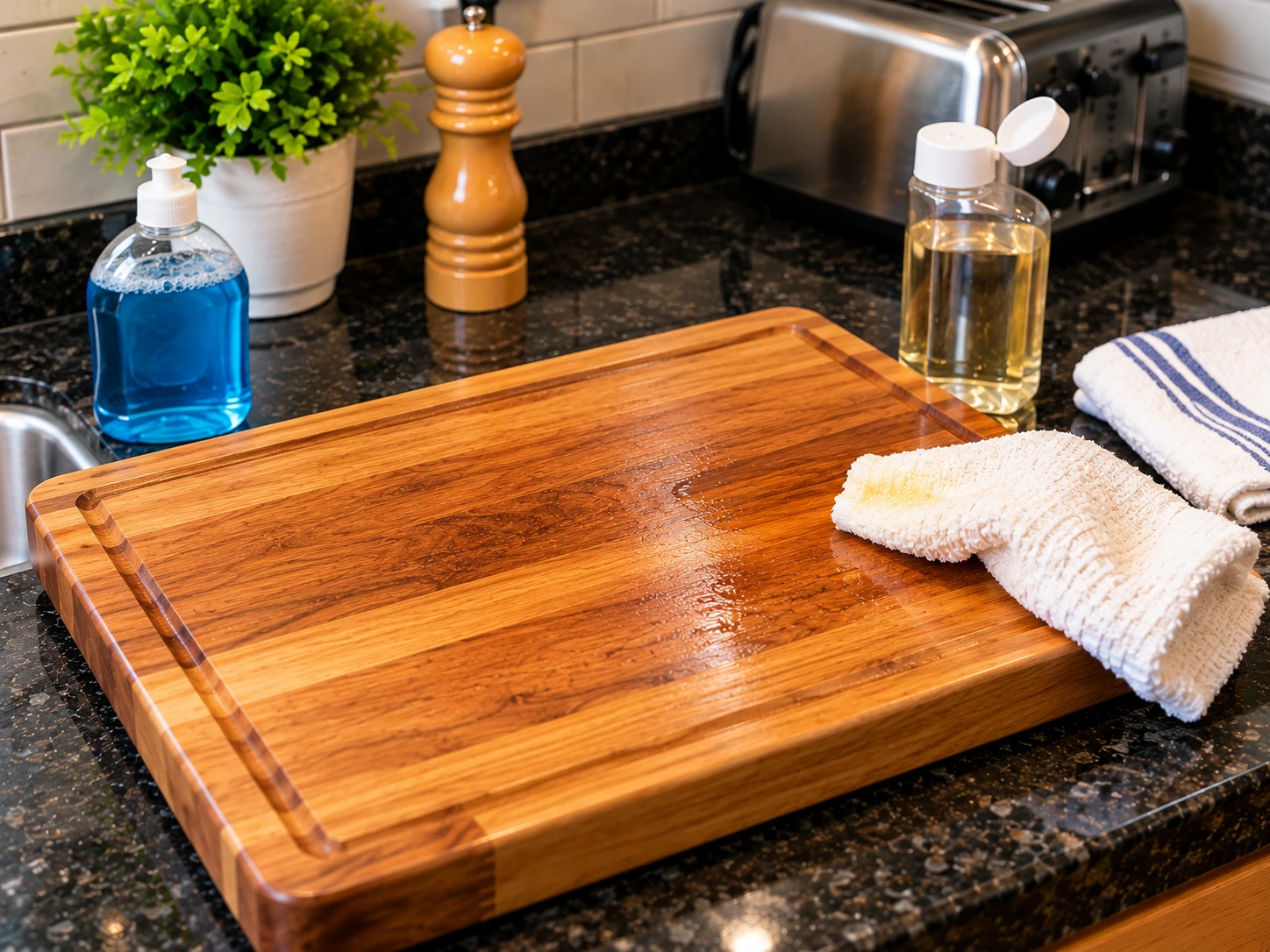

A wooden cutting board needs regular conditioning to keep the wood from becoming dry, rough, or prone to cracking. The simplest routine is to wash it gently, let it dry completely, and apply a food-safe cutting board oil when the wood starts looking dull or feeling dry.
What You’ll Need
- Food-grade mineral oil made for cutting boards
- Clean, dry cloth or paper towel
- Mild dish soap
- Clean kitchen towel
How to Keep a Wooden Cutting Board From Drying Out

1. Wash the board gently
After use, wash the cutting board with warm water and a small amount of mild dish soap. Avoid soaking it in the sink or putting it in the dishwasher, since prolonged exposure to water and heat can cause wood to swell, warp, or crack.
2. Dry it thoroughly
Wipe away excess water with a clean towel, then let the board air-dry completely. Stand it upright or place it where air can circulate around both sides.
Don’t apply oil while the board is still damp.
3. Apply food-grade mineral oil
When the wood looks pale or dry, pour a small amount of food-grade mineral oil onto the surface. Spread it evenly over the top, bottom, and edges with a clean cloth.
Let the oil soak into the wood for several hours or overnight. Then wipe away any excess oil that remains on the surface.
4. Condition the board regularly
How often you need to oil a wooden cutting board depends on how frequently you use and wash it. A board used often may need conditioning more frequently than one that is used occasionally.
A good rule is to oil it whenever the surface starts looking dry rather than waiting until the wood develops cracks.
Why Does a Wooden Cutting Board Dry Out?
Wood naturally loses and absorbs moisture as its environment changes. Frequent washing can speed up this process, especially if the board is repeatedly soaked or exposed to high heat.
Oil helps condition the wood and reduces the dry, rough feeling that can develop with regular use. It also helps the board maintain a smoother surface.
Common Mistakes to Avoid
- Soaking the board: Don’t leave a wooden cutting board submerged in water.
- Using the dishwasher: High heat and prolonged water exposure can damage the wood.
- Drying it next to high heat: Avoid placing it directly beside a hot stove or other strong heat source.
- Oiling a wet board: Let the wood dry fully before conditioning it.
- Using unsuitable oils: Avoid cooking oils that can become rancid. Use a food-safe mineral oil specifically intended for cutting boards.
How Often Should You Oil a Wooden Cutting Board?
There is no single schedule that works for every board. Check the wood regularly. If it looks dry, feels rough, or loses its usual rich appearance, it’s a good time to apply another coat of food-grade mineral oil.
A heavily used board may need conditioning more often than a board that is only used occasionally.
How to Keep Your Board in Good Condition
The biggest difference comes from consistent care. Wash the board promptly after use, avoid excessive water and heat, dry it thoroughly, and condition the wood whenever it begins to look dry.
If the board develops deep cracks, severe warping, or other damage, oiling alone may not restore it.