


Freezing fresh broccoli is an easy way to preserve it before it gets limp or starts to spoil. For the best color, texture, and flavor, blanch the broccoli briefly before freezing, then cool and dry it well before packing it for the freezer.
What You’ll Need
- Fresh broccoli
- Large pot of water
- Large bowl of ice water
- Colander
- Freezer-safe bags or airtight containers
- Baking sheet
How to Freeze Fresh Broccoli
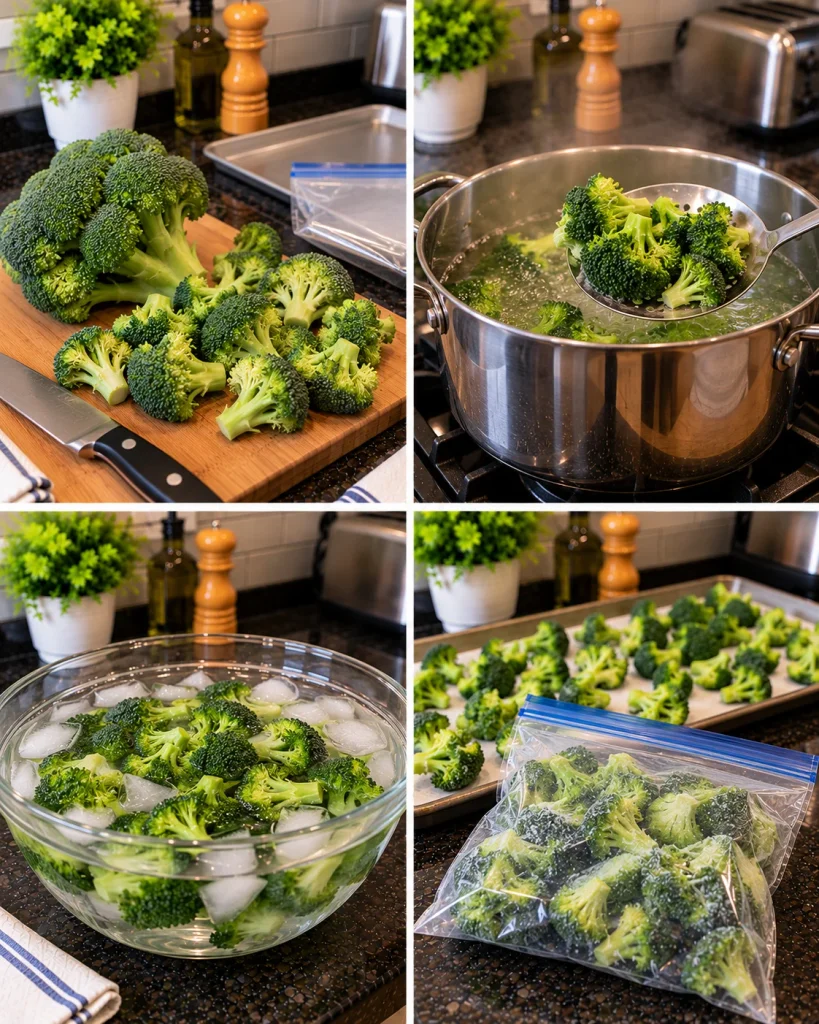
1. Wash and Cut the Broccoli
Rinse the broccoli under cool running water. Cut the florets into similar-sized pieces so they blanch evenly.
You can also peel and cut the tender parts of the stalk and freeze them along with the florets.
2. Blanch the Broccoli
Bring a large pot of water to a boil. Add the broccoli and blanch it for about 3 minutes.
Blanching helps preserve the vegetable’s color, flavor, and texture during frozen storage.
3. Cool It Quickly
Immediately transfer the broccoli to a large bowl of ice water. Let it cool for about 3 minutes, then drain thoroughly.
This stops the cooking process so the broccoli doesn’t become overly soft.
4. Dry the Broccoli Well
Spread the drained broccoli on a clean kitchen towel or paper towels and pat it dry.
Removing excess moisture helps reduce ice buildup and freezer burn.
5. Freeze the Broccoli
Arrange the broccoli pieces in a single layer on a baking sheet. Freeze until firm.
Once frozen, transfer the pieces to freezer-safe bags or airtight containers. Remove as much excess air as practical, seal, and label the container with the date.
Why Blanching Matters
Freezing slows deterioration, but it doesn’t completely stop the changes that affect vegetables over time. Blanching broccoli before freezing helps maintain better quality than freezing it raw.
For the best results, avoid packing warm or wet broccoli directly into a freezer bag. Excess moisture can freeze around the pieces and make them stick together.
How to Use Frozen Broccoli
Frozen broccoli can be added directly to soups, stews, casseroles, stir-fries, and other cooked dishes. For recipes where texture matters, avoid overcooking it because previously frozen broccoli will generally be softer than fresh broccoli.
If you want to thaw it first, place it in the refrigerator until thawed and drain away excess moisture before cooking.
Common Mistakes to Avoid
- Skipping blanching: Raw-frozen broccoli may lose quality more quickly.
- Overcooking during blanching: This can leave the broccoli soft after thawing.
- Not cooling it quickly: Ice water stops the cooking process.
- Freezing it while wet: Excess moisture creates more ice crystals.
- Leaving too much air in the package: More air exposure can contribute to freezer burn.
Frequently Asked Questions
Can you freeze broccoli without blanching it?
Yes, but blanching is recommended when your goal is to preserve quality. It helps broccoli retain its color, flavor, and texture during freezer storage.
Should broccoli be washed before freezing?
Yes. Wash the broccoli before cutting and blanching it, then drain and dry it thoroughly before freezing.
Can you freeze broccoli florets and stalks?
Yes. Tender stalk pieces can be peeled and cut into smaller pieces before blanching and freezing.
How should frozen broccoli be stored?
Keep it in a well-sealed freezer-safe bag or airtight container with as much excess air removed as practical. Labeling the package with the freezing date makes it easier to keep track of older packages.
Freezing broccoli is simple: cut, blanch, cool, dry, and freeze. Taking a few extra minutes to blanch and dry the broccoli can make a noticeable difference in its quality after it comes out of the freezer.