


A smelly refrigerator usually has a simple cause: spilled food, forgotten leftovers, or odors trapped in shelves and drawers. The easiest way to get rid of the smell is to remove the source first, then clean the inside with warm water and baking soda.
Baking soda helps neutralize odors without leaving a strong fragrance behind. Here’s how to use it to freshen up your refrigerator and keep unpleasant smells from returning.
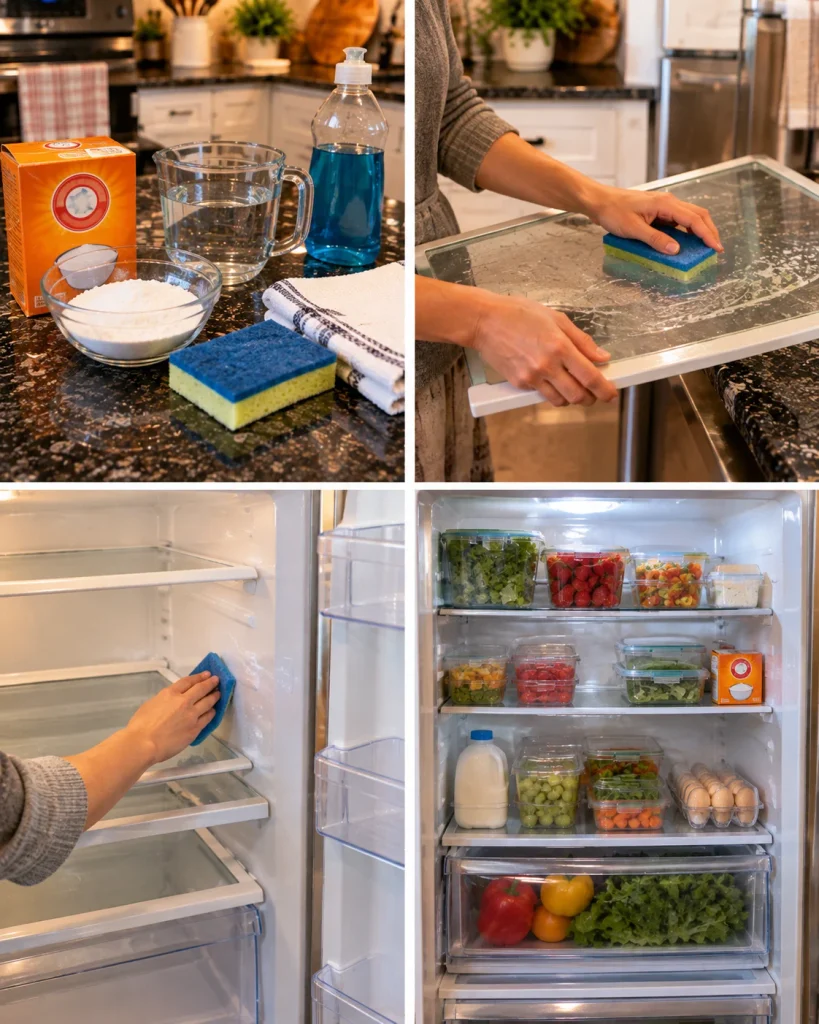
What You’ll Need
- Baking soda
- Warm water
- A clean sponge or soft cloth
- A small bowl
- Clean towels
- Mild dish soap, if needed
How to Clean a Smelly Refrigerator
1. Remove the Source of the Smell
Take everything out of the refrigerator and check for expired food, forgotten leftovers, leaking containers, and spoiled produce.
Pay special attention to items tucked behind jars or pushed into the back of drawers. Even a small spill can create a lingering odor.
Discard spoiled food safely and set aside the items you plan to keep.
2. Remove Shelves and Drawers
Take out removable shelves, drawers, and door bins if the manufacturer’s instructions allow it.
Wash them with warm water and a little mild dish soap. If a shelf is made of glass, let it come closer to room temperature before washing to reduce the risk of thermal shock.
Rinse and dry everything thoroughly before putting it back.
3. Wipe the Interior With Baking Soda
Mix 1 tablespoon of baking soda with 1 quart of warm water.
Dip a clean sponge or cloth into the solution, wring it out, and wipe the refrigerator walls, shelves, door compartments, and other accessible interior surfaces.
Baking soda helps neutralize odors while gently cleaning the surfaces. It is a good option when you want to freshen the refrigerator without using a heavily scented cleaner.
Avoid abrasive scrubbers that could scratch the interior.
4. Clean Hidden Spots
If the smell remains, check the areas that are easy to overlook.
Wipe around drawer tracks, shelf edges, door seals, and the bottom of the refrigerator where spills may collect. Use a soft cloth or an old toothbrush for narrow crevices.
Clean the door gasket gently so food residue does not remain trapped in its folds. Dry the cleaned areas with a towel.
5. Let Everything Dry Before Restocking
Make sure the shelves and drawers are completely dry before returning them to the refrigerator.
Wipe down food containers if they have sticky residue on the outside. Arrange leftovers in clean, tightly sealed containers, and return perishable food promptly to keep it cold.
The Extra Trick: Keep an Open Box of Baking Soda Inside
Once the refrigerator is clean, place an open box or a small, stable container of baking soda on a shelf, where it cannot spill onto food.
Baking soda can help absorb some lingering odors, but it will not solve every smell. Replace it according to the package instructions, and clean up spills or remove spoiled food whenever they occur.
For the best results, use baking soda as a maintenance step rather than a substitute for cleaning.
Why Does Your Refrigerator Still Smell After Cleaning?
If the odor persists, the source may be hiding somewhere you missed.
- Rotten or sour smell: Check forgotten leftovers, spoiled produce, and spills beneath drawers.
- Fishy or strong food odor: Inspect containers, packaging, and refrigerator door compartments.
- Musty smell: Look for trapped moisture, residue, or signs of mold.
- Persistent smell despite cleaning: Check the drain opening and drip pan if your refrigerator has them and they can be accessed safely according to the manufacturer’s instructions.
If the smell resembles burning plastic, chemicals, or an electrical odor, unplug the appliance if it is safe to do so and contact a qualified technician rather than treating it as an ordinary food odor.
How to Keep Your Refrigerator Smelling Fresh
A few simple habits can prevent most refrigerator odors from building up again.
- Store leftovers in airtight containers.
- Clean spills as soon as they happen.
- Check produce drawers regularly for soft or spoiled food.
- Wipe sticky shelves and door compartments when needed.
- Keep raw foods properly covered and separated from ready-to-eat foods.
- Avoid overfilling the refrigerator so cold air can circulate.
Frequently Asked Questions
Can I clean a smelly refrigerator with vinegar?
Yes, diluted white vinegar can be used on some refrigerator surfaces if the manufacturer’s care instructions allow it. However, do not mix vinegar with bleach or other cleaning products. Baking soda and warm water are a simple alternative for routine cleaning.
How long does it take for baking soda to remove refrigerator odors?
You may notice an improvement after removing the odor source and cleaning the refrigerator, but stubborn smells can take longer to disappear. If the odor continues, look for hidden spills or other sources rather than relying only on an open box of baking soda.
Is baking soda safe to use around food?
Baking soda is commonly used for household cleaning, but the cleaning solution should not be treated as a food ingredient. Wipe away residue as appropriate, dry the surfaces, and follow the refrigerator manufacturer’s cleaning instructions.
The bottom line: The simplest way to clean a smelly refrigerator is to remove spoiled food, wipe the interior with a baking soda solution, and clean the hidden spots where spills collect. An open box of baking soda can help manage lingering odors, but regular cleaning is what keeps them from coming back.