
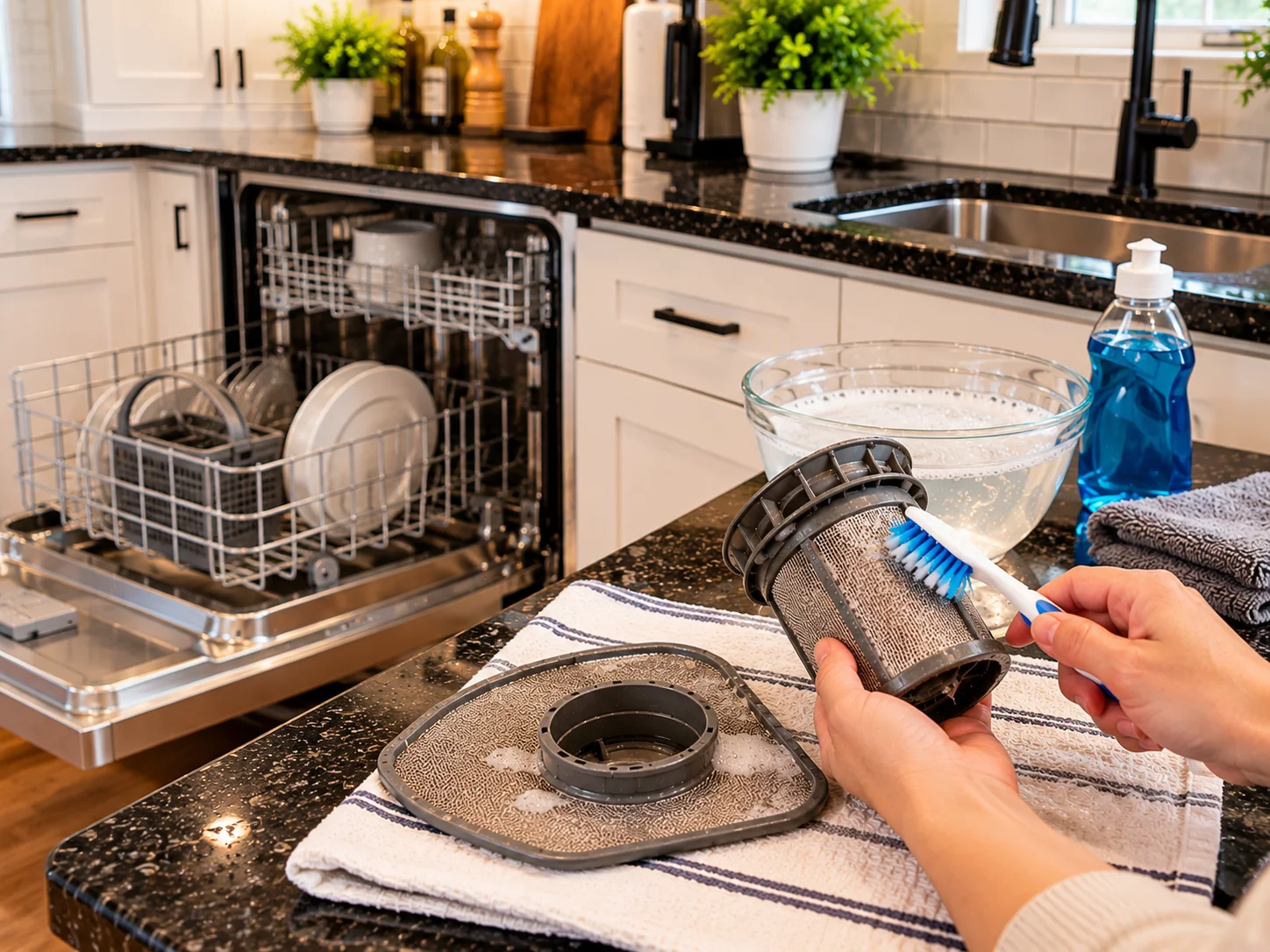

Cleaning your dishwasher filter helps remove trapped food particles, prevent unpleasant odors, and keep dishes cleaner. Most dishwasher filters are easy to clean in a few minutes using warm water, mild dish soap, and a soft brush.
What You’ll Need
- Warm water
- Mild dish soap
- A soft toothbrush or sponge
- A clean cloth
How to Clean a Dishwasher Filter
1. Turn Off the Dishwasher
Make sure the dishwasher is off and not running a cycle. If you’ve just finished a wash, let the interior cool before reaching inside.
2. Remove the Bottom Rack
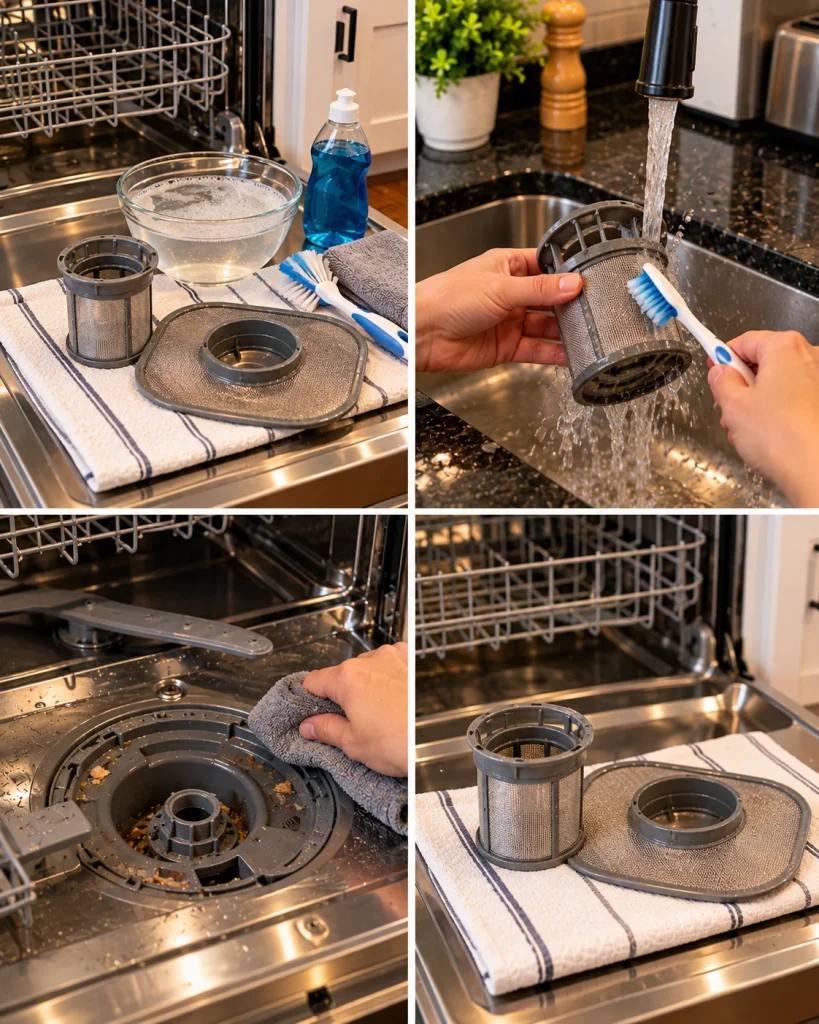
Pull out the bottom dish rack to access the filter at the bottom of the dishwasher tub. Depending on your model, the filter may be round, flat, or made of several removable parts.
3. Remove the Filter
Some filters twist to unlock, while others lift out differently. Follow your dishwasher manual for the correct removal method, and never force a filter that won’t move easily.
4. Rinse the Filter With Warm Water
Hold the filter under warm running water to remove loose food scraps, grease, and other debris.
If residue remains stuck in the mesh, gently scrub it with a soft toothbrush or sponge. Avoid abrasive pads, wire brushes, and sharp objects that could damage the filter.
5. Wash With Mild Dish Soap
If the filter is greasy or heavily soiled, apply a small amount of mild dish soap and gently clean it with a soft brush.
Rinse thoroughly to remove all soap and loosened debris. Check the manufacturer’s instructions before using any special cleaning products.
6. Clean the Filter Housing
While the filter is removed, inspect the area where it sits. Use a damp cloth to wipe away visible food particles and residue.
Be careful around the drain opening, and avoid pushing debris farther inside.
7. Reinstall the Filter
Return the filter to its original position and lock it securely according to the manufacturer’s instructions. Make sure it sits correctly before replacing the bottom rack.
Never run the dishwasher without its required filter in place.
How Often Should You Clean a Dishwasher Filter?
For many households, checking the filter weekly and cleaning it every few weeks is a practical starting point. Clean it more frequently if you use your dishwasher daily or often wash dishes with food residue.
You may need to clean it sooner if you notice:
- Food particles remaining on dishes after washing
- Unpleasant odors inside the dishwasher
- Grease or visible debris around the filter
- Water draining more slowly than usual
Always follow your dishwasher manual if it recommends a different cleaning schedule.
Common Dishwasher Filter Cleaning Mistakes
- Using abrasive tools: Rough scrubbers can damage the filter mesh.
- Forcing the filter out: Different models use different locking mechanisms.
- Forgetting to lock it back in place: An incorrectly installed filter can interfere with normal operation.
- Ignoring visible buildup: Food debris and grease can contribute to odors and poor cleaning results.
- Using unnecessary chemicals: Warm water and mild dish soap are usually sufficient for routine cleaning.
Frequently Asked Questions
Can I clean a dishwasher filter with vinegar?
Vinegar is generally unnecessary for routine filter cleaning. Warm water, mild dish soap, and a soft brush are usually enough. Check your manufacturer’s instructions before using vinegar or other cleaning agents.
Why does my dishwasher still smell after cleaning the filter?
Food residue may remain on the door seals, spray arms, drain area, or interior walls. Clean accessible areas according to the manufacturer’s instructions. If the smell persists, check the manual for further troubleshooting.
Do all dishwashers have removable filters?
No. Many dishwashers have removable filters, but some use different filtration systems. Consult your owner’s manual to determine whether your filter can be removed.
Final Thoughts
Cleaning your dishwasher filter regularly helps reduce odors, remove trapped food debris, and maintain good washing performance. Rinse it thoroughly, gently remove stubborn residue, and reinstall it securely before running your next cycle.