
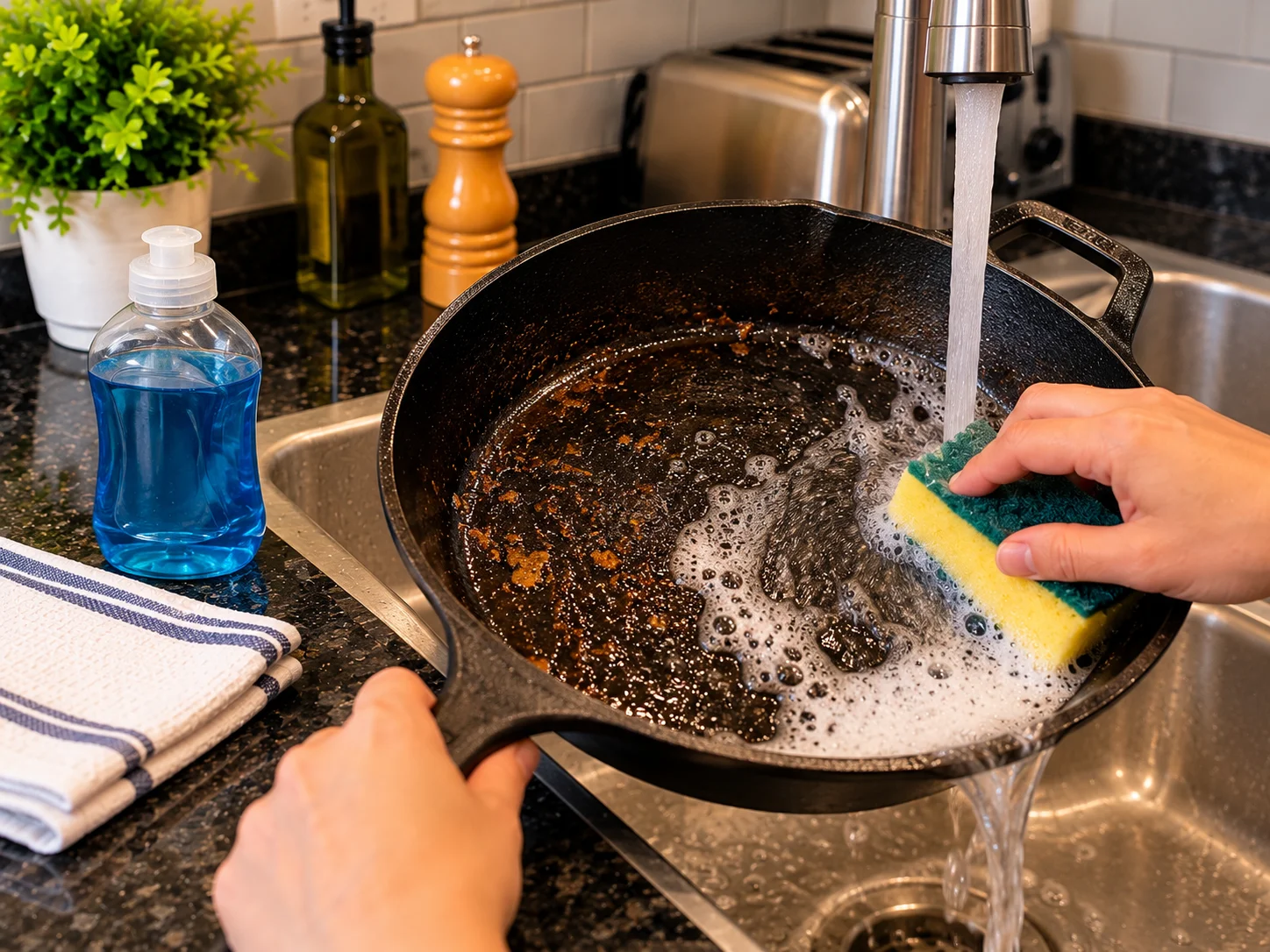

The best way to clean a cast iron skillet is simple: wash it with hot water, use a small amount of mild dish soap if needed, dry it thoroughly, and finish with a thin layer of oil. You do not need to avoid water or scrub aggressively to keep cast iron in good condition.
What You’ll Need
- Hot water
- Mild dish soap
- A sponge or soft scrub brush
- Clean towel
- A small amount of cooking oil
How to Clean a Cast Iron Skillet
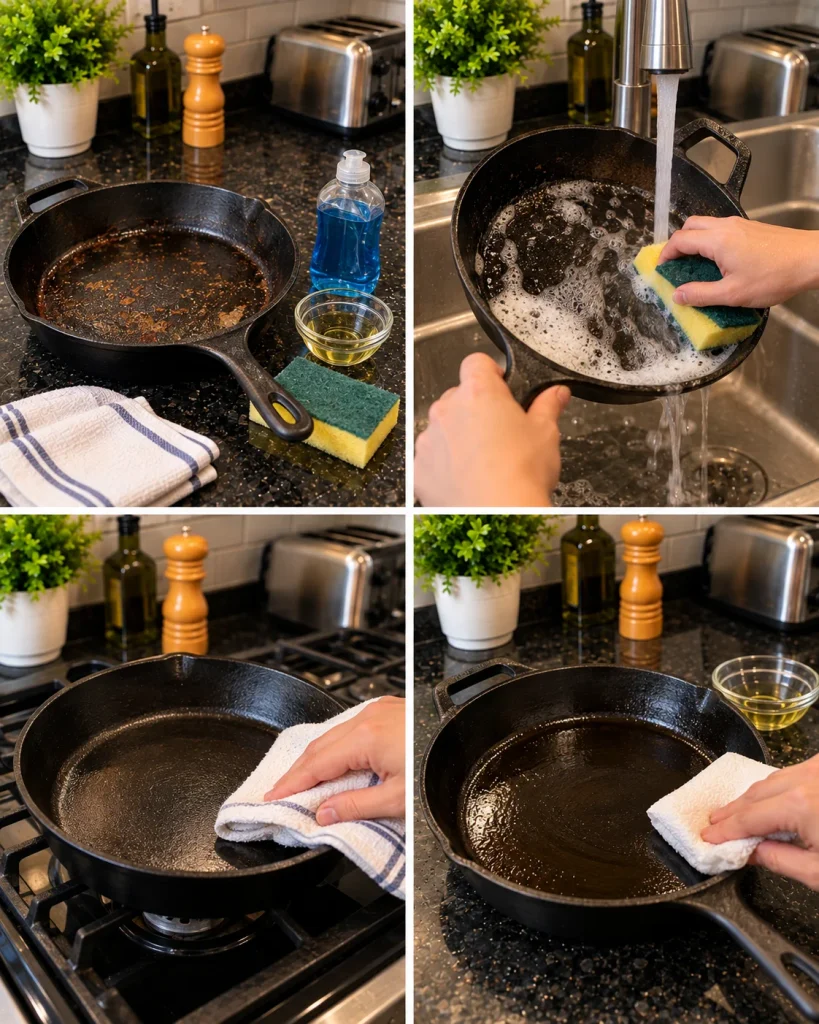
1. Let the skillet cool slightly
If the skillet is very hot, let it cool enough to handle safely. Avoid running cold water over a smoking-hot pan, since a sudden temperature change can damage cookware.
2. Wash with hot water
Rinse the skillet under hot water and loosen any food stuck to the surface. For normal cleanup, a sponge or soft brush is usually enough.
A small amount of mild dish soap is fine when the skillet needs a more thorough cleaning. Using soap does not automatically ruin a properly seasoned pan.
3. Scrub stuck-on food
For stubborn residue, use a little extra scrubbing rather than leaving food stuck to the pan. A cast iron-safe scrubber can help with tougher spots.
For especially stubborn buildup, add a small amount of water to the skillet and heat it briefly on the stove. Once the residue softens, carefully pour out the water and scrub the pan clean.
4. Dry the skillet completely
Dry the skillet immediately with a clean towel. Then place it over low heat for a few minutes to evaporate any remaining moisture.
This step matters because leaving water on cast iron can encourage rust.
5. Apply a thin layer of oil
Once the skillet is dry, add a very small amount of cooking oil and spread it over the cooking surface with a paper towel or clean cloth.
Wipe away excess oil so the skillet looks lightly coated rather than greasy.
What About a Rusty Cast Iron Skillet?
Small areas of surface rust can usually be removed by scrubbing the affected area thoroughly, washing and drying the skillet, and then restoring its seasoning with oil and heat.
If the skillet has heavy rust or extensive buildup, it may need a more thorough restoration rather than routine cleaning.
Common Cast Iron Cleaning Mistakes
Leaving the skillet wet: Moisture is one of the easiest ways to encourage rust.
Using too much oil: A thick layer can leave the surface sticky. A very thin coating is better.
Never using soap: Mild dish soap can be useful for removing grease and food residue. Properly seasoned cast iron does not need to be treated as if soap will instantly strip it.
Putting it away dirty: Leftover food and grease can affect the skillet’s surface and leave unpleasant odors.
Soaking it for a long time: Brief washing is preferable to leaving cast iron submerged in water.
How Often Should You Season Cast Iron?
Routine cleaning and seasoning are not exactly the same thing. After normal washing, drying and applying a very thin layer of oil is often enough to maintain the surface.
A more complete seasoning process may be useful when the skillet looks dull, develops bare spots, or has been stripped during cleaning or restoration.
Can You Clean Cast Iron With Dish Soap?
Yes. A small amount of mild dish soap can be used when needed. The goal is to clean the skillet without leaving it soaking wet or aggressively stripping the seasoned surface.
The most important routine is wash, dry completely, and lightly oil.
Final Takeaway
Cleaning a cast iron skillet does not need to be complicated. Wash away food residue, scrub where necessary, dry the skillet completely, and apply a thin coat of oil before storing it. With that simple routine, your skillet can stay clean and ready for the next meal.