
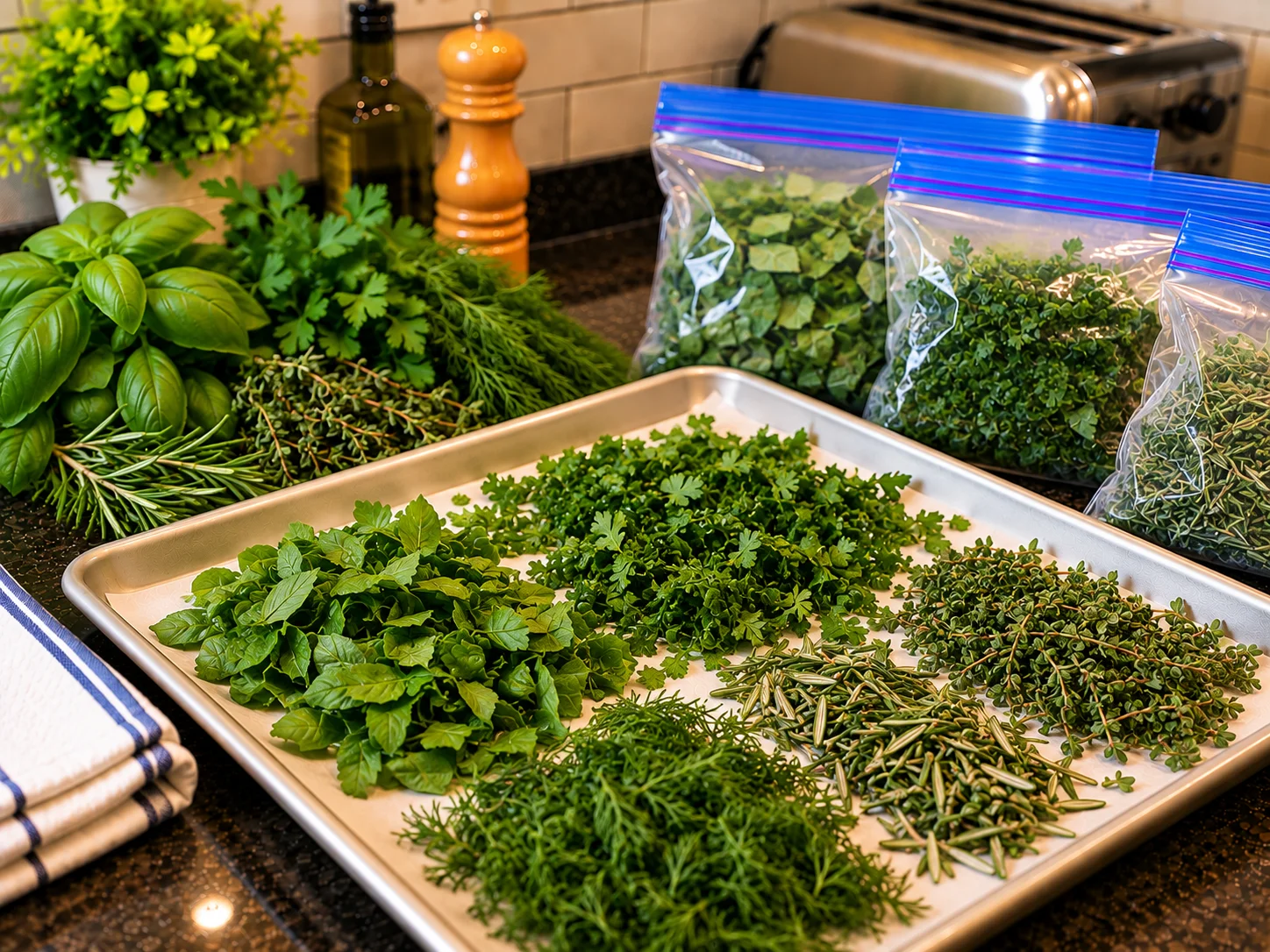

Freezing fresh herbs is an easy way to preserve herbs before they wilt or go to waste. The best method depends on how you plan to use them later, but most herbs can be frozen after a quick rinse, thorough drying, and proper packaging.
What You’ll Need
- Fresh herbs
- Cold water
- Paper towels or a clean kitchen towel
- Freezer-safe bags or airtight containers
- Baking sheet, if freezing herbs individually
How to Freeze Fresh Herbs
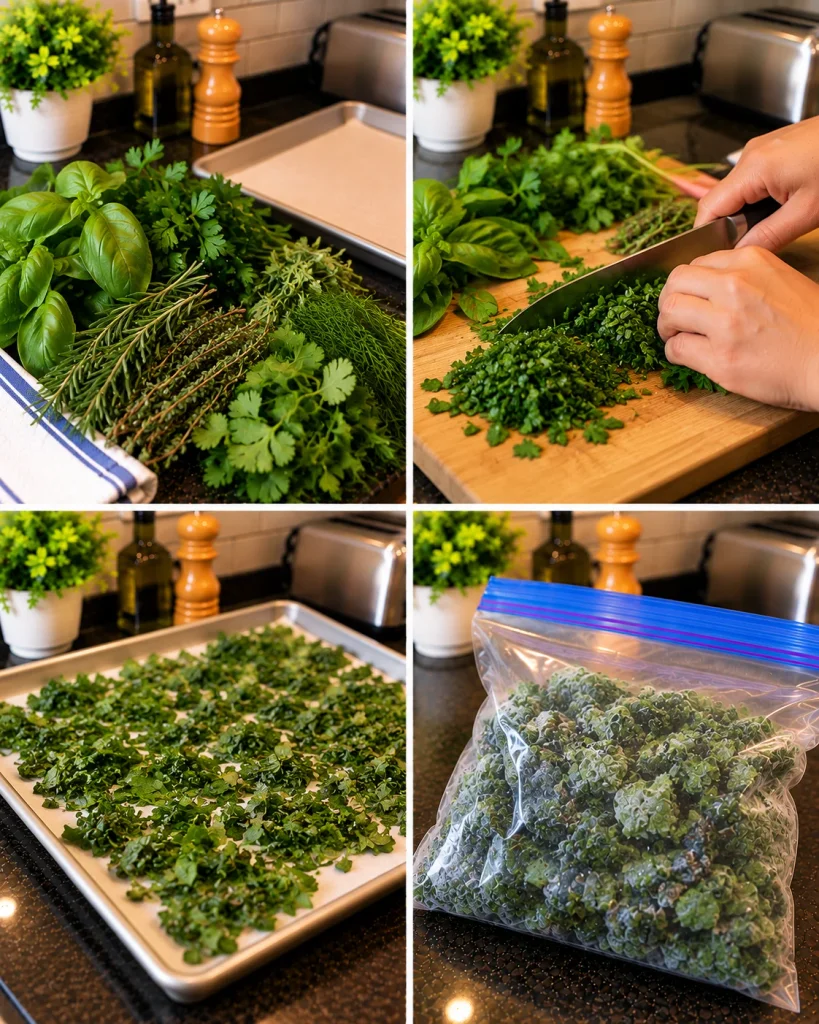
1. Choose fresh herbs
Start with herbs that are still vibrant and free from signs of spoilage. Remove wilted, yellow, or damaged leaves.
2. Rinse and dry them well
Rinse the herbs under cool water to remove dirt. Pat them dry and let them air-dry briefly if needed.
Removing excess moisture helps prevent the herbs from freezing into a large, difficult-to-use clump.
3. Freeze whole leaves or chopped herbs
For herbs you want to grab individually, spread the leaves in a single layer on a baking sheet and freeze until firm. Then transfer them to a freezer-safe bag or container.
You can also chop the herbs before freezing if you usually add them directly to soups, sauces, or cooked dishes.
4. Remove as much air as practical
Place the frozen herbs in an airtight freezer bag or container. Press out excess air before sealing to help reduce freezer burn and protect quality.
Label the container with the herb and date so it’s easy to identify later.
How to Use Frozen Herbs
Frozen herbs are generally most useful in cooked dishes because freezing can soften their texture. Add them to soups, stews, sauces, roasted vegetables, and other dishes where fresh-looking leaves aren’t essential.
You usually don’t need to fully thaw small portions before adding them to a dish. Use them directly from the freezer when practical.
Which Fresh Herbs Freeze Well?
Herbs with sturdier leaves, such as rosemary, thyme, oregano, and sage, are particularly convenient to freeze. Softer herbs such as basil, parsley, cilantro, and dill can also be frozen, although their texture may change after thawing.
The key difference is quality, not simply whether the herb can be frozen. Frozen herbs can remain useful for cooking even when they no longer have the texture of fresh herbs.
Common Mistakes to Avoid
- Freezing wet herbs: Excess water can create ice crystals and clumps.
- Using damaged herbs: Freezing won’t restore herbs that are already spoiled.
- Leaving too much air in the package: Air exposure can contribute to freezer burn and quality loss.
- Expecting fresh texture: Frozen herbs are usually better suited to cooked dishes than salads or garnishes.
Frequently Asked Questions
Can you freeze fresh herbs without blanching them?
Yes. Many fresh herbs can be frozen without blanching. Wash, dry, portion, and package them properly before freezing.
Should you thaw frozen herbs before using them?
Not usually. For soups, sauces, and other cooked dishes, frozen herbs can often be added directly from the freezer.
Can you freeze mixed herbs together?
Yes, if you regularly use the same combination. Chop and portion the herbs together, then store them in a well-sealed freezer container.
Freezing fresh herbs is a simple way to preserve extra herbs and make them available for cooking later. Just keep in mind that freezing protects their usefulness and flavor better than it preserves their original fresh texture.