
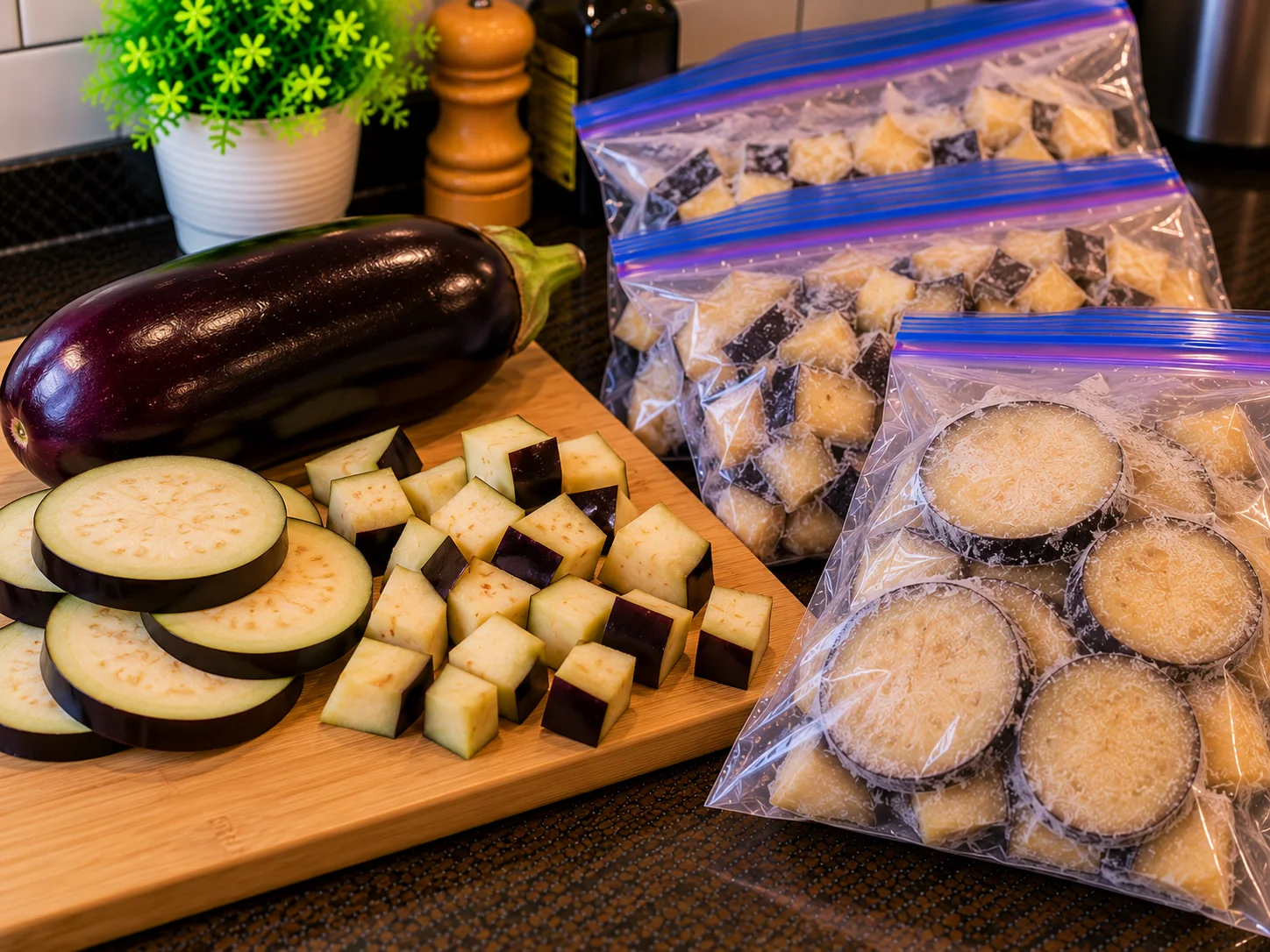

Freezing eggplant is an easy way to preserve it for future meals. For the best texture and color, slice or cube the eggplant, blanch it briefly, cool it in ice water, and freeze it in a single layer before transferring it to freezer bags. You can also freeze roasted eggplant for soups, sauces, and dips.
What You’ll Need
- Fresh, firm eggplant
- Sharp knife and cutting board
- Large pot of boiling water
- Bowl of ice water
- Colander or slotted spoon
- Paper towels or a clean kitchen towel
- Baking sheet and parchment paper
- Freezer-safe bags or airtight containers
How to Freeze Eggplant Step by Step
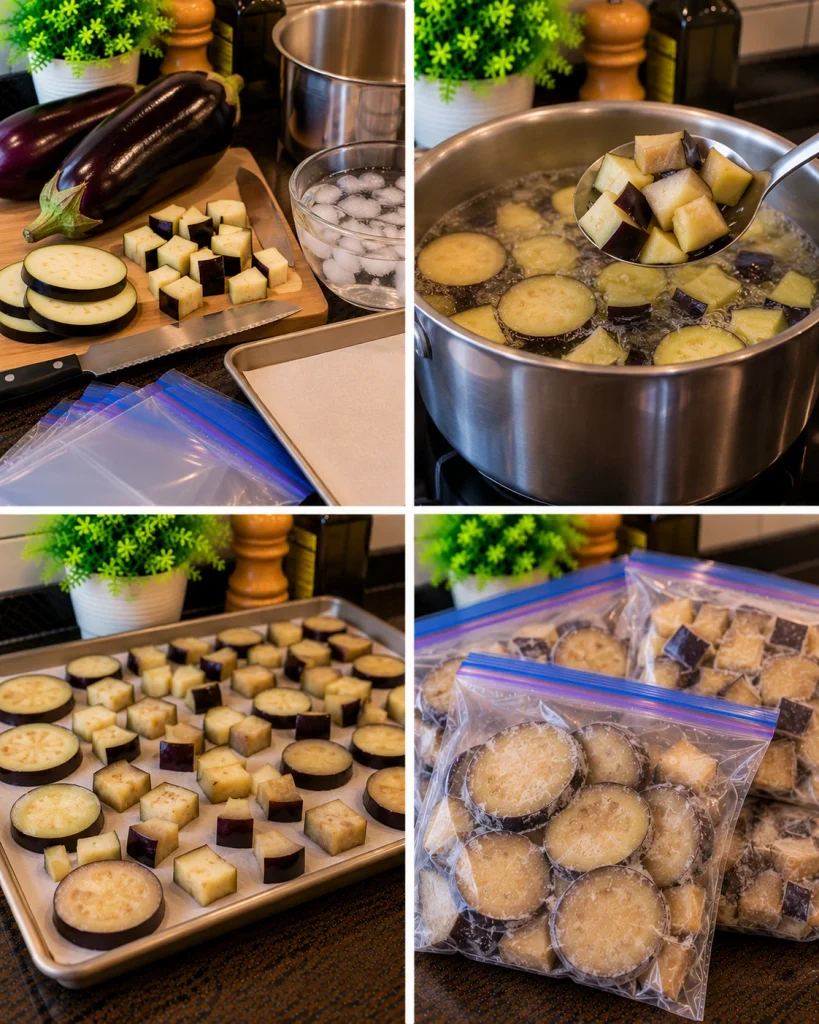
1. Wash and Prepare the Eggplant
Choose firm eggplants with smooth, shiny skin and no soft spots. Rinse them under running water and pat dry. Peeling is optional, so leave the skin on if you prefer.
2. Cut Into Slices or Cubes
Trim off the stem and cut the eggplant into rounds, cubes, or strips, depending on how you plan to use it later. Slices about ½ inch thick work well for many recipes.
3. Blanch the Eggplant
Bring a large pot of water to a boil. Add the eggplant pieces in small batches and blanch for 4 minutes.
Blanching helps slow the enzyme activity that can affect the eggplant’s color, flavor, and texture during frozen storage.
4. Cool in Ice Water
Immediately transfer the eggplant to a bowl of ice water. Let it cool for about 4 minutes, then drain thoroughly and pat dry with paper towels.
5. Freeze in a Single Layer
Arrange the eggplant pieces on a parchment-lined baking sheet without overlapping. Place the tray in the freezer for a few hours, or until the pieces are firm.
6. Pack and Label
Transfer the frozen pieces to freezer-safe bags or airtight containers. Remove as much air as possible, seal tightly, and label with the date. Return them to the freezer promptly.
Alternative Methods
- Roasted eggplant: Cut into cubes or halves and roast until tender. Cool completely, portion into freezer-safe containers, and freeze. This works well for soups, sauces, and dips.
- Breaded eggplant: Slice and bread the pieces, then freeze them on a tray until firm. Transfer to freezer bags and cook from frozen according to your recipe.
Why This Works
Blanching slows natural enzyme activity that can cause changes in flavor, color, and texture during freezing. Freezing the pieces separately also keeps them from sticking together, making portioning easier.
Common Mistakes to Avoid
- Freezing eggplant that is already soft, moldy, or spoiled.
- Skipping blanching when you want better long-term quality.
- Packing wet eggplant, which encourages ice crystals.
- Freezing all the pieces in one large clump.
- Expecting frozen eggplant to remain crisp after thawing.
- Leaving thawed eggplant at room temperature for extended periods.
Frozen eggplant works best in cooked dishes rather than salads or recipes that require a firm, fresh texture.
Signs of Spoilage or Quality Loss
- Freezer burn: Dry, pale, or leathery patches indicate quality loss.
- Darkening: Discoloration can occur, especially if the eggplant was not prepared properly.
- Mushy texture: This is common after thawing and does not automatically mean the eggplant is spoiled.
- Off odors or mold before freezing: Discard spoiled eggplant rather than freezing it.
If eggplant was safe when frozen and has remained continuously frozen at 0°F (-18°C) or below, freezer burn generally affects quality rather than safety.
How Long Does Frozen Eggplant Last?
For the best quality, use frozen eggplant within 8–12 months when stored continuously at 0°F (-18°C) or below. It can remain safe longer if kept continuously frozen, although its flavor and texture may decline.
You usually do not need to thaw eggplant before cooking. Add frozen pieces directly to soups, stews, sauces, and casseroles. For roasting or sautéing, remove excess surface ice and adjust the cooking time as needed.
Frequently Asked Questions
Can you freeze eggplant without blanching?
Yes. However, its flavor, color, and texture may deteriorate faster. Blanching is generally the better option for longer storage.
Should you peel eggplant before freezing?
No. Peeling is optional. Leave the skin on for convenience or remove it if you prefer a smoother texture in sauces and dips.
Can you freeze eggplant raw?
Yes, but raw eggplant may lose quality more quickly because of enzyme activity and its high water content. Blanching before freezing is usually recommended.
How do you cook frozen eggplant?
Add frozen eggplant directly to soups, stews, and sauces. For roasting or sautéing, expect a softer texture than fresh eggplant and cook until tender.