
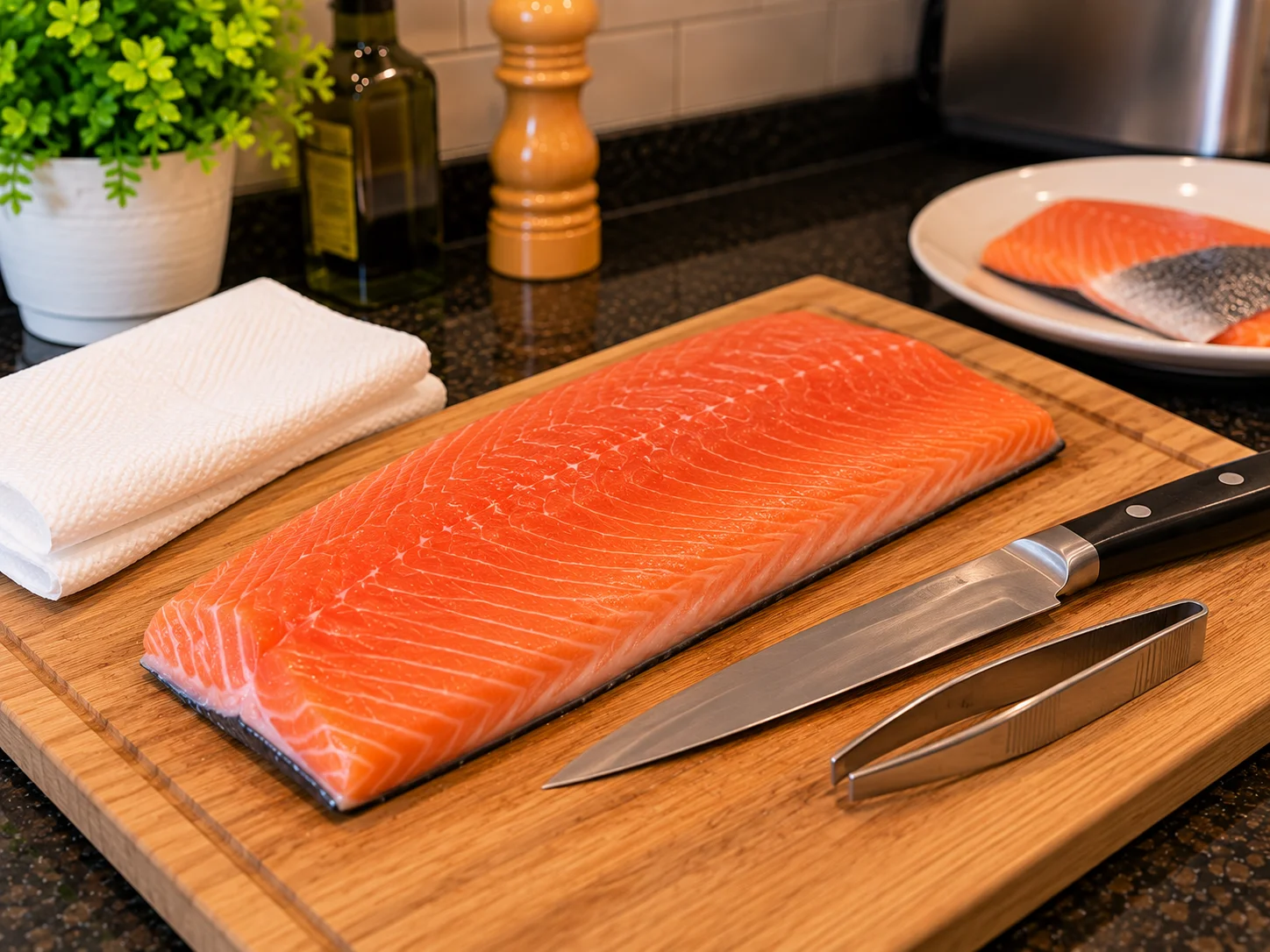

Cleaning salmon before cooking is simple. The safest approach is to remove any remaining scales, pin bones, and unwanted parts, then pat the fish dry with paper towels. Do not rinse raw salmon under running water, because splashing can spread bacteria around your sink and countertops.
What You’ll Need
- Fresh salmon fillet or whole salmon
- Clean cutting board
- Sharp fish knife or kitchen knife
- Fish tweezers or clean needle-nose pliers
- Paper towels
- Clean plate or tray
How to Clean Salmon Step by Step

1. Keep the Salmon Cold
Remove the salmon from the refrigerator just before preparing it. Place it on a clean cutting board and work quickly to keep it cold.
2. Check for Scales
If the skin is still on, run your fingers gently over it to feel for loose scales. If you find any, scrape them off with the back of a knife, moving against the direction of the scales. Keep the fish low in the sink or use a contained work area to minimize splashing.
If you bought a skinless, pre-cleaned fillet, you can usually skip this step.
3. Remove the Pin Bones
Run your fingers along the center of the fillet to locate any small, hard bones.
Use fish tweezers to grip each bone and pull it out in the direction it naturally points. Check the fillet again with your fingers to make sure no bones remain.
4. Trim Unwanted Parts
Look for any remaining fins, rough edges, or damaged areas. Trim them with a clean, sharp knife if needed.
If you are preparing a whole salmon, remove the entrails if they have not already been removed. Discard the entrails and clean any utensils and surfaces that contacted them.
5. Pat the Salmon Dry
Instead of washing the salmon, gently pat it dry with paper towels. This removes excess moisture and helps the fish brown better when pan-searing or roasting.
Discard the used paper towels and wash your hands, cutting board, knife, and other utensils with hot, soapy water.
6. Cook or Store Immediately
Cook the salmon promptly, or return it to the refrigerator in a clean, covered container. Keep raw salmon separate from ready-to-eat foods.
Why This Works / Pro Tips
- Avoid rinsing raw salmon. Washing does not reliably remove harmful bacteria and can spread them through splashes.
- Dry the surface well. Excess moisture can prevent salmon from developing a crisp, golden crust.
- Check carefully for bones. Even commercially prepared fillets may contain a few pin bones.
- Use a clean cutting board. Keep raw fish and its juices away from cooked food and fresh produce.
Common Mistakes to Avoid
- Washing salmon under running water or soaking it in a bowl.
- Using your fingers alone to pull out stubborn pin bones.
- Leaving raw salmon at room temperature for extended periods.
- Using the same unwashed knife or cutting board for other foods.
- Trying to clean away signs of spoilage instead of discarding the fish.
Frequently Asked Questions
Should I wash salmon with vinegar or lemon juice?
No. Vinegar and lemon juice do not reliably make raw salmon safe from harmful bacteria. Use proper handling and cooking instead.
Should I remove the skin before cooking salmon?
Not necessarily. Salmon skin is edible, and leaving it on can help protect the flesh during cooking. If you prefer skinless salmon, remove it with a sharp knife before or after cooking.
How do I know if salmon has gone bad?
Fresh salmon should smell mild, not strongly fishy or sour. Discard it if it has a sour or ammonia-like odor, an unusually slimy surface, or other clear signs of spoilage. Do not taste it to check.
Do I need to clean store-bought salmon?
Usually, only a quick inspection is necessary. Check for pin bones, remaining scales, or unwanted pieces, then pat the fish dry before cooking.