
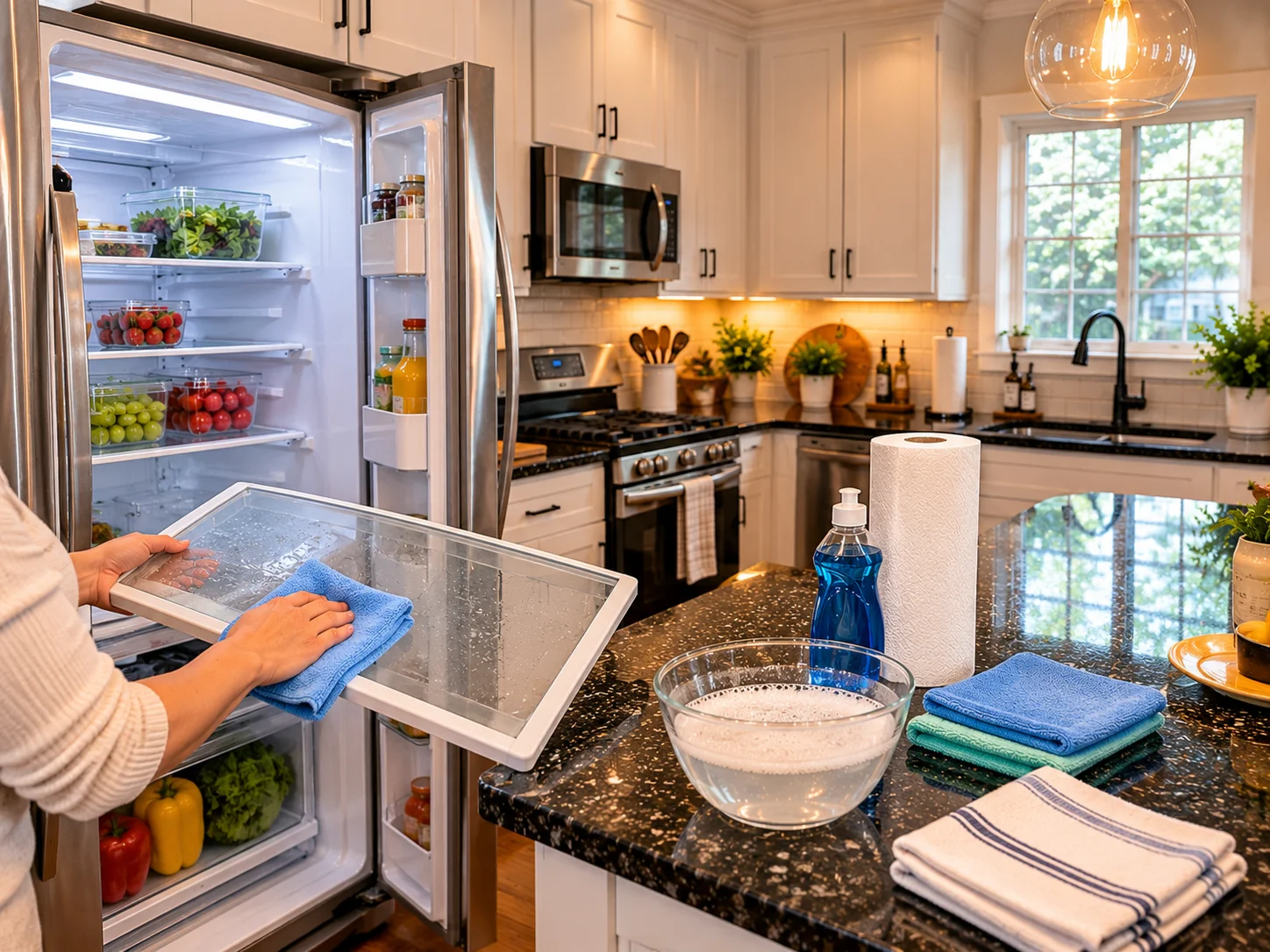

Cleaning refrigerator shelves without making a mess is easier when you work one shelf at a time, catch spills before they spread, and use a soft cloth with warm, soapy water. You usually don’t need to empty the entire refrigerator or remove every shelf. A simple routine can help you clean sticky spots, food spills, and everyday grime without dripping water onto the kitchen floor.
What You’ll Need
- Microfiber cloths or soft sponges
- Warm water
- Mild dish soap
- A small bowl or container
- A dry towel
- Paper towels for small spills, if needed
How to Clean Refrigerator Shelves Without a Mess

1. Prepare for Spills Before You Start
Move any food sitting directly on the shelf you’re cleaning. Place it on a clean counter or in a cooler while you work, and keep refrigerated perishable foods out of the refrigerator for as little time as possible.
If the shelf has loose crumbs, dried food, or liquid, remove these first with a paper towel. This prevents food residue from spreading when you wipe the surface.
2. Clean One Shelf at a Time
Instead of removing everything from the refrigerator, focus on one shelf before moving to the next.
This approach keeps food organized and reduces the chance of knocking over jars, bottles, or containers. It also makes it easier to spot spills hidden behind food packages.
If you need to remove a shelf, check your refrigerator manual for instructions. Some glass shelves need to warm to room temperature before washing to reduce the risk of thermal shock.
3. Use a Damp Cloth Instead of Pouring Water
Mix a few drops of mild dish soap into a bowl of warm water. Dip a microfiber cloth into the mixture and wring it out well.
Wipe the shelf from the back toward the front, using gentle strokes. Keep the cloth damp rather than dripping wet so water doesn’t collect around shelf edges or run into drawers below.
For sticky spots, hold the damp cloth against the area for a short time to soften the residue before wiping it away.
4. Catch Drips as You Work
Place a dry towel beneath the front edge of the shelf if you’re worried about drips. Keep a second cloth nearby to wipe up any water that reaches the refrigerator walls, door seals, or lower shelves.
Pay attention to corners and shelf supports, where crumbs and sticky liquids can collect. Use a lightly damp cloth to reach these areas without soaking them.
Avoid spraying cleaner directly into the refrigerator, especially near vents, electrical components, or controls.
5. Wipe Away Soap Residue
Use a separate cloth dampened with clean water to remove any remaining dish soap. This helps prevent a slippery film from forming on the shelf.
If you’re cleaning a removable shelf, you can wash it in the sink with warm, soapy water, provided the shelf is safe to remove and wash that way. Avoid sudden temperature changes, particularly with glass.
6. Dry the Shelf Before Replacing Food
Wipe the surface with a clean, dry towel. Make sure the shelf edges and corners aren’t holding water before putting food back.
Return containers to their original places, checking the bottoms of jars and bottles for sticky residue. Clean containers are less likely to leave fresh marks on the shelf.
Repeat the process for the remaining shelves as needed.
Common Mistakes That Make Refrigerator Cleaning Messy
A few small changes can make the job much easier.
- Using too much water: Excess water can drip into drawers or collect around shelf edges. Wring out your cloth before wiping.
- Cleaning every shelf at once: Removing too much food at the same time creates clutter and makes spills harder to manage.
- Using abrasive scrubbers: Rough pads can scratch plastic surfaces and some shelf finishes. Start with a soft cloth and mild dish soap.
- Ignoring sticky container bottoms: Even a freshly cleaned shelf can become dirty again if jars and bottles have residue underneath.
- Putting cold glass into hot water: Sudden temperature changes can cause glass to crack. Let removable glass shelves adjust to room temperature before washing them.
How Often Should You Clean Refrigerator Shelves?
Wipe up spills as soon as you notice them, especially raw meat juices, leaking containers, and sticky liquids. Clean individual shelves whenever they become visibly dirty, and include them in your regular refrigerator-cleaning routine.
For food safety, clean contaminated areas promptly with an appropriate cleaning method. If raw meat or poultry juices spill onto a shelf, wash the area thoroughly and follow the food-safety directions for the surface and cleaner you’re using.
Frequently Asked Questions
Can I clean refrigerator shelves without removing them?
Yes. For routine cleaning, a well-wrung damp cloth and mild dish soap are usually enough. Cleaning one shelf at a time lets you reach most areas without unloading the entire refrigerator.
Should I use vinegar to clean refrigerator shelves?
You can use a suitable vinegar solution on some surfaces, but mild dish soap and water are often sufficient for everyday grime. Check your refrigerator manufacturer’s care instructions before using vinegar or other cleaners, as some finishes and materials may be sensitive to them.
How do I clean sticky refrigerator shelves quickly?
Place a warm, damp cloth over the sticky spot briefly to soften the residue. Wipe gently, rinse away any soap with a clean damp cloth, and dry the area thoroughly.
Keep Refrigerator Cleaning Simple
The easiest way to clean refrigerator shelves without a mess is to work in small sections, use a damp rather than dripping cloth, and dry each surface before moving on. With a few basic supplies and a little care, you can remove everyday spills without turning refrigerator cleaning into a full kitchen cleanup.