
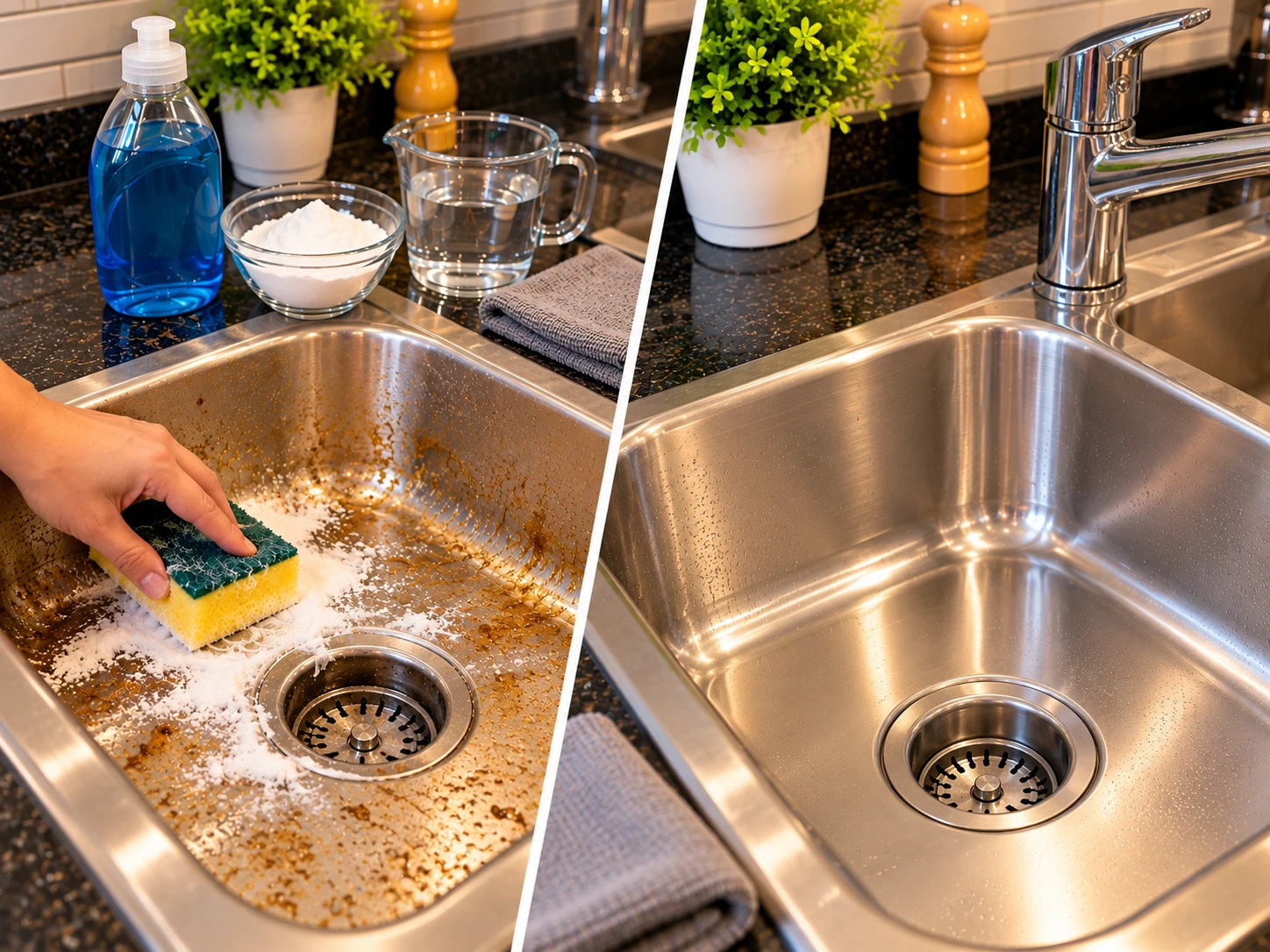

A greasy kitchen sink can look dirty even after a quick rinse. The simple fix is to use dish soap and baking soda to loosen the grease, lift stuck-on residue, and freshen the surface.
You don’t need a harsh cleaner or a complicated routine. A few minutes of gentle scrubbing is usually enough for everyday grease buildup.
What You’ll Need
- Dish soap
- Baking soda
- Warm water
- A soft sponge or non-scratch scrubber
- A clean cloth
How to Clean a Greasy Kitchen Sink
1. Rinse Away Loose Debris
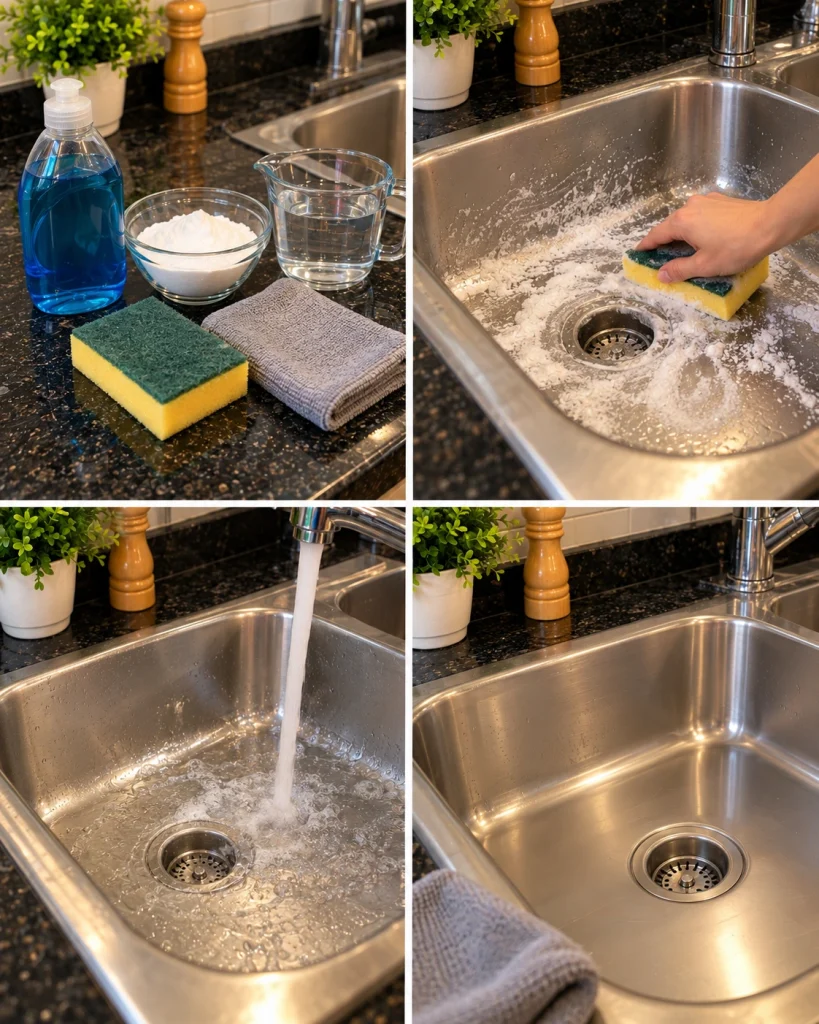
Remove dishes and food particles from the sink. Rinse the surface with warm water to loosen loose grease and residue.
2. Add Dish Soap
Apply a small amount of dish soap directly to the greasy areas. Dish soap is designed to break up everyday cooking grease, making it a good first step for a kitchen sink.
3. Sprinkle With Baking Soda
Sprinkle a light layer of baking soda over the sink. The baking soda adds gentle scrubbing power while the dish soap works on the grease.
4. Scrub the Sink
Use a damp sponge or non-scratch scrubber to work the mixture around the sink. Pay extra attention to the drain area, corners, and any spots where grease has collected.
For stubborn buildup, let the soapy baking soda mixture sit for a few minutes before scrubbing again.
5. Rinse and Dry
Rinse the entire sink thoroughly with warm water. Wipe it dry with a clean cloth to remove remaining residue and water spots.
Why This Works
The trick is combining grease-cutting dish soap with the gentle abrasive action of baking soda. The soap helps loosen oily residue, while the baking soda makes it easier to scrub away buildup without relying on an especially harsh cleaner.
Common Mistakes to Avoid
- Using only cold water: Cold water may not loosen greasy residue as effectively as warm water.
- Using an overly abrasive scrubber: It can scratch some sink finishes.
- Leaving cleaner residue behind: Rinse thoroughly after scrubbing.
- Ignoring the drain area: Grease and food residue can collect around the drain and edges even when the rest of the sink looks clean.
If your sink has a delicate or specialty finish, check the manufacturer’s cleaning recommendations before using baking soda or a scrubber.
How Often Should You Clean a Greasy Sink?
For everyday kitchens, wiping and rinsing the sink regularly can help prevent grease from building up. A deeper scrub is useful whenever the surface starts to feel sticky, look dull, or develop visible residue.
The key is not to let layers of grease accumulate. Cleaning small amounts regularly is usually much easier than tackling heavy buildup later.