
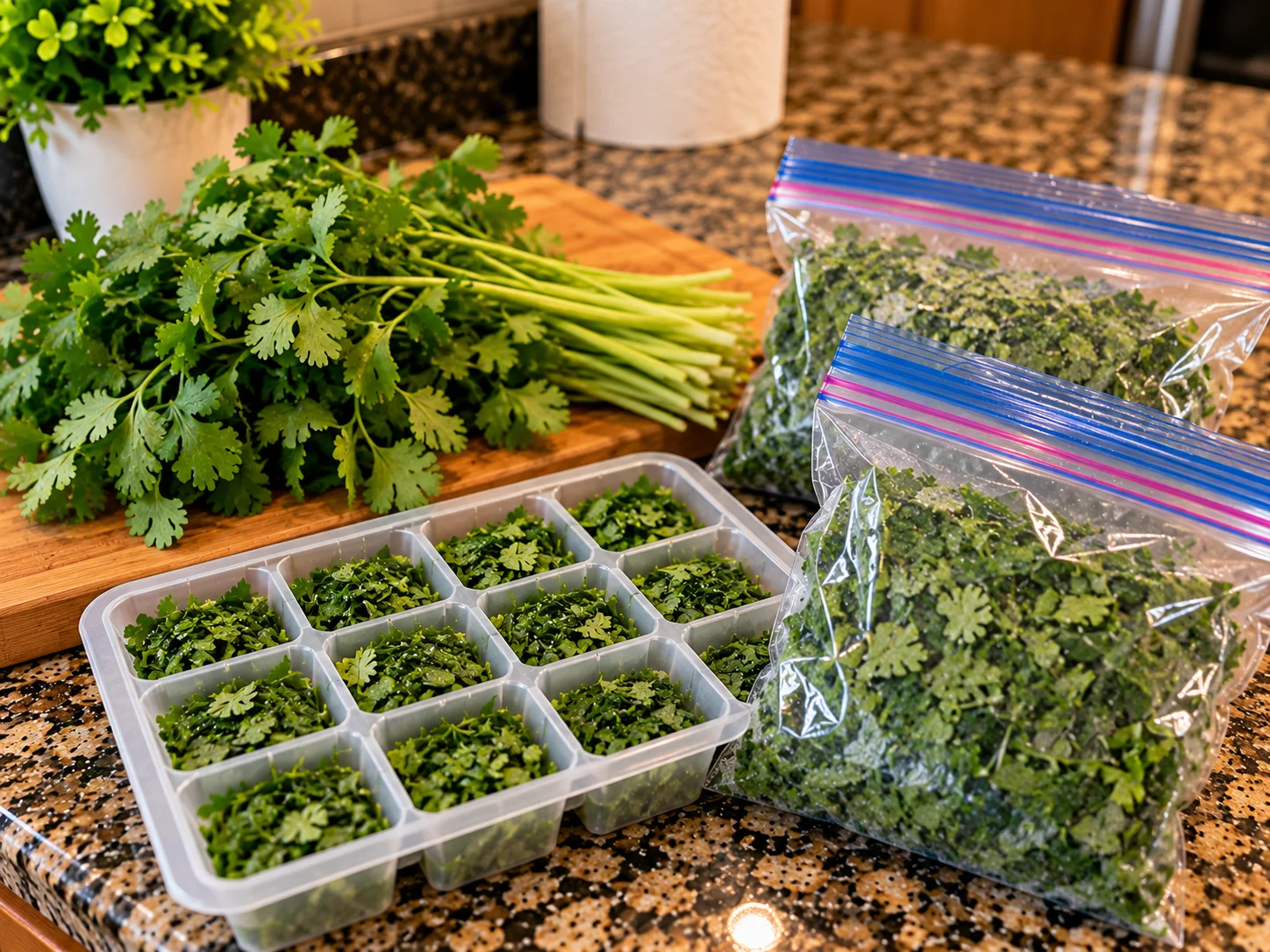

Yes, you can freeze cilantro, but the texture will change after thawing. Frozen cilantro is best for cooked dishes, sauces, soups, and other recipes where crisp, fresh leaves are not essential.
How to Freeze Cilantro

- Wash the cilantro
Rinse the cilantro under cool water to remove dirt and debris. - Dry it thoroughly
Pat the cilantro dry with paper towels. Excess moisture can lead to ice crystals and freezer burn. - Remove the tough stems
Pick off any damaged leaves and separate the leaves from thicker stems if desired. Tender stems can also be frozen. - Portion the cilantro
Divide it into small portions so you can take out only what you need later. - Package it well
Place the cilantro in a freezer bag or airtight freezer container. Press out as much excess air as possible before sealing. - Freeze
Label the package with the date and place it in the freezer.
Does Frozen Cilantro Taste Good?
Frozen cilantro can retain much of its flavor, although it will not have the same fresh texture. The leaves become softer once frozen and thawed, so they are not ideal for garnishing tacos, salads, or other dishes where fresh cilantro adds texture.
For cooked dishes, however, frozen cilantro can be a convenient way to reduce waste when you have more herbs than you can use.
Can You Freeze Cilantro in Ice Cubes?
Yes. Chopped cilantro can be portioned into ice cube trays with a small amount of water or cooking liquid and then frozen. Once solid, transfer the cubes to a freezer bag or airtight container.
This method makes it easy to add small amounts of cilantro directly to soups, sauces, and other cooked dishes.
How to Use Frozen Cilantro
You generally do not need to thaw cilantro before using it in cooked dishes. Add the frozen cilantro directly to soups, stews, sauces, rice dishes, or other recipes where it can warm through during cooking.
If you need cilantro for a fresh garnish, use fresh cilantro instead. Freezing preserves the herb but does not preserve its original crisp texture.
Final Takeaway
You can freeze cilantro, and doing so is a practical way to save extra herbs. For the best results, dry it well, portion it before freezing, and use it later in cooked dishes rather than recipes that depend on fresh cilantro’s texture.