
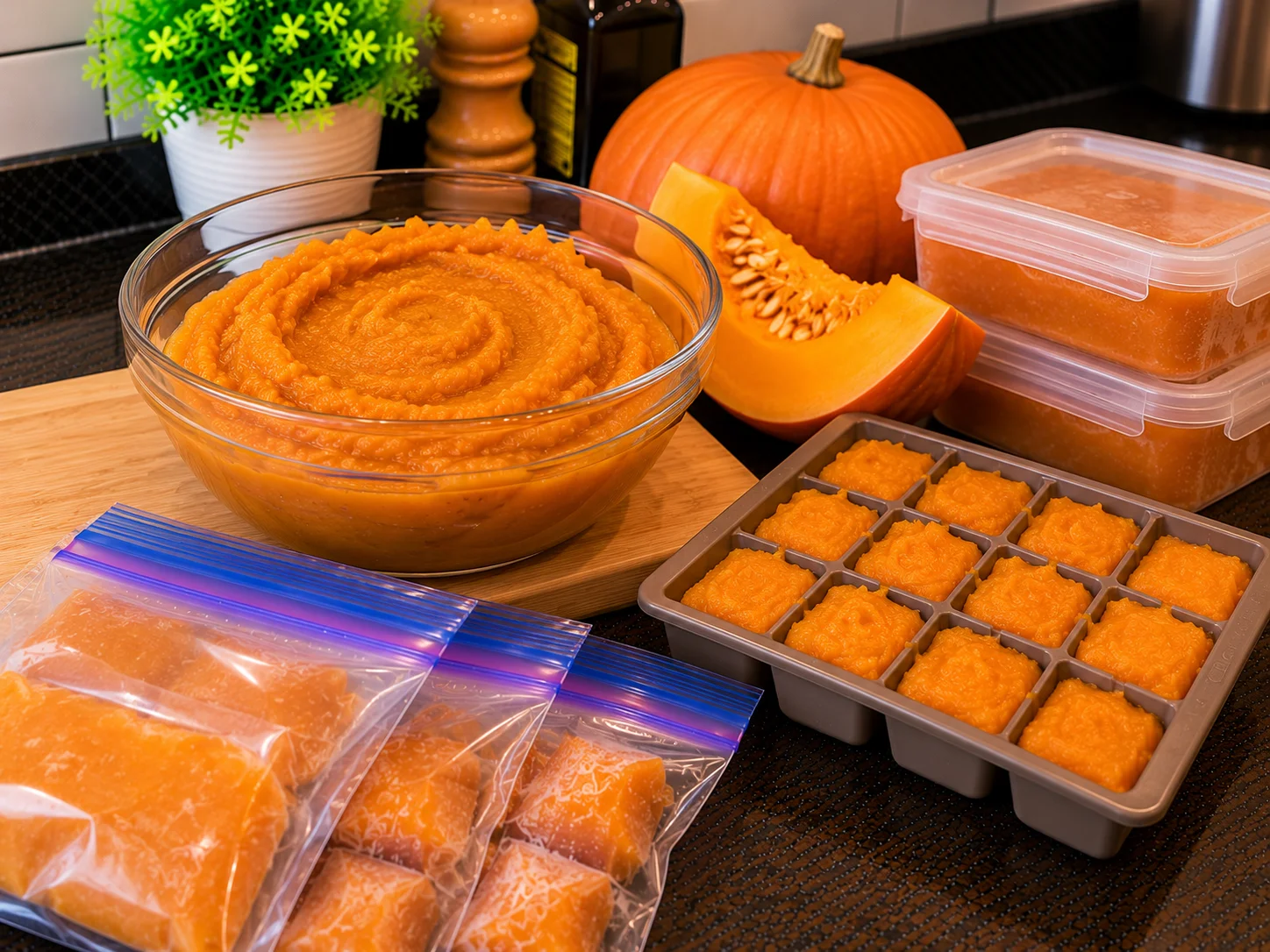

Freezing pumpkin puree is an easy way to save leftover canned pumpkin or homemade puree for future recipes. You can freeze it in freezer-safe bags, airtight containers, or ice cube trays, making it simple to portion out exactly what you need for pies, muffins, soups, and smoothies.
What You’ll Need
- Pumpkin puree (homemade or canned)
- Freezer-safe bags or airtight containers
- Ice cube trays (optional)
- Measuring cup or kitchen scale
- Permanent marker and freezer labels
How to Freeze Pumpkin Puree
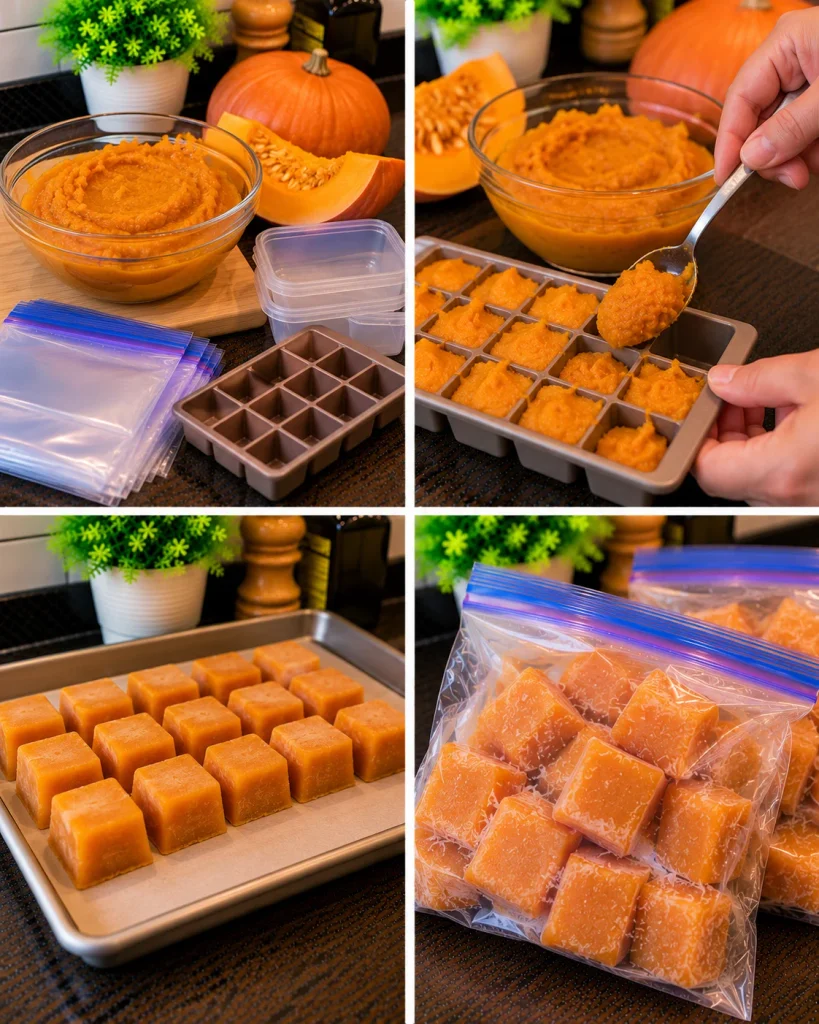
Step 1: Prepare the Puree
If you’re using homemade pumpkin puree, let it cool completely before freezing. Drain excess liquid if the puree is unusually watery. Canned pumpkin can be frozen directly from the can after opening.
Step 2: Divide Into Portions
Measure the puree into convenient amounts based on your favorite recipes. One-cup portions work well for many baking recipes, while smaller portions are useful for sauces, oatmeal, and smoothies.
Step 3: Choose a Freezing Method
- Freezer bags: Spoon the puree into freezer-safe bags, press out excess air, and seal tightly. Lay the bags flat to save space.
- Airtight containers: Transfer the puree into freezer-safe containers, leaving a little room at the top for expansion.
- Ice cube trays: Fill the compartments with puree and freeze until solid. Transfer the frozen portions to a labeled freezer bag.
Step 4: Label and Freeze
Write the contents and freezing date on each container or bag. Place the portions in the freezer at 0°F (-18°C) or below.
Alternative Methods
If you freeze pumpkin puree frequently, try these convenient options:
- Silicone molds: Freeze measured portions in silicone molds, then transfer them to a freezer bag once solid.
- Small freezer-safe jars: Use jars designed for freezing, leaving adequate headspace to prevent cracking as the puree expands.
Why This Works
Freezing slows the growth of microorganisms and preserves pumpkin puree for later use. Removing excess air and using airtight packaging helps reduce freezer burn and protect the puree’s flavor and texture.
Common Mistakes to Avoid
- Freezing warm puree, which can raise the temperature of nearby frozen foods.
- Filling containers to the brim without allowing room for expansion.
- Leaving excess air in freezer bags.
- Freezing large portions when you usually need only a small amount.
- Assuming freezing makes spoiled puree safe to eat.
Signs of Spoilage or Quality Loss
After thawing, check the puree before using it.
- Appearance: Discard it if you notice mold or unusual discoloration.
- Smell: A sour, fermented, or otherwise unpleasant odor is a warning sign.
- Texture: Separation and extra liquid can be normal after freezing. Stir the puree to recombine it. Discard it if it has other signs of spoilage.
If pumpkin puree was left at room temperature for more than two hours, discard it rather than freezing it for later.
How Long Does Frozen Pumpkin Puree Last?
For the best quality, use frozen pumpkin puree within 3–6 months. Food kept continuously at 0°F (-18°C) or below remains safe indefinitely from a food-safety standpoint, although its flavor and texture may deteriorate over time.
Thaw frozen puree overnight in the refrigerator or use the defrost setting on your microwave if you plan to use it immediately. Once thawed in the refrigerator, use it within 3–4 days. If you thaw it in the microwave, use it immediately.
Frequently Asked Questions
Can you freeze pumpkin puree in its original can?
No. Transfer opened canned pumpkin to a freezer-safe container or bag before freezing. Never freeze food in an unopened metal can.
Does frozen pumpkin puree change texture?
It can become watery or slightly grainy after thawing. Stir it well and drain excess liquid if your recipe requires a thicker puree.
Can you refreeze thawed pumpkin puree?
Refreezing is generally safe if the puree was thawed in the refrigerator and kept at a safe temperature, but repeated freezing and thawing can reduce its quality. Avoid refreezing puree that has been left at room temperature too long.
Can you freeze pumpkin puree in one-cup portions?
Yes. One-cup portions are convenient for baking and cooking. Label each package with the amount so you can grab exactly what a recipe calls for.