
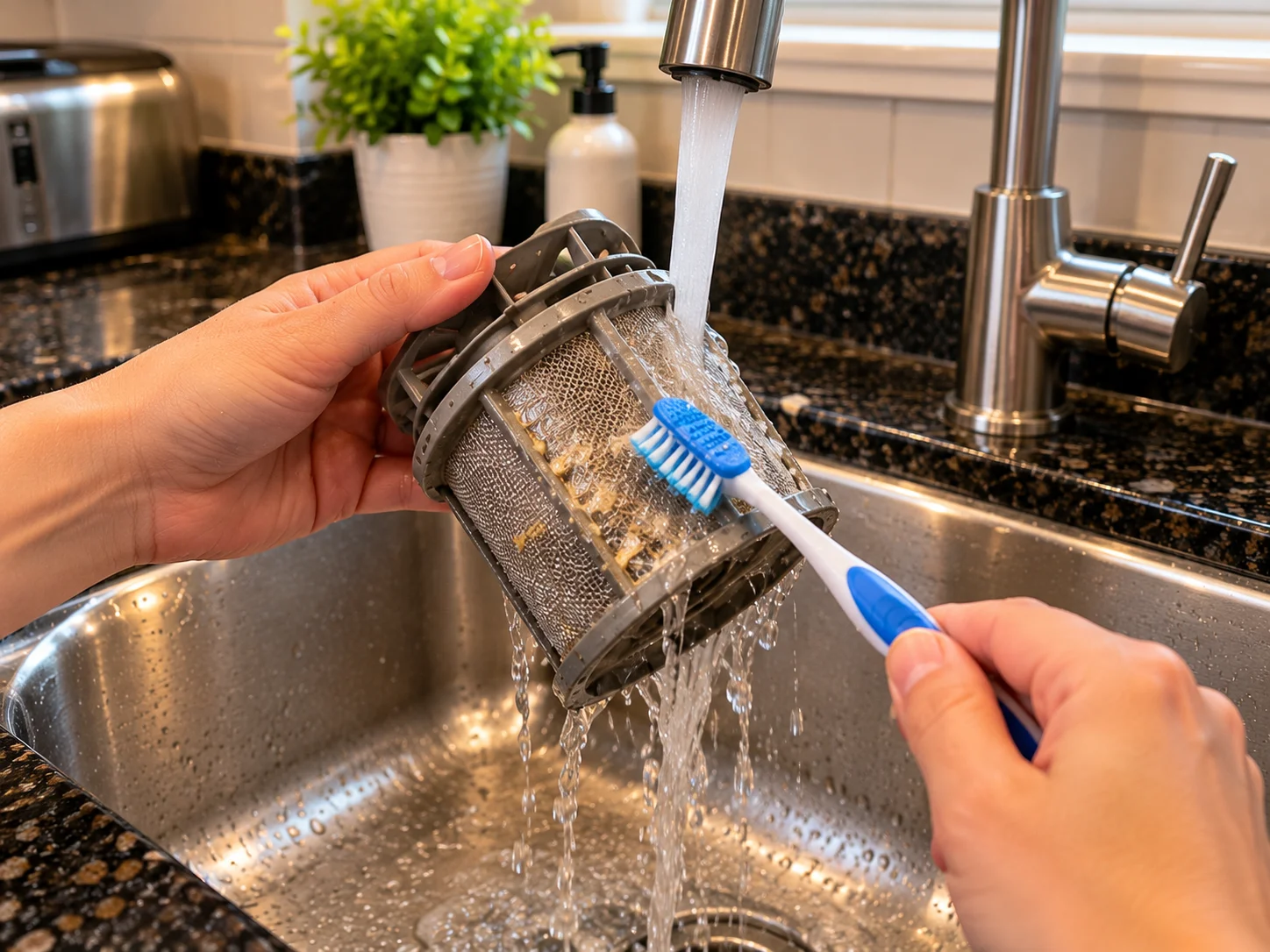

A dirty dishwasher can leave dishes cloudy, produce unpleasant odors, and struggle to drain properly. The best way to clean a dishwasher is to remove food debris, clean the filter, wipe the door and seals, and run a hot cleaning cycle with white vinegar if your dishwasher’s manufacturer allows it.
With a few simple supplies, you can remove grease, leftover food, and everyday buildup without spending much time on the job.
What You’ll Need
- Dish soap
- A soft sponge or microfiber cloth
- An old toothbrush or small cleaning brush
- White vinegar (if approved for your dishwasher)
- Baking soda (optional, for odor control)
- Warm water
How to Clean a Dirty Dishwasher Step by Step
1. Empty the Dishwasher
Remove all dishes, utensils, and racks if they need extra cleaning. Check the bottom of the dishwasher for food scraps, paper labels, broken glass, or other debris.
Remove loose debris by hand, using gloves if necessary. Never reach blindly into the bottom of the dishwasher because sharp objects may be hidden there.
2. Clean the Dishwasher Filter
The filter catches food particles and helps prevent them from recirculating onto your dishes. When it becomes clogged, the dishwasher may smell bad or leave residue behind.
- Locate the filter at the bottom of the dishwasher.
- Remove it according to the manufacturer’s instructions.
- Rinse it under warm running water.
- Use a soft brush and a little dish soap to remove stubborn grease and debris.
- Rinse thoroughly and reinstall it securely.
Avoid using abrasive brushes or harsh chemicals that could damage the filter.
3. Wipe the Door and Rubber Seals
Food residue and grease often collect around the door edges, hinges, detergent dispenser, and rubber seals.
Dampen a microfiber cloth with warm, soapy water and wipe these areas carefully. Use an old toothbrush to reach narrow corners and crevices.
Pay particular attention to the bottom edge of the door, where grime can accumulate without being washed away during a normal cycle. Wipe away the soap with a clean, damp cloth.
4. Clean the Spray Arms
Spray arms distribute water throughout the dishwasher. Food particles or mineral deposits can block their small openings and affect cleaning performance.
Check the spray arms for visible debris. If your model allows them to be removed, follow the manual’s instructions and rinse them under running water.
Use a soft brush or wooden toothpick to loosen debris from blocked holes, taking care not to damage the openings. Reinstall the spray arms and make sure they can rotate freely.
5. Run a Cleaning Cycle
Once the removable parts and interior surfaces are clean, run an empty hot-water cycle using a dishwasher cleaner approved for your appliance.
If the manufacturer permits white vinegar, place a dishwasher-safe cup containing white vinegar on the upper rack and run a hot cycle. Do not pour vinegar directly into the detergent dispenser unless the manufacturer specifically recommends it.
Avoid using vinegar regularly if your dishwasher manual warns against it, since repeated exposure to acids may damage certain components.
Never mix vinegar with bleach or chlorine-based cleaners. If you use a commercial dishwasher cleaner, follow its label and avoid combining cleaning products.
6. Tackle Lingering Odors
If the dishwasher still smells after cleaning the filter and interior, check for trapped debris around the drain area and door seals.
For mild odors, some manufacturers allow a separate empty cycle with a small amount of baking soda sprinkled on the dishwasher floor. Check your manual before trying this method.
Do not combine baking soda and vinegar in the same cleaning step. They react with each other and largely neutralize one another, making the combination less useful for cleaning.
Common Dishwasher Cleaning Mistakes
A few habits can make dishwasher cleaning less effective or cause unnecessary wear.
- Ignoring the filter: Food debris can build up and contribute to odors and poor cleaning results.
- Using too much vinegar: More acid does not mean better cleaning and may damage appliance components over time.
- Scrubbing with abrasive pads: These can scratch stainless steel, plastic, and other interior surfaces.
- Using regular dish soap in the machine: Hand-washing liquid creates excessive suds and can cause leaks or overflow.
- Forgetting the spray arms: Blocked openings can prevent water from reaching dishes properly.
- Mixing cleaning products: Combining incompatible cleaners can release dangerous fumes.
How Often Should You Clean Your Dishwasher?
Your cleaning schedule depends on how often you use the appliance and how much food residue collects inside.
| Cleaning task | Suggested frequency |
|---|---|
| Check for food scraps | Weekly |
| Clean the filter | Weekly or as needed, following the manual |
| Wipe the door and seals | Every 1–2 weeks |
| Inspect spray arms | Monthly or as needed |
| Run a dishwasher-cleaning cycle | Monthly or as directed by the product |
If you use your dishwasher daily, you may need to clean the filter more often. Always follow the manufacturer’s maintenance recommendations.
Frequently Asked Questions
Why does my dishwasher smell bad even after cleaning?
Food trapped in the filter, drain area, or door seals is a common cause. Clean these areas first. If the odor persists, check the drain hose and plumbing for possible drainage problems.
Can I use bleach to clean my dishwasher?
Do not use bleach unless your dishwasher manufacturer explicitly permits it. Bleach can damage stainless steel and other components, and it must never be mixed with vinegar or other incompatible cleaners.
Can I clean my dishwasher with vinegar and baking soda together?
It is better to use them separately, if your manufacturer permits both. Mixing them causes a reaction that neutralizes much of their cleaning action. A dishwasher cleaner formulated for your appliance is often the simplest option.
Why are my dishes still dirty after cleaning the dishwasher?
Check the filter, spray arms, detergent dispenser, and loading arrangement. Make sure the spray arms can rotate freely and that dishes are not blocking the water jets. If cleaning performance remains poor, the appliance may have a drainage, water-supply, or mechanical issue.
Final Thoughts
The best way to clean a dirty dishwasher is to start with the parts that collect the most debris: the filter, spray arms, door seals, and drain area. Finish with an approved cleaning cycle to help remove remaining buildup and odors.
Regular maintenance can keep your dishwasher cleaner, help it wash dishes more effectively, and make unpleasant smells less likely to return.