
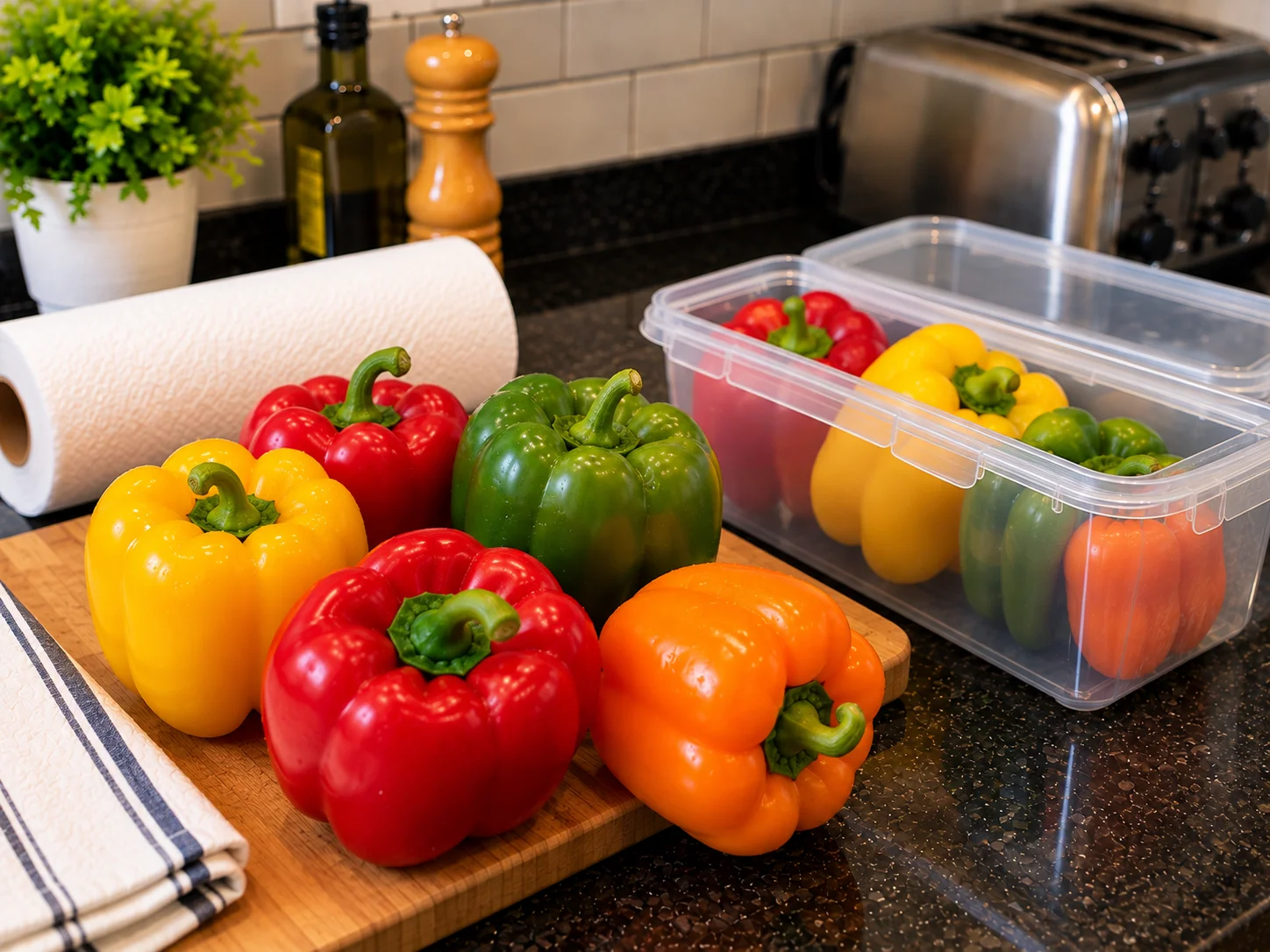

Fresh peppers can lose their crisp texture quickly when they are exposed to too much moisture or stored in a way that traps condensation. The best approach is to keep whole peppers dry, cool, and refrigerated until you are ready to use them.
The Best Way to Store Fresh Peppers
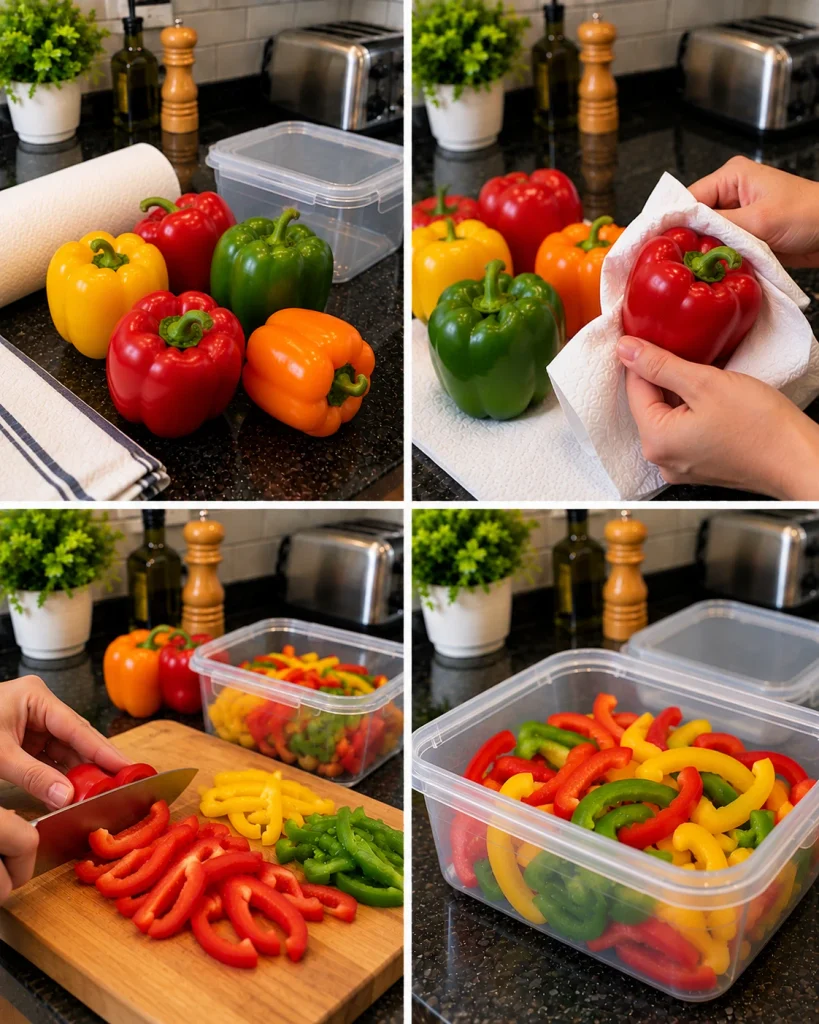
Keep whole, unwashed peppers in the refrigerator. If they came in a plastic bag or container that holds moisture, give them some ventilation rather than sealing them tightly against dampness.
For best results:
- Keep peppers whole. Cut peppers lose moisture and quality faster than whole peppers.
- Keep them dry. Excess moisture can encourage soft spots and spoilage.
- Store them in the refrigerator. The crisper drawer is a practical place for whole peppers.
- Avoid overcrowding. Give the peppers enough room that they are not constantly pressed against one another.
- Wash just before using. Washing before storage can leave surface moisture behind.
Why Do Fresh Peppers Go Soft?
Peppers naturally lose water after they are harvested. As they lose moisture, their firm, crisp texture gradually becomes softer.
Poor storage can speed this process up. Excess moisture can also lead to deterioration, especially if peppers are stored while wet or have damaged areas.
What About Cut Peppers?
Once a pepper has been cut, refrigerate the pieces in a clean, covered container. Keeping cut peppers protected from drying air can help preserve their texture.
For the best quality, use cut peppers sooner rather than later and check them before cooking.
Common Storage Mistakes
- Storing peppers while wet: Surface moisture can contribute to deterioration.
- Leaving them at room temperature for too long: Refrigeration helps maintain quality.
- Keeping damaged peppers with fresh ones: Bruised or damaged areas can deteriorate faster.
- Cutting peppers before you need them: Whole peppers generally retain their quality longer.
How to Tell If a Pepper Has Gone Bad
A pepper that is slightly soft may simply have lost some of its crispness and can still be suitable for cooking if it otherwise looks and smells normal.
Discard peppers with signs of spoilage such as mold, a slimy texture, leaking liquid, or an unpleasant odor. Storage can help preserve fresh peppers, but it cannot make spoiled food safe.
FAQ
Should fresh peppers be refrigerated?
Yes. Refrigerating whole fresh peppers is a practical way to help maintain their quality and crisp texture.
Should I wash peppers before storing them?
It is generally better to wash them when you are ready to use them. If peppers are already wet, dry them thoroughly before refrigerating.
Can you still use a soft pepper?
A slightly soft pepper may still be usable if there are no signs of spoilage. Remove any questionable damaged areas and use it promptly. If you see mold, slime, or other clear signs of spoilage, discard it.