


Fresh broccoli stays crisp and flavorful longer when you keep it cold without trapping too much moisture around the florets. The simplest approach is to refrigerate it unwashed and loosely wrapped, then wash it just before using.
How to Store Fresh Broccoli
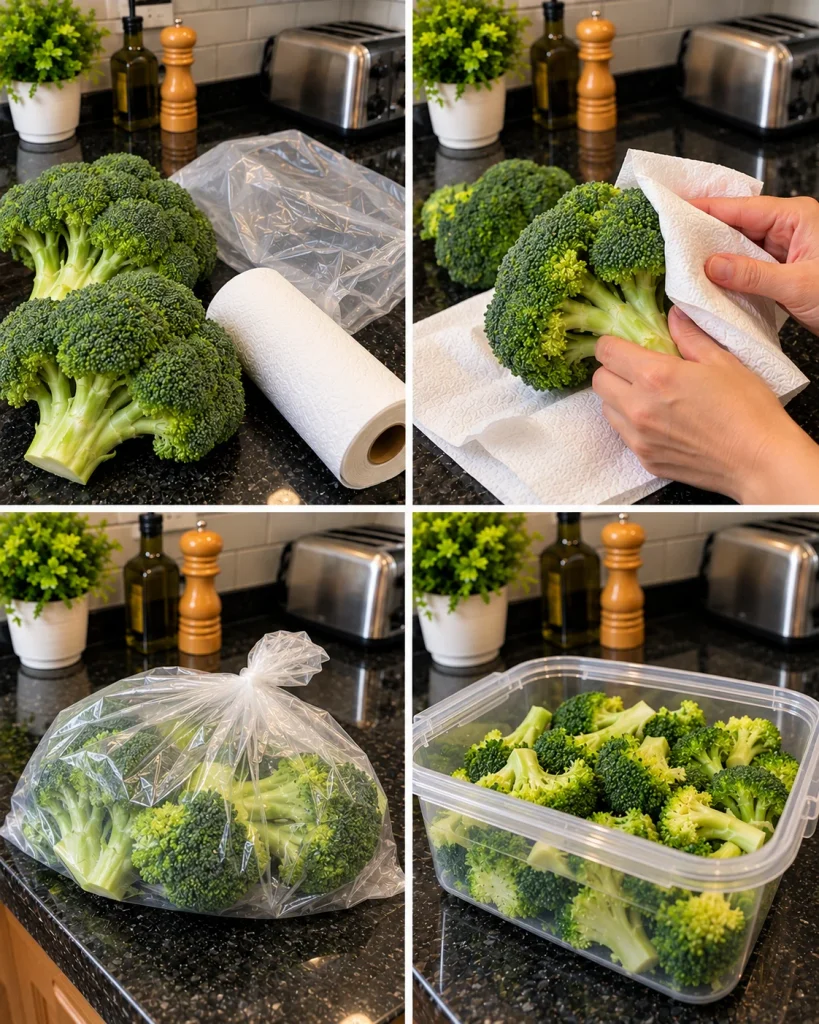
1. Keep it unwashed
Avoid rinsing broccoli before storing it. Extra moisture can collect between the florets and encourage faster quality loss.
If the broccoli is already wet, gently pat it dry with a clean paper towel before refrigerating.
2. Wrap it loosely
Place the broccoli in a loose plastic bag or wrap it loosely so moisture can escape. Avoid sealing it tightly in an airtight container while it is still whole.
The goal is to prevent the broccoli from drying out without trapping excess condensation.
3. Refrigerate promptly
Keep fresh broccoli in the refrigerator rather than leaving it at room temperature for extended periods. A cold, consistent refrigerator environment helps preserve its crisp texture and fresh appearance.
4. Wash it before using
When you’re ready to cook or eat the broccoli, rinse it thoroughly under cool running water. Cut away any damaged areas, then prepare it as needed.
What About Cut Broccoli?
Cut broccoli can lose quality more quickly than a whole head because more of its surface is exposed to air and moisture.
For cut florets, use a clean, covered container and refrigerate them. If the broccoli is damp after washing, dry it well before storing to reduce excess moisture.
Common Storage Mistakes
- Washing broccoli before storing: Extra moisture can contribute to faster quality loss.
- Sealing wet broccoli tightly: Trapped condensation can make the florets deteriorate more quickly.
- Leaving broccoli on the counter: Room-temperature storage is not the best way to maintain its freshness.
- Ignoring damaged areas: Remove visibly spoiled or damaged portions rather than storing them with fresh broccoli.
How to Tell If Broccoli Is Losing Quality
Fresh broccoli should have firm stalks and compact florets. As it ages, it may become limp, develop yellowing florets, or show other signs of deterioration.
Quality changes do not all mean the same thing, so check the broccoli for obvious spoilage before using it. If it has an unpleasant odor, visible mold, or other clear signs of spoilage, discard it rather than trying to freshen it up.
Can You Freeze Fresh Broccoli?
Yes, broccoli can be frozen, but freezing is a different storage method from refrigerator storage and can change its texture. If you plan to keep broccoli for longer-term storage, use a proper freezing method rather than simply placing fresh broccoli in the freezer.
For everyday use, refrigerator storage is the better choice when you want to preserve the texture of fresh broccoli.